









Everyone around us claims to care about the environment. We talk about plastic pollution, disappearing forests and the need to protect nature, yet many of us continue using plastic bags for everyday needs without thinking much about their impact.
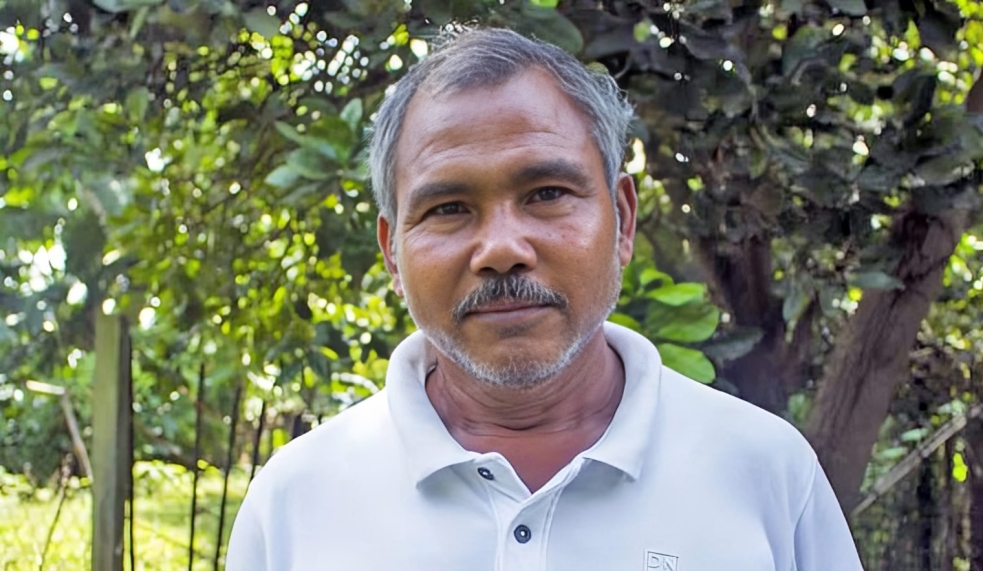
But there are also people who do more than talk. They are willing to dedicate years of their lives to protecting nature, even when there is no guarantee of recognition or reward. Jadav Payeng is one such person.
Born on 31 October 1959 in Assam, Jadav “Molai” Payeng belongs to the Mising community and grew up around the Brahmaputra landscape. He would eventually become known as the “Forest Man of India”, after spending decades planting and tending trees on a barren sandbar in Assam. His efforts helped transform the landscape into what is now known as Molai Forest.
Payeng was not a wealthy businessman or someone who began with a major environmental campaign behind him. He came from a simple rural background. What made him extraordinary was the determination with which he continued working to restore a landscape that had little vegetation.
The incident that changed everything
Payeng’s journey towards environmental conservation is closely connected to an incident in 1979. After flooding along the Brahmaputra, he saw snakes lying dead on a barren sandbar. The animals had been washed onto the land, where there was little vegetation or shade to protect them from the heat.
The sight deeply affected the young Payeng. He wanted to understand what could be done to prevent such deaths, and he began planting bamboo on the sandbar. Accounts differ on some details of the incident, including the exact number of plants initially provided, but the broader story of the dead snakes and his decision to begin planting is consistently reported.
At the time, there was no reason to believe that this small effort would eventually contribute to a forest ecosystem. Payeng simply continued planting and caring for the vegetation.
When the project ended, Payeng stayed
An important part of Payeng’s story is often overlooked. In 1980, a social forestry project was launched at Aruna Chapori near Kokilamukh in Assam. The project covered about 200 hectares, and Payeng worked there as one of the labourers.
The government-backed project eventually ended after several years, with reports attributing its abandonment to a lack of funds. The other workers left, but Payeng stayed and continued looking after the plantation.
He then expanded his own efforts. He kept planting trees, tending the vegetation and working to make the land capable of supporting a wider ecosystem. For years, his work received little attention outside the local area.
This is where the story of Molai Forest truly began to take shape.
How a barren sandbar became a forest
Over the following decades, the landscape gradually changed. Bamboo and other vegetation spread across the area, while Payeng continued planting trees and caring for the growing greenery. As the vegetation developed, the area became capable of supporting a much wider range of plant and animal life.
The forest eventually became known as Molai Forest, taking its name from Payeng’s nickname, “Molai”. It is generally reported to cover around 550 hectares, or approximately 1,360 acres.
The forest is now associated with a diverse range of wildlife. Reports have documented elephants, deer, monkeys, rabbits and numerous bird species in the area. Larger animals, including tigers and rhinoceroses, have also been reported there.
The transformation is what makes Payeng’s contribution so remarkable. His work did not simply result in rows of planted trees. Over time, the vegetation developed into a broader ecosystem in which wildlife could return and thrive.
His own life remained simple
While the forest grew, Payeng continued to live a relatively modest rural life. Earlier reports described him supporting his family through cattle and buffaloes and earning income from selling milk.
His work also came with difficulties that went beyond physical labour. The return of wildlife to the forest created challenges for his family and livestock. In an interview with The Telegraph, Payeng said that tigers and leopards had killed a significant number of his cattle and other animals over the years.
Yet Payeng said he did not blame the big cats. Instead, he pointed towards human encroachment and the destruction of forests as the larger problem.
That perspective is important to understanding his approach to conservation. For Payeng, restoring a forest was not simply about growing trees. It was also about creating a habitat where wildlife could live.
The world eventually noticed
For many years, Payeng’s work remained largely unknown outside his local area. That changed in 2008, when forest officials entered the region while searching for a herd of elephants that had moved into the area.
Instead of finding only the animals they were looking for, the officials discovered an extensive forest. They also learned about the man who had spent decades working there.
His story gradually attracted national and international attention. The nickname “Forest Man of India” became closely associated with him, and his work eventually received one of India’s highest civilian recognitions.
In 2015, the Government of India honoured Jadav Payeng with the Padma Shri. The official Padma Awards records list him among the 2015 awardees.
The recognition came decades after he had started his work. By then, the forest itself had become the clearest evidence of what sustained conservation efforts could achieve.
More than just planting trees
It is tempting to describe Jadav Payeng simply as a man who planted thousands of trees. However, that description does not fully capture his contribution.
Planting a sapling is only the beginning. Keeping vegetation alive on a difficult riverine landscape requires years of care and patience. Payeng continued working on the land long after the original plantation project had ended, helping the vegetation expand and creating conditions in which wildlife could return.
It is also important not to reduce Molai Forest to the idea that every tree was planted personally by Payeng. Natural processes, animals, birds and the river have all played a role in the development of the ecosystem. Payeng himself has acknowledged the importance of nature in shaping the forest.
His contribution lies in the decades of work that helped create and protect the conditions in which that ecosystem could develop.
His work continues
Payeng’s conservation efforts did not end with Molai Forest. More recent accounts have discussed Molai Forest 2.0, an effort connected with restoring eroded river islands and expanding plantation work. His family has also become involved in continuing conservation activities.
The continuing work reflects the same idea that shaped Payeng’s life from the beginning: damaged landscapes can recover when people are willing to give nature time, space and consistent care.
The legacy of Jadav Payeng
Jadav Payeng’s story is not really about becoming famous. For years, he worked without widespread public attention and continued despite the difficulties that came with restoring a natural habitat.
His journey began with something simple. He saw animals suffering on land that had little vegetation and decided to do something about it. That decision eventually became a decades-long commitment to planting, protecting and caring for the land.
Today, Molai Forest stands as a powerful example of what long-term conservation can achieve. The forest emerged through decades of planting, protecting and caring for the land rather than through a single moment or project.
Payeng’s story also offers a different way of thinking about environmental action. Not everyone can create a forest, but his life shows that conservation does not always begin with a large organisation, a massive budget or worldwide attention. Sometimes, it begins when one person sees a problem and decides to keep working on it.
For Jadav Payeng, that decision began with a barren sandbar.
Decades later, that same landscape had become a forest.
And perhaps that is the most enduring part of his legacy: he started with what he could do, and he kept going.
Subscribe Deshwale on YouTube


