








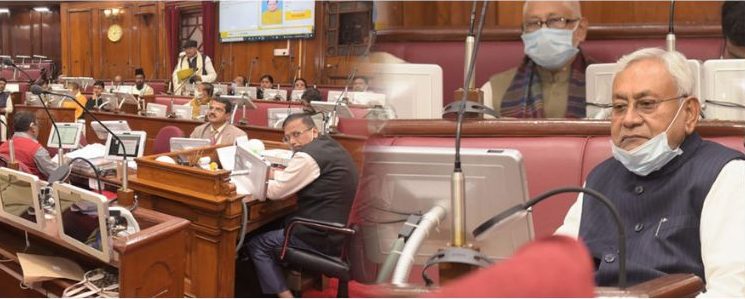
The National e-Vidhan Application (NeVA) project has made significant progress in advancing the digital transformation of India’s legislative institutions. According to the Government, 33 out of the 37 State and Union Territory Legislatures have signed Memoranda of Understanding (MoUs) for the implementation of the National e-Vidhan Application. Of these, 21 Legislative Houses have already completed their transition into fully digital Legislatures under the NeVA project.
The National e-Vidhan Application is designed to modernise legislative functioning by digitising the conduct of legislative business and providing a secure digital platform for State and Union Territory Legislatures. The initiative seeks to improve efficiency, accessibility and transparency by replacing paper-based processes with a comprehensive electronic system.
The 21 Legislative Houses that have successfully transitioned into Digital Houses under the NeVA project include the Punjab Legislative Assembly, Odisha Legislative Assembly, Bihar Legislative Assembly, Bihar Legislative Council, Nagaland Legislative Assembly, Manipur Legislative Assembly, Tamil Nadu Legislative Assembly, Sikkim Legislative Assembly, Tripura Legislative Assembly, Haryana Legislative Assembly, Meghalaya Legislative Assembly, Mizoram Legislative Assembly, Uttar Pradesh Legislative Assembly, Uttar Pradesh Legislative Council, Gujarat Legislative Assembly, Puducherry Legislative Assembly, Himachal Pradesh Legislative Assembly, Uttarakhand Legislative Assembly, Assam Legislative Assembly, Rajasthan Legislative Assembly and the Delhi Legislative Assembly.
To support this digital transformation, the Central Government has provided financial assistance to the participating Legislative Houses. A total of ₹138.17 crore has been disbursed to these Legislatures to facilitate the implementation of the NeVA project and enable their transition to digital legislative operations.
The NeVA platform is intended to provide a unified digital ecosystem for legislative business. It enables Legislatures to manage various parliamentary and assembly functions electronically, helping reduce dependence on physical documents while streamlining administrative and legislative processes. The adoption of digital systems is expected to improve operational efficiency and make legislative proceedings more accessible.
An important feature of the NeVA platform is its multilingual capability. The public portals developed under the project are equipped with AI-driven multilingual translation tools developed by BHASHINI. These tools enable legislative content to be translated into all 22 Scheduled Indian Languages as well as English, making legislative information more accessible to people across different linguistic backgrounds.
The multilingual translation capability supports greater inclusivity by allowing legislative content to be available in multiple languages. This feature helps improve public access to legislative information while enabling wider participation and understanding of legislative proceedings across the country.
Along with digitisation and language accessibility, considerable emphasis has been placed on ensuring the security and reliability of the NeVA platform. Several safeguards have been incorporated into the software suite to provide State and Union Territory Legislatures with a secure and resilient digital environment for conducting legislative business.
The NeVA software is hosted on the National Informatics Centre’s secure Meghraj 2.0 cloud infrastructure. Hosting the application on this government cloud platform provides a secure technological foundation for storing legislative data and managing digital legislative operations.
To strengthen business continuity, a dedicated Disaster Recovery site has also been established. This facility is designed to ensure reliable recovery of legislative data in the event of an adverse incident, helping maintain uninterrupted digital services and protecting critical information.
The Government has also incorporated regular security audits as part of the NeVA implementation framework. These periodic assessments help identify potential vulnerabilities within the software and ensure that necessary corrective measures are taken to strengthen the platform’s security.
In addition, the NeVA software employs two-factor authentication for user logins. This security feature restricts access to authorised users only and helps prevent unauthorised access or misuse of sensitive legislative workflows. The use of multi-layer authentication enhances the overall security of the digital legislative environment and safeguards confidential legislative information.
Through these technological, linguistic and security features, the National e-Vidhan Application aims to provide State and Union Territory Legislatures with a modern digital platform capable of supporting efficient, secure and transparent legislative functioning. The continued implementation of the project reflects the Government’s efforts to promote digital governance within legislative institutions across the country.
This information was provided by the Minister of State (Independent Charge) for Law and Justice and Minister of State for Parliamentary Affairs, Arjun Ram Meghwal, in a written reply in the Lok Sabha.
Subscribe Deshwale on YouTube


