









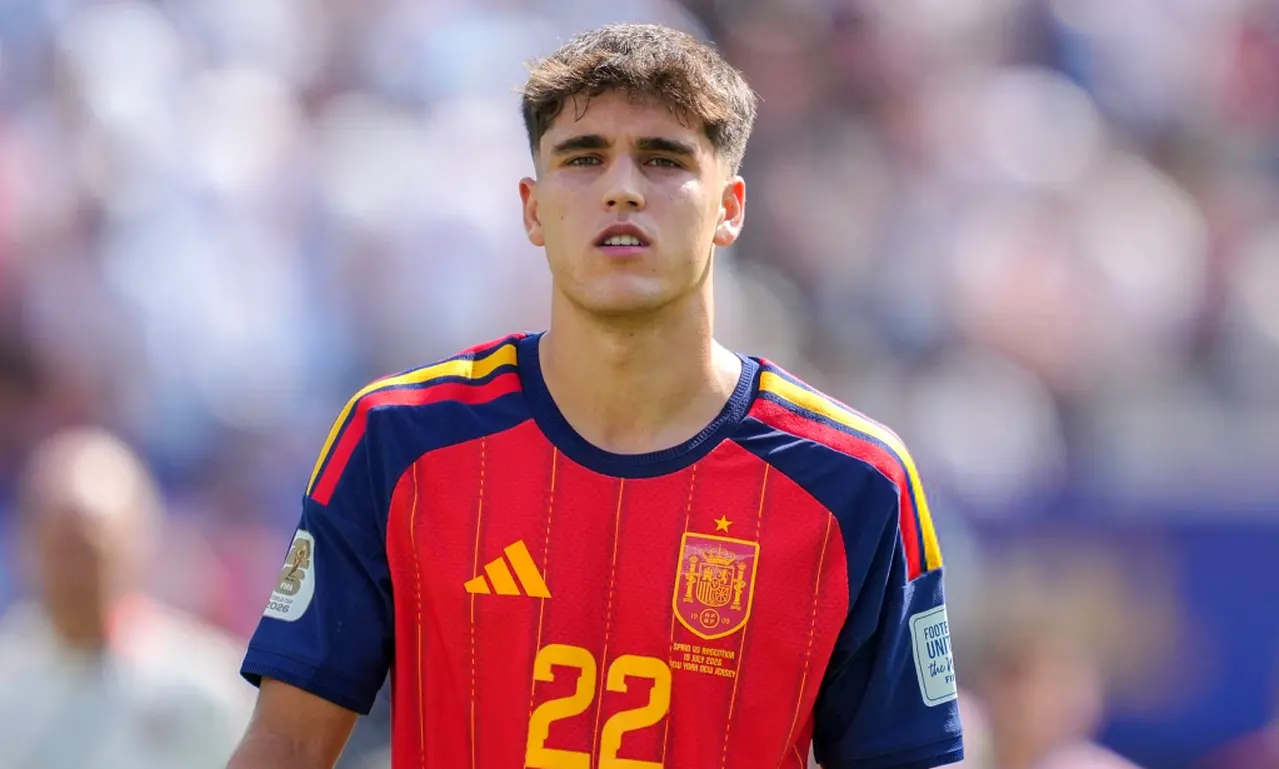
He didn’t score the winning goal or make the decisive save. He simply made sure Spain never needed either, until it mattered most
Most World Cups introduce the world to a striker or a winger, someone whose highlight reel writes itself. Occasionally, a defender rewrites the story instead. At this tournament, that was Pau Cubarsí.


At 19, the Barcelona centre-back was named the FIFA Young Player of the Tournament, an award that has previously gone to Pelé, Kylian Mbappé and Enzo Fernández. The number behind it is the real headline: across eight matches, Spain conceded just once, in a 2-1 quarter-final win over Belgium, with Cubarsí marshalling the defence throughout, including the final against Argentina. Seven clean sheets in eight games, at 19, on football’s biggest stage. His story is worth telling properly.
A Girona upbringing, a La Masia education
Cubarsí was born on 22 January 2007 in Estanyol, a tiny village in Girona, and joined Barcelona’s famed La Masia academy as a boy. Coaches there remember a child who, unusually, played with his head up, reading the game rather than simply chasing the ball. That habit never left him.
La Masia has produced Xavi, Iniesta, Busquets, Piqué and Messi, and its emphasis has always been less about physical dominance than about understanding space and making the correct decision under pressure. Xavi himself, who gave Cubarsí his Barcelona debut as a 16-year-old, has called him a player who “always chooses the best option” when the opposition presses.
Reading the game rather than reacting to it
Modern centre-backs are asked to do far more than defend. They must break opposition pressing, carry the ball forward and start attacks. and Cubarsí has built his reputation on doing exactly that. He intercepts passes before attackers can turn, which means the last-ditch, sliding-tackle heroics rarely become necessary in the first place. That, more than any single tackle, is the mark of an elite defender: preventing danger before it develops.
His distribution matters just as much. At this World Cup, no player completed more through-balls, and only his own teammates Rodri and Aymeric Laporte, his central-defensive partner throughout the tournament, made more passes than he did.
A résumé beyond his years
Breaking into Barcelona’s first team young is hard enough; Cubarsí has done it while collecting two La Liga titles, two Supercopas, a Copa del Rey and, with Spain’s under-23s, Olympic gold in 2024. He is now, at 19, a senior World Cup winner too, Spain’s second, and their first since 2010.
None of it seems to have unsettled him. Under relentless pressing, against forwards far more experienced than him, his first touch stays controlled and his passing stays confident. That composure, as much as his reading of the game, is why coaches have trusted him this early.
Cubarsí’s rise is a reminder that great defending is built on coaching, positioning and decision-making, taught early, rather than on size or aggression alone. Spain’s academies have invested in exactly that for decades, and it shows.
19 is remarkably young for a centre-back; most reach their peak well into their late twenties, which suggests Cubarsí’s finest years are still ahead. Expectations, and the scrutiny that comes with a World Cup medal, will only grow from here. On this evidence, he already looks equipped for it, a defender whose gift is making the hardest job on a football pitch look almost simple.
A boy has risen and how!
(Featured image courtesy: Fabrizio Romano on X @FabrizioRomano)


