









A Damascus court has finally put a number on what the Assad family did to its own country. It took two men, five decades, and roughly half a million lives to get there.
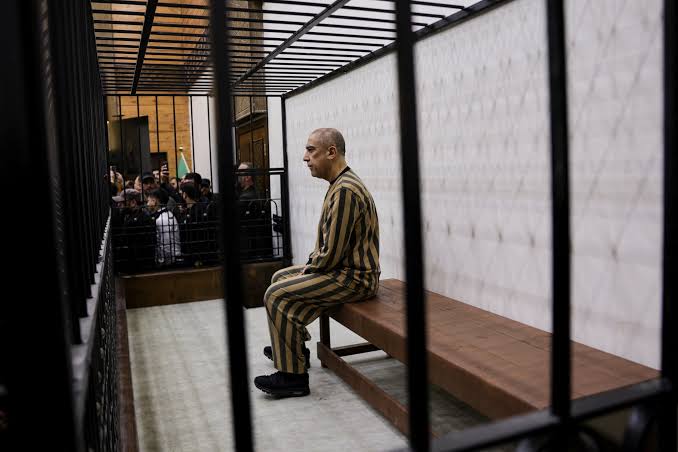
On Tuesday, a courtroom in Damascus did something that would have been unthinkable in Syria for most of the last fifty years: it put Bashar al-Assad’s name on a guilty verdict and read it aloud on state television.
The Fourth Criminal Court sentenced the former president, in absentia, to death for premeditated murder, torture and crimes against humanity, alongside his brother Maher al-Assad once commander of the army’s feared 4th Armoured Division and his cousin Atef Najib, the security chief whose crackdown on teenage protesters in Daraa in March 2011 is widely regarded as the spark that lit Syria’s civil war.
“Bashar Assad used state agencies to commit war crimes and crimes against humanity,” the presiding judge said, addressing a case built around fourteen years of conflict that left roughly half a million people dead.
Both Assad brothers are safely in Russia and will never serve a day of the sentence. That fact alone tells you almost everything about how impunity actually works for men who run states rather than gangs but the verdict still matters, because it is the first formal, judicial reckoning with a family that ruled Syria, largely through fear, for fifty-four consecutive years.
Understanding why this sentence landed the way it did, and why it took so long, means going back considerably further than the war that finally ended the Assads’ rule.
A father’s warning, written in a city’s ashes
Bashar al-Assad did not invent the machinery he eventually used against his own people. He inherited it, fully built, from his father.
Hafez al-Assad, an Air Force officer from the minority Alawite sect, seized power in a 1970 coup and ruled Syria for the next three decades with a mix of genuine modernization and total intolerance for dissent.
The clearest, bloodiest demonstration of what that intolerance meant came in February 1982, in the city of Hama, where the Muslim Brotherhood had built a base of armed opposition to his Ba’athist government. Hafez’s response was to seal the city cutting water, electricity and communications and send in tens of thousands of troops under the command of his own brother, Rifaat al-Assad, who would earn the nickname “the Butcher of Hama” and later boast openly about the death toll.
For 27 days, Syrian forces shelled the old city until large sections of it were flattened, then sent soldiers door to door to finish the job. Estimates of the dead range from 20,000 to 40,000 people, in what one former U.S. diplomat called the single deadliest act by any Arab government against its own citizens in the modern history of the Middle East.
Survivors described bodies left in the streets for dogs, and men whose fingers were severed by security forces and nailed to the walls of a mosque as a warning that stayed in place for two years, because no one dared touch it.
For the following forty years, Syrians simply did not speak of Hama above a whisper. A common refrain under both Assads became a kind of national reflex: the walls have ears. That silence was, in itself, the whole point of the massacre not merely to crush an uprising, but to demonstrate, permanently, what the price of a future uprising would be.
The son who was supposed to be different
When Hafez died in 2000 and power passed to his son, Bashar a British-trained ophthalmologist who had been living a comparatively quiet life in London before his older brother’s death in a car crash made him the heir apparent there was a brief, genuine flicker of hope inside Syria, remembered today as the “Damascus Spring.” Intellectuals and reformers spoke openly for the first time in a generation.
It lasted only months. By the autumn of 2001, the new president’s security services had crushed the movement: prisons that had briefly emptied filled back up with political detainees, journalists and activists, and the boundaries his father had drawn decades earlier were firmly reasserted. Whatever version of Bashar al-Assad might once have existed independent of the family machine, it did not survive contact with the machine itself.
A decade later, in March 2011, that machine turned on children. In Daraa, in Syria’s south, a group of teenagers scrawled anti-government graffiti on a school wall, echoing slogans then sweeping through the Arab Spring uprisings in Tunisia and Egypt. Atef Najib the same cousin sentenced to death this week ran the local political security branch, and his response was to arrest and torture them.
When their families and neighbours took to the streets in protest, his forces opened fire. What followed metastasized, within months, from local unrest into a nationwide uprising, and then into one of the deadliest civil wars of the twenty-first century.
Fourteen years, half a million dead, and a photographer who chose to remember
The precise death toll of Syria’s civil war will likely never be fully settled, but monitoring groups place it at roughly half a million people, including tens of thousands of children a majority of them, by most independent estimates, killed by forces loyal to the government rather than by any of the opposition or extremist groups fighting against it.
Two pieces of evidence, more than any other, came to define what the world knows about how the Assad state actually treated its own citizens in custody. The first is a set of some 55,000 photographs, smuggled out of Syria by a military police photographer known only by the codename “Caesar,” documenting roughly 11,000 detainees who died from torture, starvation or execution inside government detention facilities. The second is Saydnaya military prison outside Damascus, which Amnesty International documented as the site of systematic mass hangings a facility so associated with industrialized death that survivors and human rights investigators came to describe it simply as a slaughterhouse.
Then there were the chemical weapons. In August 2013, a sarin gas attack on the Ghouta suburbs of Damascus killed an estimated 1,400 people later confirmed as a sarin attack by international chemical weapons inspectors in what became one of the deadliest uses of chemical weapons anywhere in the world since Saddam Hussein’s campaign against Iraqi Kurds in the 1980s.
Five years later, in April 2018, a further chemical attack on Douma, the last rebel-held town in Eastern Ghouta, killed dozens more, with victims found in basements foaming at the mouth. Beyond the chemical attacks, Syrian monitoring groups documented more than 80,000 barrel bombs crude, indiscriminate explosives packed with shrapnel and dropped from helicopters onto civilian neighbourhoods over the course of the war, a weapon whose entire design logic is that it cannot distinguish a fighter from a child.
Some individual pieces of this machine did face justice long before Tuesday’s verdict just never inside Syria itself. German courts, invoking the principle of universal jurisdiction, convicted a former Assad secret police officer in 2021, sentenced a senior Syrian intelligence official to life imprisonment in 2022, and convicted a Syrian doctor of torturing patients inside military hospitals in 2025, with the presiding judge in that final case describing the verdict as underscoring “the brutality of Assad’s dictatorial, unjust regime.” For most of the war, foreign courtrooms were the only venue in which any part of this record could be formally judged at all.
The fall, and the reckoning that followed
The end, when it finally came, arrived with startling speed after a war that had ground on, in various forms, for over a decade. In late November 2024, a coalition led by Hayat Tahrir al-Sham an Islamist group that had governed pockets of northwestern Syria for years and was, until mid-2025, still designated a terrorist organization by the United States launched a rapid offensive that swept through Aleppo, Hama and Homs in a matter of days.
On December 8, 2024, opposition forces entered Damascus. Bashar al-Assad fled to Russia, where he remains, and where he was formally granted asylum. Fifty-four years of Assad family rule ended not in negotiation, but in collapse.
What followed has been a genuinely fragile transition. HTS leader Ahmed al-Sharaa, a former al-Qaeda-affiliated fighter turned self-styled statesman, was named interim president and has since overseen a new constitutional declaration and a transitional government intended to govern for roughly five years before elections.
Syria today remains a country of profound humanitarian need tens of millions still require aid, millions remain displaced or refugees in neighbouring states and of unresolved sectarian and political tension between the new Islamist-led government, Kurdish forces in the northeast, and remnants of Alawite and other minority communities who fear what majority rule under a former jihadist commander might mean for them. Whether Syria’s new government proves capable of building something more accountable than what it replaced is, as of today, genuinely an open question rather than a settled one.
But inside that uncertainty, Tuesday’s verdict marks something real: the first time any Syrian court, under any Syrian government, has formally found Bashar al-Assad guilty of anything.
For fifteen years, Syrians who lost relatives in Saydnaya, in Ghouta, in Daraa, in Douma, watched the men responsible travel freely, sit for televised interviews, and in Bashar al-Assad’s case, be received for years afterward as the internationally recognized president of Syria even as the evidence of what his state was doing to its own people piled into the tens of thousands of photographs.
A death sentence handed down in absentia to a man safely in Moscow will not, on its own, deliver anyone back to the families still searching for the names of relatives who disappeared into a detention system built specifically to make disappearance permanent. Human Rights Watch has been careful to note it opposes the death penalty even in this case, and that any real accountability will depend on whether Syria’s fragile new institutions can deliver justice that meets basic fair-trial standards going forward a genuinely open question for a transitional government still finding its footing.
What the verdict does deliver, for the first time in over half a century, is a sentence: a word, spoken by a judge in a Damascus courtroom, naming what the Assad family actually did. For a country that spent five decades being told the walls had ears and the past had no name, that alone is not nothing.
Subscribe Deshwale on YouTube


