






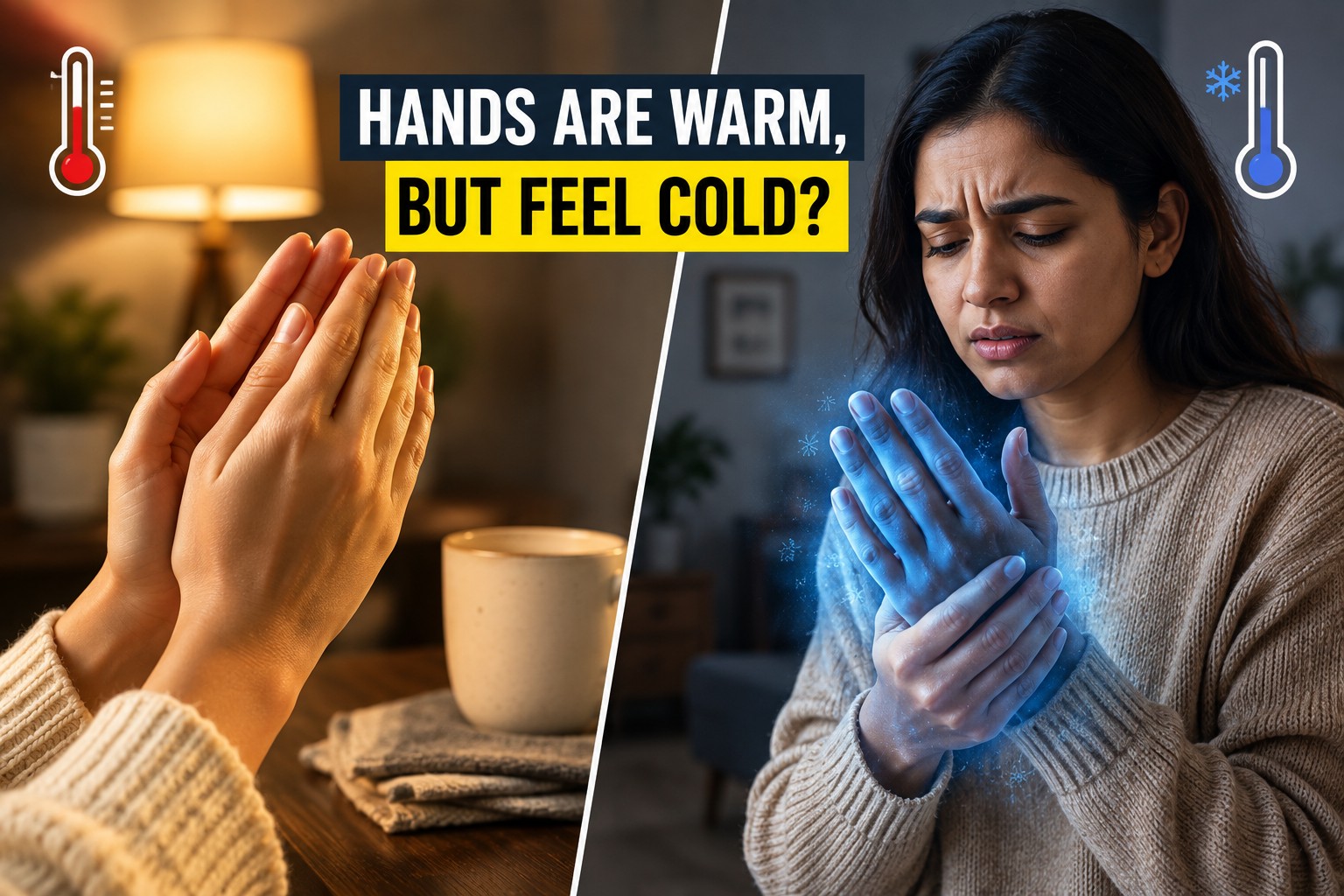
You touch your own hand. It feels warm. But somehow, it still feels like ice to you. Sounds confusing, right? It turns out your brain might be playing tricks on you, and the real reason has almost nothing to do with poor circulation, which is what most people blame first.
According to Dr Divya Gopal, additional director of internal medicine at Sir HN Reliance Foundation Hospital, cold hands and feet are rarely just about blood flow. Several everyday body processes can be behind it, and some of them have nothing to do with temperature at all.
When your nerves send false alarms
This is the part that catches most people off guard. Sometimes your hands and feet are genuinely warm to the touch, but your brain still registers them as cold.
Dr Gopal explains that irritated or damaged sensory nerves can send wrong signals straight to the brain. This miscommunication can show up as phantom chills, numbness, or a strange tingling sensation.
It is often linked to long-term high blood sugar, low vitamin B12 levels, or ongoing inflammation in the body. In other words, the coldness you feel may be a signal problem, not a temperature problem.
Stress switches on your body’s defence mode
Stress plays a bigger role in this than most people realise. When you feel anxious or nervous, your brain releases adrenaline almost instantly.
This causes the tiny blood vessels near your skin to narrow. Your body pulls warm blood away from your fingers and toes to protect vital organs like the heart and lungs.
So even if the room around you feels perfectly comfortable, ordinary daily stress can leave your hands and feet feeling icy.
A slow thyroid changes your internal heat
The thyroid gland works like the body’s built-in thermostat. When it does not produce enough hormones, your metabolism slows down.
A slower metabolism means your body generates less internal heat overall. Since your body naturally prioritises keeping core organs warm, your hands and feet are usually the first to feel the drop.
This can come along with tiredness, low energy, and unusually dry skin, so it is worth watching for these signs together.
Sudden triggers can cause blood vessels to cramp
For some people, blood vessels in the hands and feet react strongly to sudden changes. Walking into an air-conditioned room or holding a cold drink can be enough to set this off.
The tiny vessels in the fingers and toes may temporarily narrow or cramp. Fingers can turn pale or even bluish, and there can be a throbbing feeling once warmth returns.
This reaction can feel alarming in the moment, but it usually passes once the body adjusts.
Low iron levels quietly add to the problem
Iron plays a key role in carrying oxygen through the body. It also helps cells produce the energy needed to generate warmth.
When iron levels drop, cells struggle to make enough heat. This can leave a person more prone to feeling chilly, even in normal or warm conditions.
So, is it really about circulation?
Most people assume cold hands simply mean poor blood circulation. But as this breakdown shows, the real reasons are often hormonal, neurological, or nutritional rather than purely circulatory.
If cold hands and feet happen constantly, come with visible skin colour changes, or are paired with numbness, it may be worth looking beyond just wearing extra layers.
A basic check-up can help assess nutrient levels, hormone balance, and nerve health. This can point to what is actually affecting your body’s ability to stay warm.
Subscribe Deshwale on YouTube


