 Deshwale
business
Engineering After Class 10: NMIMS Offers a New Pathway from Diploma to B Tech
4 min read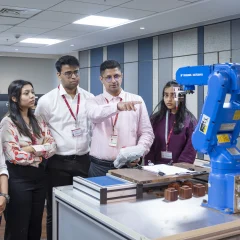

The article argues that choosing between a degree and a skill course is not a simple either-or decision, because AI is changing the job market. It cites the World Economic Forum's projection of 170 million new jobs and 92 million lost by 2030, with 59 of every 100 workers needing new or upgraded skills and 11 possibly missing that training. It advises students to combine a degree or technical qualification with practical skills, learn to work with AI, and keep learning, since neither a degree nor a certificate guarantees a job.
5 min read























India's ban on gutkha, in place since 2011 and extended by states from 2012, has not removed the product from daily life, because manufacturers sell tobacco and pan masala as separate sachets that customers mix themselves. Enforcement is the main weakness, since officers must cover thousands of small shops and each state has its own order. The article argues that a ban works only alongside strict enforcement, higher taxes, affordable quit support and targeted awareness campaigns.
India's women's hockey team finished fifth at the 2026 FIH Women's Hockey World Cup, and Hockey India rewarded them with fifty lakh rupees despite the team not winning a medal. The article presents the reward as recognition of the team's progress from its low point in 2024, when it had been relegated from the Pro League and missed the Paris Olympics. Hockey India's president Dilip Tirkey described the result as historic.
Most Indian homes are shaped by family opinion, budget, and practical concerns such as resale value and rental restrictions rather than purely personal taste. Even though about 70 percent of households are nuclear, many still make decisions jointly with parents or in-laws, and limited space and money often leave personal style to small touches like cushions, curtains, and decor corners.
Indian currency notes carry numbers, symbols and words in several scripts, reflecting the country's linguistic diversity and making the currency accessible across different regions. The denomination is written in a language panel using 15 languages apart from Hindi and English, which appear prominently on the front, and these languages are arranged in alphabetical order according to the scripts used by the Reserve Bank of India.