



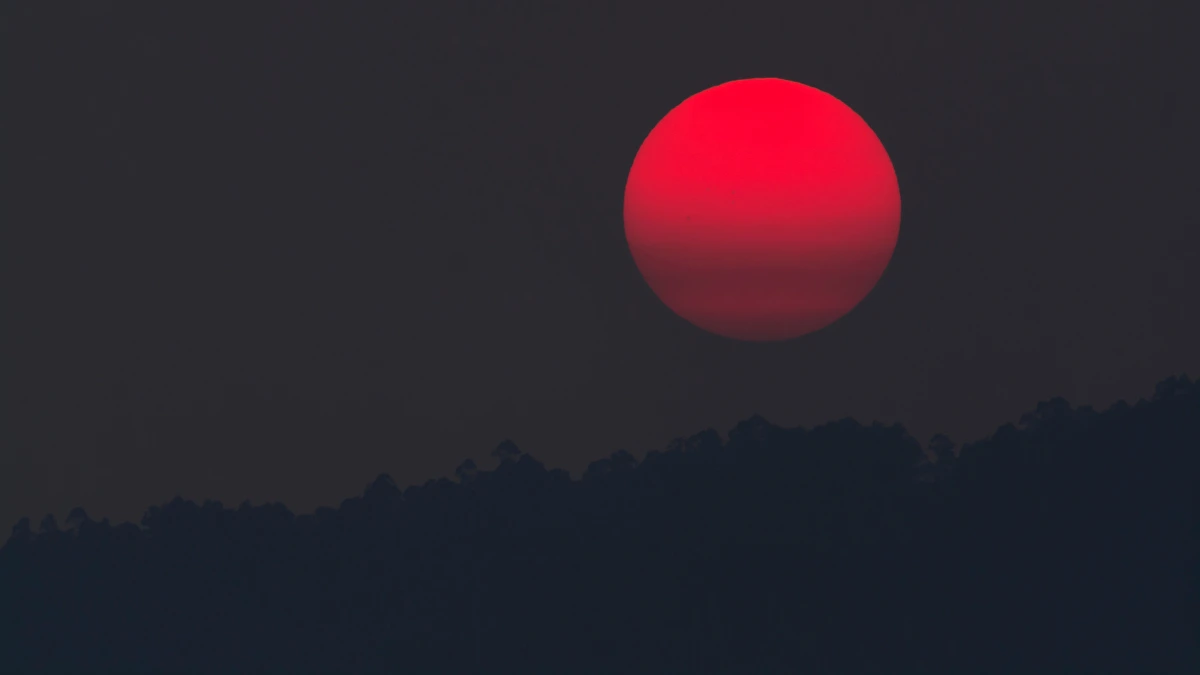
Skygazers and festival lovers are in for a rare treat as a total lunar eclipse, commonly known as a Blood Moon, will take place on March 14, 2025, coinciding with the celebrations of Holi. This celestial event will turn the Moon a deep red hue, adding an extraordinary touch to the festival of colours.
According to astronomers, the eclipse will be visible in various parts of the world, including North and South America, parts of Europe, and Asia. However, in India, only the partial phases of the eclipse will be visible, as the total eclipse will occur during daylight hours.
Timing and Visibility
The total lunar eclipse will begin at approximately 10:22 AM IST and reach its peak at 12:53 PM IST. The eclipse will conclude around 3:23 PM IST. Since the total phase will occur during the day, Indian observers may miss the dramatic red Moon effect but can witness the penumbral and partial phases in the early morning hours.
For those eager to watch the spectacle, live streams from space agencies and observatories worldwide will offer high-definition views of the Blood Moon. Many scientific organisations, including NASA, will provide coverage of the event.
What causes a Blood Moon?
A Blood Moon occurs during a total lunar eclipse when the Earth comes directly between the Sun and the Moon. Instead of going completely dark, the Moon takes on a reddish tint due to sunlight refracting through Earth’s atmosphere. The phenomenon is known as Rayleigh scattering—the same process that makes sunsets appear red.
Holi and the Eclipse: Cultural beliefs and Superstitions
The coincidence of a lunar eclipse with Holi has sparked discussions among astrologers and religious communities. In Hindu traditions, eclipses are often considered times for spiritual reflection and are associated with various rituals. Some people choose to fast or refrain from certain activities during the eclipse, while others believe it enhances the festive significance of Holi.
Many temples in India may alter their schedules due to the eclipse, and believers might avoid cooking or eating during the event, following age-old traditions. However, scientists encourage people to witness and understand the eclipse from an astronomical perspective rather than a superstitious one.
How to watch the Eclipse Safely
Unlike solar eclipses, lunar eclipses are completely safe to observe with the naked eye. No special equipment is needed, though binoculars or telescopes can enhance the viewing experience. Enthusiasts in regions where the eclipse will be fully visible should find a location with minimal light pollution for the best experience.
The next total lunar eclipse after this one will occur on September 7, 2025, making this Holi’s Blood Moon a must-watch event for those who appreciate cosmic wonders.
