




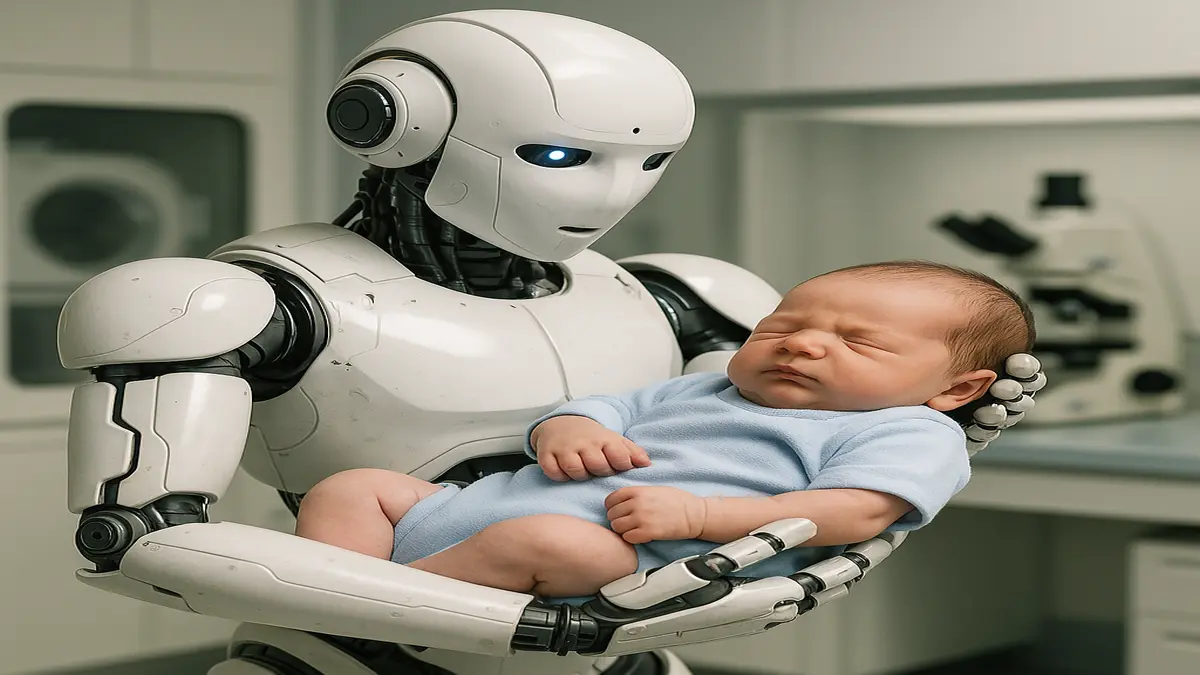
AI System Handles All 23 IVF Steps—No Human Hands Involved
A baby boy has been born using a fully automated IVF system, assisted entirely by artificial intelligence (AI)—a first in the history of human reproduction.
This AI-led breakthrough replaces the manual process of intracytoplasmic sperm injection (ICSI), where a single sperm is injected into an egg by a trained embryologist. The new system performed all 23 steps of the ICSI procedure without human hands, relying on AI and robotic control.
The milestone birth took place at Hope IVF Mexico in Guadalajara. A 40-year-old woman undergoing IVF with donor eggs became pregnant through this AI-assisted system after a previous failed attempt. Out of five eggs fertilised, four were successfully fertilised, and one healthy embryo was transferred, resulting in the birth of a healthy baby boy.
Replacing Human Hands with Machine Precision
Since the 1990s, ICSI has been a standard IVF method that requires skilled professionals to manually inject sperm into eggs. This process, however, is known for its dependence on manual dexterity, precision, and fatigue-free focus.
But now, this new AI-based system — developed by experts from Conceivable Life Sciences, based in New York and Guadalajara, and led by embryologist Dr Jacques Cohen — aims to reduce human error and improve IVF outcomes by replacing manual input with automation.
According to their findings published in Reproductive Biomedicine Online, the robotic system can perform all essential fertilisation steps through AI or remote digital control.
A Second Breakthrough in Denmark
In parallel, another milestone occurred in Copenhagen, Denmark, where a Spanish startup, OXFORD Brain, built a separate AI-IVF system. Their robot, controlled via PlayStation-style controllers by non-medical engineers, performed fertilisation steps that resulted in the birth of a healthy baby girl.
This system also marked a leap in AI-operated reproductive technology, proving that machines can now perform the delicate fertilisation process with success rates similar to human embryologists.
Why This Changes Everything
Both births—one in Mexico and one in Denmark—highlight the beginning of machine-led reproduction. These systems promise to make IVF more accessible, affordable, and consistent, especially in areas with limited medical infrastructure.
Scientists say this is a major step towards fully automated IVF. With robots handling precise biological procedures, the cost of IVF could be lowered, and its global reach expanded.
Looking Ahead: Benefits and Questions
The rise of AI-IVF comes with its own set of ethical and clinical challenges. While automation can help reduce costs and expand access, experts stress the need for strict regulations, clinical oversight, and long-term safety reviews.
Still, these births show that the future of fertility could be robotic, offering hope to countless couples struggling with infertility.
