



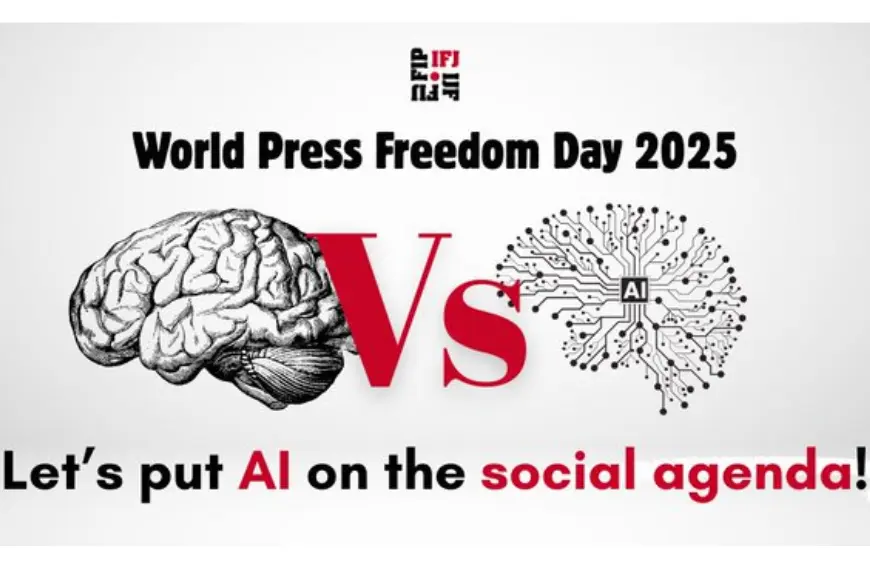
Every year on 3 May, we pause to recognise the value of press freedom, a right that many take for granted, but which remains under constant threat in various parts of the world. World Press Freedom Day is not just another date on the calendar. It’s a reminder to governments to uphold their commitment to free, independent media. But more than that, it’s a moment for journalists themselves to reflect on ethics, responsibility, and the risks they take to bring stories to the public.
This year’s theme is timely and pressing: ‘Reporting in the Brave New World – The Impact of Artificial Intelligence on Press Freedom and the Media.’
Journalism in the age of AI
Let’s be honest, AI is changing journalism fast. On one side, it’s a powerful tool. Reporters are now using AI to dig deeper into investigations, produce content faster, translate across languages, and crunch data more efficiently. Fact-checking has become quicker, and the potential to reach wider audiences has grown.
But there is a flip side. AI can also be used to spread falsehoods. Deepfake videos, automated disinformation, biased algorithms, and surveillance technologies are all real threats. When used the wrong way, these tools can silence journalists instead of supporting them.
There is also a big concern about fairness. As AI tools are used more and more to produce content, what happens to journalists who create original work? Will they still get paid fairly? Can traditional media survive if algorithms dominate the information space?
What this day really stands for
World Press Freedom Day is not just about looking at what’s new. It’s also about remembering those who have lost their lives chasing the truth. Journalists in many parts of the world are still facing violence, censorship, and threats, simply for doing their job.
The origin of this day goes back to 1993, when the United Nations General Assembly declared 3 May as World Press Freedom Day. This decision followed a call made by African journalists in the 1991 Windhoek Declaration, which laid the foundation for promoting independent and pluralistic media.
A global gathering in Brussels
This year’s official event is set to take place on 7 May in Brussels, at Bozar, where global media voices, policymakers, and civil society groups will come together. The focus will be on how to use AI wisely — to support journalism and protect democratic values rather than threaten them.
The day will also see the UNESCO/Guillermo Cano World Press Freedom Prize Ceremony, honouring those who have shown exceptional courage and commitment to press freedom.
