



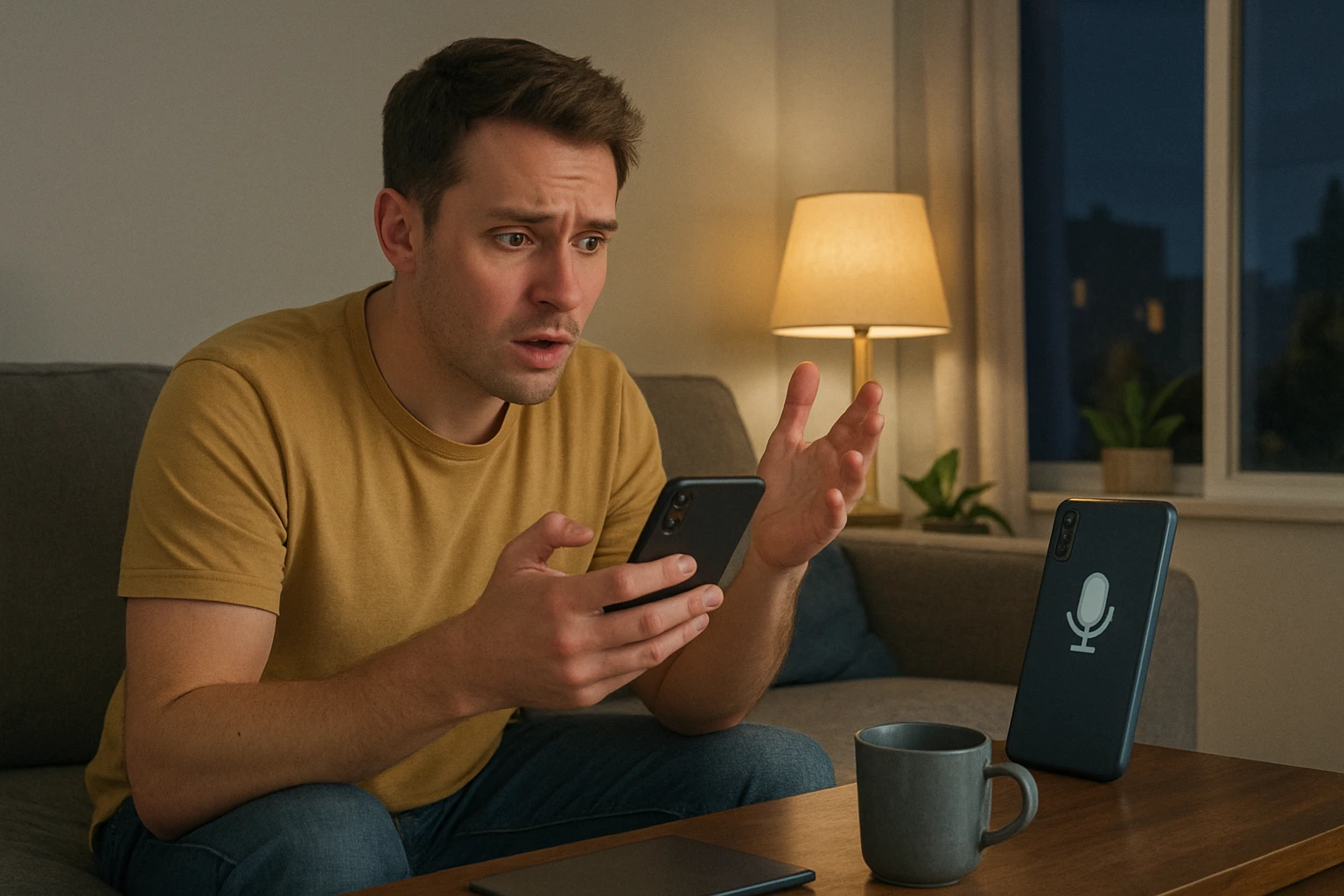
Let’s be honest. We’ve all had that strange moment where we’re chatting about something totally random like a new backpack, and suddenly, an ad pops up for that exact thing. You didn’t search for it. You didn’t type it. You just mentioned it. It’s enough to make you wonder if your phone is secretly listening to everything you say. It sounds like a proper conspiracy theory, but the truth lies somewhere between myth and tech reality.
Now, can your phone actually hear you? Technically, yes. Smartphones come with microphones and most of us have apps that need mic access, like Siri, Google Assistant or Alexa. These apps are designed to activate when they hear specific trigger words like Hey Siri or Ok Google. Once triggered, the device listens, captures a short clip of audio and sends it to a server to process your request. That’s all expected behaviour and it’s usually outlined in the app permissions and privacy policy — the stuff no one reads.
But here’s where it gets interesting. In the past, companies like Google and Facebook were found storing and even transcribing voice recordings using third-party contractors. That did actually happen. So yes, under certain circumstances, your phone has listened to you. But does that mean it’s always recording everything you say? Not quite.
If you’re wondering why you keep getting ads that seem perfectly timed or oddly specific, the answer lies more in data than in audio. Your phone tracks a lot of things — your location, search history, likes, scrolling behaviour, purchases and even how long you stare at a post. All of this data builds a digital profile of you, and it’s scarily accurate. Algorithms don’t need to hear you say hiking boots to show you an ad for them. If you’ve browsed outdoor gear, clicked on a nature reel and walked near a Decathlon, the algorithm already knows what’s on your mind.
Now, do tech companies listen without your permission? Officially, no. Apple, Google and Meta have all denied secretly recording conversations and have put systems in place to limit misuse. Your apps will typically ask for permission to use your mic. Still, bugs happen. Permissions can get overused or misused, especially by less reputable apps. That’s why it’s a good idea to check your phone settings and remove mic access for apps that don’t need it.
If the idea still gives you the creeps, there are steps you can take. Head into your settings and check which apps have microphone access. Disable voice assistants if you don’t use them. Turn off personalised ads in your privacy settings. You can even reset your ad preferences now and then. And if an app asks for mic access and doesn’t have a reason to need it, deny it.
At the end of the day, your phone isn’t sitting there recording everything you say. It doesn’t need to. With all the data it collects, it already knows enough about you to predict your next move. That’s the creepy part. But it’s not magic or spying. It’s just the result of very smart tracking systems doing what they were designed to do.
So next time you see an ad that feels way too accurate, don’t jump straight to the idea that your phone heard you whisper it. More likely, it just put two and two together using the information you’ve already given it.
