



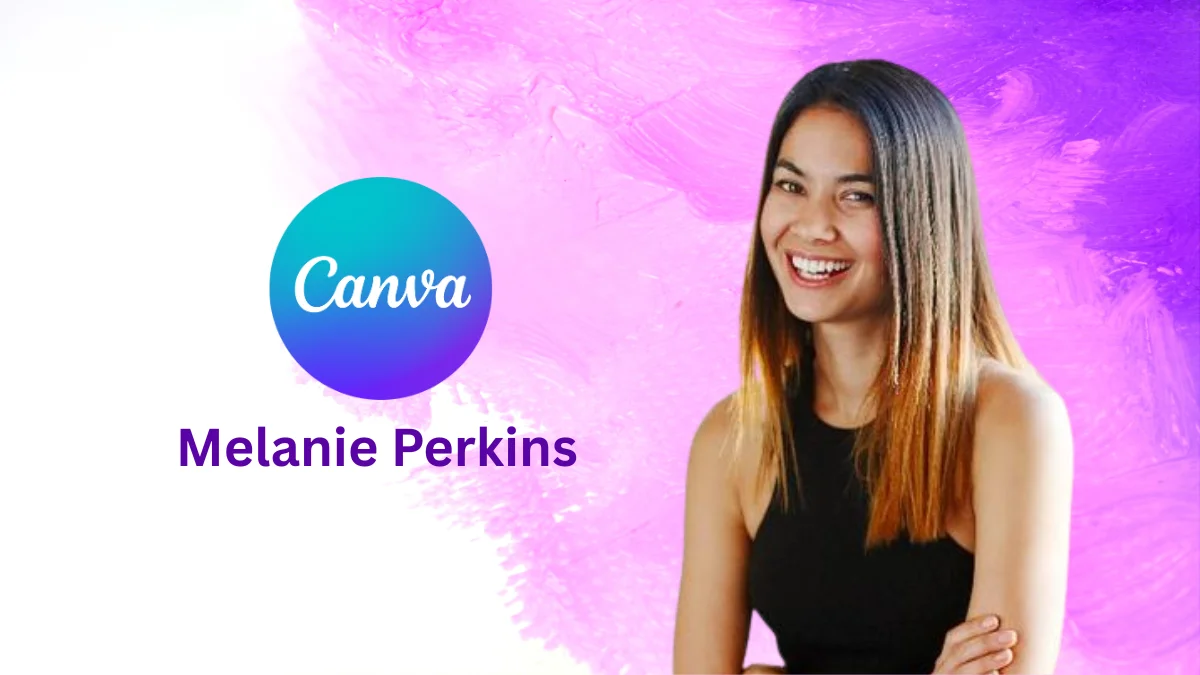
From a Living Room to a Global Brand: Melanie Perkins and Canva
Have you ever used Canva to make a quick poster or edit a presentation? It feels simple and almost fun. But have you ever wondered who made it? That simplicity was no accident. Behind Canva is Melanie Perkins, a young woman from Perth who once helped classmates struggling with complex design software. What began as a small frustration turned into one of the biggest design platforms in the world. Her journey from a living room to leading a global company is nothing short of inspiring.
A simple idea sparked by struggle
At 19, Melanie noticed something important. While teaching design at university, she saw that students often felt overwhelmed by tools like Photoshop. Even the simplest tasks took too long to learn. She believed that design should be easy and accessible to everyone.
So, instead of waiting for someone else to fix the problem, she took action.
From yearbooks to a bold new vision
Melanie’s first step came with Fusion Books. Launched from her mother’s living room, the online tool helped students design school yearbooks. It was simple to use and didn’t need any special software. Soon, it became popular across Australia and even expanded to New Zealand and France.
However, Melanie had a bigger dream. She imagined a global platform where anyone could design anything, no matter their skills.
Hard rejections, firm resolve
With Cliff Obrecht, her co-founder and partner, Melanie began pitching the idea. But more than 100 investors turned them down. Many said no. Some didn’t understand the vision.
Still, they kept going.
Their persistence finally paid off when they met Cameron Adams, a former Google engineer. He believed in their idea and joined them as a third co-founder.
In 2013, Canva was launched.
Why Canva stood out
From day one, Canva felt different. Unlike other design tools, it wasn’t made for experts. It was built for everyone — students, teachers, marketers, business owners and more.
Users could simply drag and drop elements, use pre-made templates, and create professional designs without any training. The platform worked online, so there was nothing to install. It was fast, collaborative and flexible.
Most importantly, it was free — with paid options for those who needed extra features.
Canva’s rapid rise
Today, Canva operates in over 190 countries and supports more than 100 languages. It serves over 135 million active users each month. Big companies like Zoom, Salesforce and PayPal use it regularly.
The business model is clever. Basic features are free. But users can upgrade to Canva Pro or Canva for Teams for advanced tools like brand kits, premium templates, and workflow support. Canva also offers free access to schools and non-profits, helping those who need it the most.
By 2021, Canva reached a valuation of more than 40 billion dollars. That made it one of the most valuable private tech companies in the world.
More than just a company
Melanie didn’t just build a product. She built a movement.
Canva promotes an inclusive work culture. It also gives back to society through the Canva Foundation, which holds a large share of the company’s equity for charitable causes.
Canva’s mission continues to grow. Today, it offers tools for visual communication — from documents and videos to websites and whiteboards. It’s no longer just a design tool. It’s a full creative platform.
What her story tells us
Melanie Perkins didn’t have millions of dollars or a background in tech. But she had a clear idea and the will to chase it.
She turned a simple frustration into a powerful solution. Canva didn’t just happen. It was built, tested, rejected, and rebuilt – again and again, until it worked.
Her story proves that innovation doesn’t need perfect conditions. It only needs a real problem, a strong purpose, and someone brave enough to keep trying.
