



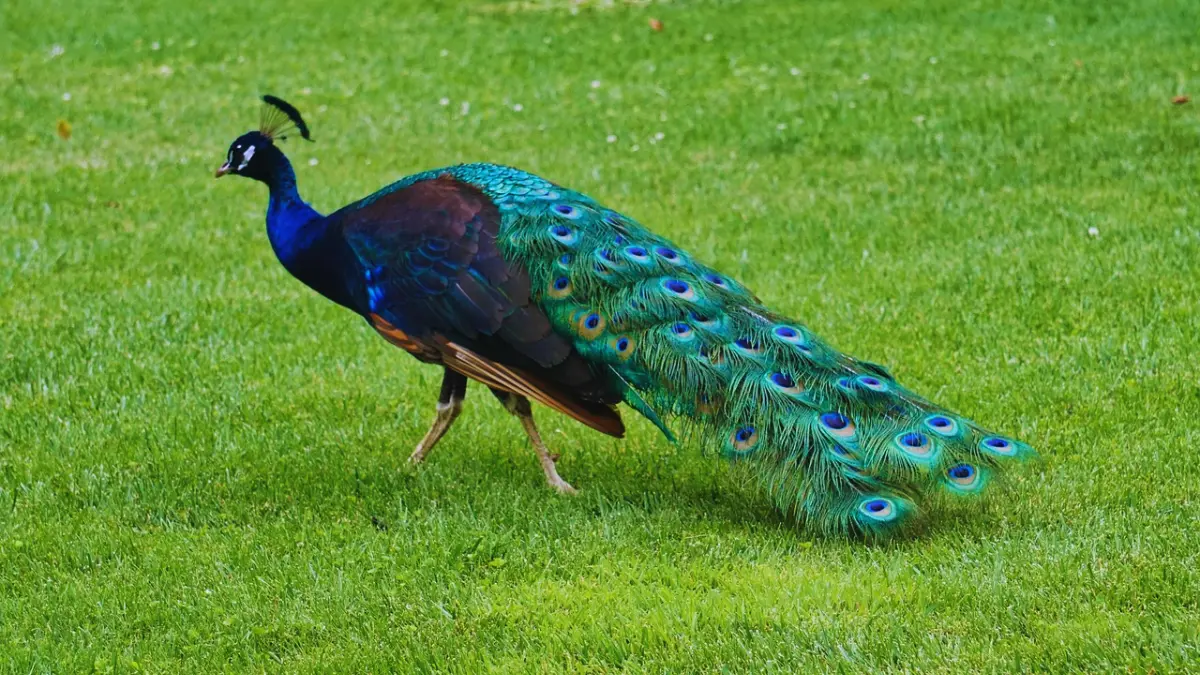
The peacock, male of the Indian peafowl, is among the most dazzling creatures on Earth. With radiant feathers, thunderous cries, and mesmerising dance moves, it is built for drama. But behind the beauty lies a deeper story of survival, courtship, and evolution.
Not Just a Tail
What most call a tail is actually a train. This train is made of upper tail feathers that extend far beyond the body. It stretches over 1.5 metres and forms a glowing semicircle when fanned out.
The shimmer is not due to pigment but to structural colouration. Tiny crystal-like structures bend light into vibrant shades of blue, green, and bronze.
A Dance to Impress
Peacocks perform in loose groups called leks, where males compete for female attention. They rustle their trains, step rhythmically, and display their brightest feathers.
Peahens often choose mates with longer trains, more eyespots, and confident moves. This is sexual selection in action, where female choice shapes male features.
The Loud Side of Beauty
Peacocks are not silent charmers. They make loud, ringing calls, especially during the Indian monsoon. These calls announce territory, warn of danger, or call to mates.
Their voices are strong enough to carry over several kilometres.
Deep Cultural Roots
Peacocks have symbolised beauty and divinity for centuries:
- In Hindu belief, they are sacred to Kartikeya and Saraswati.
- In Buddhism, they represent wisdom and openness.
- In India, the peacock is the national bird, symbolising pride.
- Ancient Greeks linked them to Hera, goddess of marriage.
From temple carvings to royal flags, their image is everywhere.
Meet the Peafowl Trio
There are three types of peafowl:
- Indian peafowl (Pavo cristatus): The most iconic, native to India.
- Green peafowl (Pavo muticus): Found in Southeast Asia, but endangered.
- Congo peafowl (Afropavo congensis): From Africa’s rainforests, less flashy but well adapted.
Each has evolved to suit its own unique habitat.
Not Just a Pretty Face
Peafowl eat seeds, fruits, insects, and small reptiles. They help spread seeds and keep pests in check. Their alertness also benefits other animals by warning of predators.
They play a key role in their ecosystem.
Under Threat
The Indian peafowl is still widespread, but the green peafowl faces serious risks. Forest loss, hunting, and human interference have shrunk its numbers.
Saving them means protecting habitats, stopping illegal trade, and spreading awareness about their importance.
As David Attenborough once said, “Peacocks are living proof that beauty can evolve purely for the sake of attraction, they are evolution’s spectacular gamble.”
