




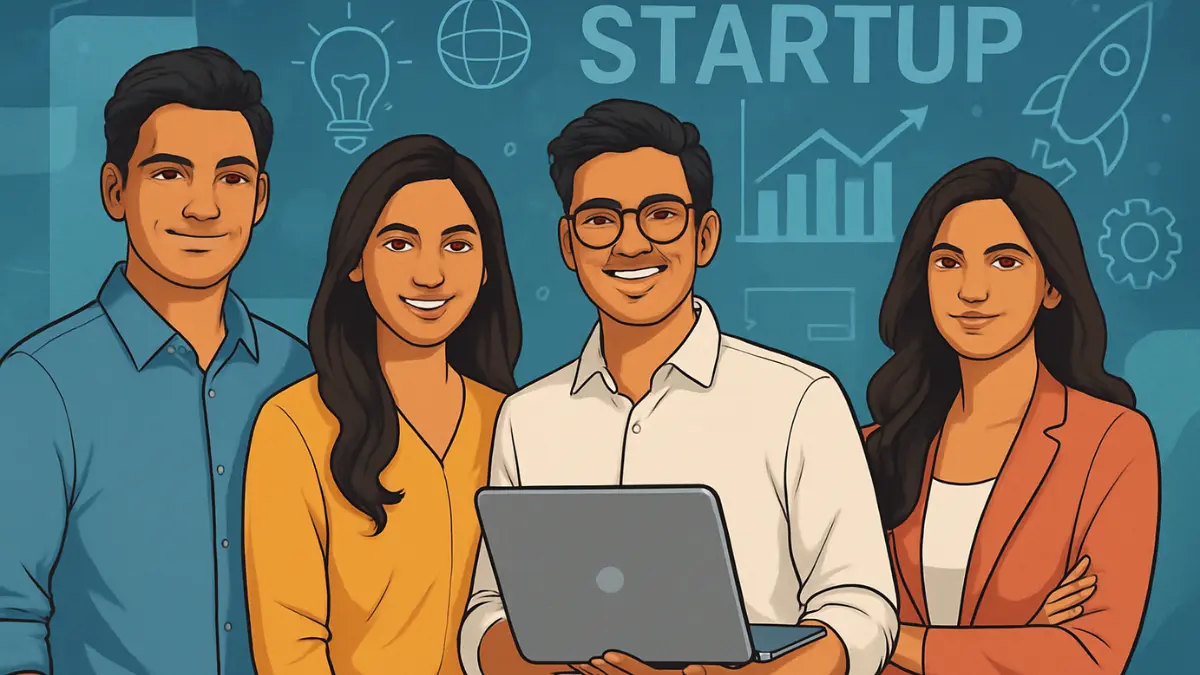
India’s startup scene is booming, but what’s remarkable is who’s leading it. Not industry veterans or business tycoons, but teenagers and twenty-somethings with laptops, big dreams, and the courage to build from scratch. These young entrepreneurs aren’t just chasing trends. They’re solving real problems, building global products, and changing the narrative about what it means to be “too young to start”.
The New Age of Entrepreneurship
A report by Avendus and Hurun India recently revealed that India’s under-30 entrepreneurs created more than 64,000 jobs and raised over 5.2 billion dollars in just one year. These numbers aren’t coming from legacy firms or Silicon Valley returnees. They’re being driven by local kids with big ideas.
Many are college dropouts. Others are still in school. But all of them share one thing in common – they didn’t wait. They launched.
Young Indians Building for the World
Here are 10 inspiring young Indian entrepreneurs who are shaping the future:
1. Kaivalya Vohra (Zepto)
At just 19, Kaivalya co-founded Zepto, India’s fastest-growing instant grocery delivery service. His idea turned into a billion-dollar startup in less than two years.
2. Aadit Palicha (Zepto)
Alongside Kaivalya, Aadit helped scale Zepto across major Indian cities. He dropped out of Stanford to chase a vision that’s now redefining urban convenience.
3. Ritesh Agarwal (OYO Rooms)
Ritesh started OYO at 17. Today, it is a global hotel chain operating in over 80 countries. He remains one of India’s most recognisable young business faces.
4. Trishneet Arora (TAC Security)
Once a school dropout, Trishneet is now a leading cybersecurity expert. His firm protects some of India’s biggest corporations and government institutions.
5. Arjun Deshpande (Generic Aadhaar)
Arjun launched a pharma startup at 16 to make affordable medicines accessible to all. Generic Aadhaar now supports over 1,500 retail partners across India.
6. Farrhad Acidwalla (Rockstah Media)
Farrhad began building online communities at 13. He soon founded Rockstah Media, which now provides branding and marketing services to clients worldwide.
7. Tilak Mehta (Papers n Parcels)
At 13, Tilak launched a courier company using Mumbai’s dabbawala network. His startup now offers app-based intra-city deliveries with thousands of active users.
8. Sreelakshmi Suresh (eDesign)
Recognised as one of the world’s youngest web designers, Sreelakshmi built her first website at age 6 and now runs her own design company.
9. Advait Thakur (Apex Infosys)
Advait started coding at 6. By 21, he was running Apex Infosys, a tech company focused on AI and digital innovation for education and healthcare.
10. Harshwardhan Zala (Aeron Systems)
Harshwardhan developed a landmine-detecting drone and signed a ₹5 crore MoU with the Gujarat government at 14. He now works in defence tech and disaster response.
Why This Boom Now?
Several forces are working together. First, technology is accessible. A smartphone and internet connection are enough to learn, test, and launch ideas. Second, there’s funding. VCs, angel investors, and even government schemes are supporting youth-led ventures. Third, the mindset has changed. Young people no longer wait to “grow up” to be taken seriously.
Schools, colleges, and incubators now promote innovation and leadership. Online learning platforms and YouTube tutorials are teaching coding, design, marketing, and more, for free. Platforms like Instagram and LinkedIn are helping these founders build brands and reach global customers overnight.
Girls in the Lead Too
Young women are stepping up with strong ideas and sharper execution. Entrepreneurs like Devika Gholap, Devanshi Kejriwal, and Radhika Ambani are working in everything from wellness and fashion to fintech and AI. They are not just participating, they are leading teams and building scalable businesses.
It’s Not All Glamour
Many of these young founders struggle with credibility. Investors question their age. Customers hesitate to trust. Friends move on to jobs while they juggle payrolls, bugs, and burnouts.
Mental health is a real issue. Founders admit to feeling isolated and overwhelmed. But they also speak of a deep sense of purpose and freedom. They aren’t working for promotions. They are building legacies.
The Bigger Picture
India’s youth is no longer just job-seeking. It’s job-creating. And this shift will define the country’s economy for decades to come. These young founders are not exceptions. They are part of a larger movement – one where ideas, not age, set the rules.
If current trends continue, India won’t just be the world’s largest democracy. It could also become its youngest startup capital.
