




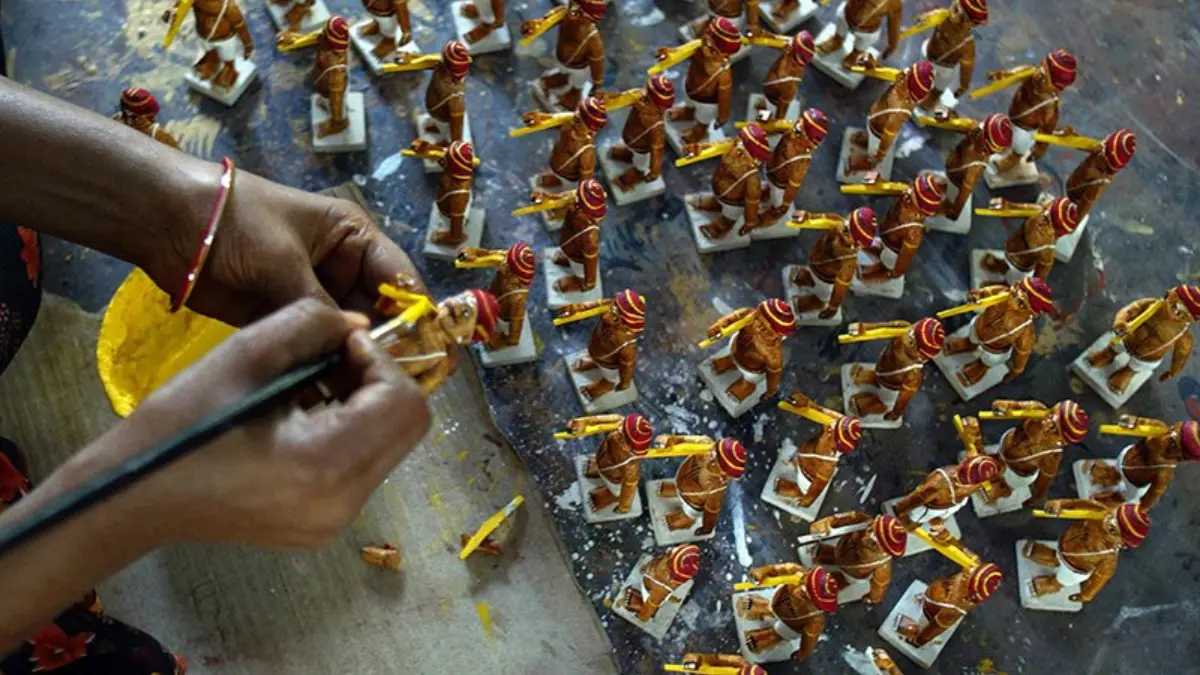
In the small town of Kondapalli, Andhra Pradesh, the sound of chisels once echoed through narrow alleys. Wooden toy-makers spent their days carving animals, dolls, and warriors from softwood. Today, many of those workshops are shut. The younger generation has moved on, and the remaining artisans are struggling to survive. Their craft is slowly slipping away, piece by piece.
This isn’t just the story of Kondapalli. All across India, traditional professions are disappearing. Weavers, potters, toy-makers, brass workers, stone sculptors, and dyers are watching their centuries-old trades fade into silence. These crafts, once the pride of India’s cultural identity, are now being replaced by machines, mass production, and modern tastes.
The Hands That Built India
India has long been known for its handmade treasures. From the delicate Banarasi weave to the bold Warli paintings, every region offered something unique. Over seven million artisans across the country still hold on to this heritage, many of them working from their homes or small workshops.
However, behind the beauty of their work lies a difficult truth. Most artisans live in poverty. They earn far less than minimum wage, lack job security, and receive little or no recognition. The traditional handloom sector, for instance, employs a large number of women and rural workers. But cheap, machine-made fabrics have taken over the market, and the original creators are being pushed out of the picture.
In places like Varanasi and Bhagalpur, weavers now drive autos or work in factories. Some continue to weave, but only during festival seasons. It is no longer a stable source of income.
Why Are Crafts Disappearing?
There are many reasons behind the decline. First, the demand for handmade goods within India has dropped. Imported plastic toys and synthetic fabrics are cheaper and widely available. People now prefer fast fashion, quick fixes, and bulk buys over slow, hand-crafted items.
Second, the younger generation is moving away from traditional trades. Long working hours, low income, and lack of respect for artisan work have pushed many to look for better-paying jobs in cities. Few want to carry on their family legacy.
Third, most artisans work informally. They do not have access to insurance, pension, or bank loans. Government support schemes exist, but many craftspeople are unaware of them or unable to navigate the bureaucracy.
Migration is another factor. Many rural artisans have moved to cities for survival, leaving behind their tools and training. The communities that supported these crafts are breaking apart.
Dying Toys and Fading Colours
Channapatna in Karnataka once thrived as a toy-making hub. Its wooden, lacquered toys were colourful, safe, and full of charm. Today, only a few families continue the tradition. Others have switched to daily-wage jobs or abandoned the skill altogether.
In Tamil Nadu, natural yarn dyeing is becoming a lost art. Only a few elderly women still know the recipe for making colours from turmeric, beetroot, and indigo. With no one to teach or learn, the knowledge risks being buried forever.
Weavers in Maheshwar, Odisha, and Kanchipuram are also losing hope. They still create beautiful sarees, but buyers are few. Online marketplaces are often too expensive for them to join. Even when they do sell, commissions take away most of the profit.
Revival Efforts Are Not Enough
There have been several government schemes to support artisans. These include the Handloom Mark, GI tagging, and financial aid for self-help groups. Some NGOs and startups are working to connect artisans to global markets. But the truth remains: these efforts are not reaching most of the people who need them.
Red tape, lack of awareness, and middlemen often block the benefits. Many artisans say they never hear from officials or receive training. Others mention that paperwork and travel costs make it impossible to access aid.
A few success stories exist. In Gujarat, some craft clusters have managed to revive local embroidery and tie-dye work. In Odisha, tribal weaves are being promoted through rural exhibitions. But these are small islands of hope in a sea of neglect.
India’s Culture, Exported But Ignored
What’s ironic is that Indian crafts are appreciated abroad. Handmade brass idols, woven carpets, and hand-carved toys find eager buyers in the US, Europe, and Japan. However, most of the money goes to exporters and brands. The original makers rarely get a fair share. Many have never even seen the places where their work ends up.
Artisans often express frustration. They are proud of their skills, but feel invisible. Festivals and exhibitions bring temporary cheer, but do not change their day-to-day struggles.
The Last of Their Kind
In a village in West Bengal, an old potter shapes clay with his bare hands. His children have moved away. He is one of the last in his area to still practice this craft. In Rajasthan, a 68-year-old woman embroiders traditional mirror work onto fabric. No one else in her family has learned it.
These aren’t isolated examples. Across India, these silent guardians of culture are growing older, with no apprentices beside them. When they are gone, entire art forms may vanish with them.
What We’re Really Losing
When a traditional profession disappears, it is not just a job that ends. A part of India’s identity fades away. These crafts carry stories, rituals, techniques, and collective memories. They link the past with the present. Their loss is our loss.
India is marching forward as a digital and economic powerhouse. But progress should not mean forgetting the hands that helped shape our culture. If these professions are not protected now, future generations may only see them in museums or textbooks.
The time to act is now. Before the last toy is made. Before the final thread is woven.
