




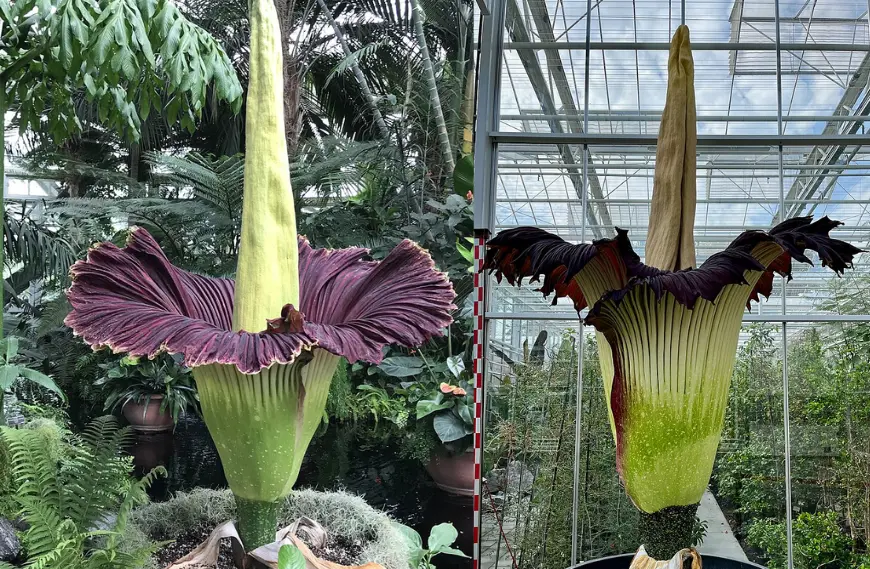
Few flowers captivate and repulse like the corpse flower (Amorphophallus titanum). With a bloom taller than a human and a stench like rotting meat, it’s one of the world’s most bizarre and rare flowering events – a spectacular reminder of evolution’s creativity.
Meet the Titan
Native to the rainforests of Sumatra, Indonesia, the corpse flower produces the world’s largest unbranched inflorescence, reaching over 3 metres tall. Its central spike (spadix) is surrounded by a frilly, maroon collar (spathe) that unfurls dramatically during blooming.
The flower’s scientific name means giant misshapen phallus, a nod to its unusual form.
The Smell of Death
When the corpse flower opens – an event lasting just 24-48 hours – it emits a powerful stench resembling decaying flesh. This scent attracts carrion beetles and flesh flies, the flower’s primary pollinators.
Chemical analyses show the corpse flower releases compounds like:
- Dimethyl disulfide (smells like garlic and rotting meat)
- Trimethylamine (rotting fish)
- Isovaleric acid (sweaty socks)
This foul bouquet travels far, luring insects from the surrounding jungle.
How It Heats Up
To spread its scent, the corpse flower warms itself up to human body temperature using thermogenesis. This heat vaporizes its smell and enhances pollinator attraction. Heating also mimics the warmth of fresh carrion – a clever evolutionary trick.
Lifecycle and Blooming Rarity
The corpse flower spends years (often 7-10) gathering energy underground as a massive tuber before blooming. Some plants wait decades between blooms. After flowering, the plant collapses and returns to dormancy.
In botanical gardens worldwide, a corpse flower bloom is a celebrated event, drawing thousands of visitors eager to see – and smell – the spectacle.
Cultural Impact
- In Indonesia, the corpse flower is called bunga bangkai, meaning corpse flower.
- Its rarity and size have earned it a cult following, with live streams of blooms attracting millions online.
- Artists and writers use the corpse flower as a symbol of paradox: something magnificent and revolting at once.
Conservation Status
Habitat loss from deforestation in Sumatra threatens corpse flower populations in the wild. Botanical gardens like the Bogor Botanical Gardens and institutions like Chicago Botanic Garden and Royal Botanic Gardens, Kew, are key to preserving the species through cultivation and education.
Why the Corpse Flower Matters
Beyond its shock value, the corpse flower exemplifies coevolution – the tight relationship between plants and their unique pollinators. Its rarity reminds us of the fragility of rainforest ecosystems and the wonder of biodiversity.
As botanist Dr James Symon said Seeing a corpse flower in bloom is like witnessing a lunar eclipse of the botanical world – a rare, fleeting, unforgettable moment.
Also Read: Turmeric: The Golden Spice Transforming Health, One Spoon at a Time
