



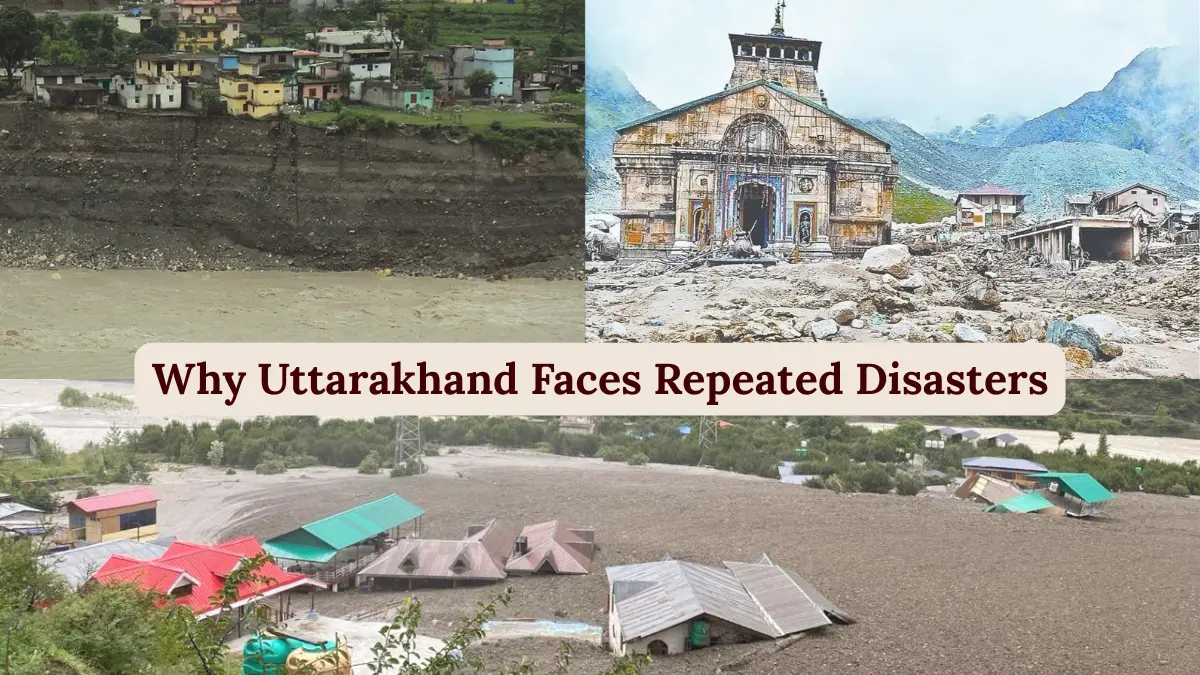
Uttarakhand is stunning, but it is fragile. Its mountains attract pilgrims and tourists, yet they also carry a growing risk. Each year, news of cloudbursts, flash floods, and landslides reminds us how exposed the state truly is.
A Land That Moves and Breathes
The Himalayas are young in geological terms. They rise and shift constantly. Large parts of Uttarakhand sit on ancient landslide debris. Experts say places like Joshimath were always on shaky ground. Cracks in walls and sinking soil are warnings of nature reclaiming its space.
The state also lies on active fault lines. Even small tremors disturb the slopes. This fragile terrain, combined with human activity, makes disaster almost inevitable.
Rainfall That Comes Too Fast
Monsoon rains here are no longer what they used to be. Climate scientists say downpours have become more intense. When warm, moist air hits the high peaks, it lifts quickly and releases sudden, heavy bursts of rain. Locals call it “cloudburst rain” because it feels as if the sky simply tears open.
In narrow valleys, these rains have nowhere to go. They sweep down with force, dragging rocks, trees, and even houses with them. Recent events in Uttarkashi showed how quickly calm rivers can turn wild and destructive.
Building More Than the Mountains Can Bear
In the rush to develop, Uttarakhand has been overbuilt. Roads, hydropower projects, hotels, and shops now stand where forests once grew. These constructions often cut into steep slopes and block natural water flow.
Joshimath is the clearest example. Experts warned years ago that tunnelling for power projects was risky. Yet it continued. When the ground began to sink and cracks split homes, it was too late. Hundreds had to leave behind everything.
Tourism Adds Pressure
The Char Dham Yatra brings lakhs of pilgrims every year. While this drives the local economy, it also strains the region. New roads and hotels rise quickly to meet demand. Hillsides are cleared, and old drainage paths are filled.
Residents say the mountains now feel crowded and restless. What once supported small villages now bears the weight of entire towns.
Disasters That Keep Returning
Uttarakhand has seen too many tragedies. The Kedarnath floods of 2013 remain etched in memory. Glacial floods in Chamoli in 2021 killed workers and wrecked dams. And now, the recent cloudburst in Uttarkashi has claimed more lives and destroyed villages.
These are not isolated incidents. Experts warn that such events will grow more frequent as the climate warms and construction continues unchecked.
What Needs to Change
Scientists and local voices agree on the same solutions. Stop unsafe construction on steep slopes. Plant trees to hold the soil. Improve early warning systems so people can leave before disaster strikes.
Above all, development must respect the limits of these mountains. Growth that ignores nature’s warning signs only invites more devastation.
Listening to the Mountains
A veteran geologist put it simply: “You cannot fight these hills. You must live with them.” Uttarakhand’s beauty hides its fragility. Unless we learn to balance progress with caution, we may see more stories like Joshimath and Uttarkashi.
