



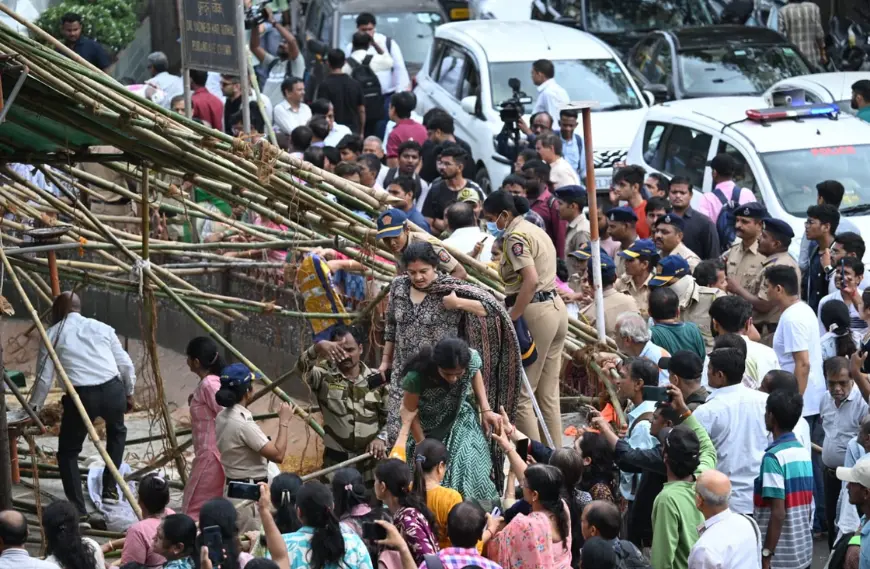
Tensions flared in Dadar as the Jain community strongly opposed the BMC’s recent move to cover the iconic Kabutarkhana, a well-known pigeon feeding site. The civic body’s action was in response to a Bombay High Court directive banning public pigeon feeding due to health and hygiene concerns.
What Happened
On August 2, BMC officials began covering the feeding zone with bamboo and plastic sheets and installed CCTV cameras to stop people from feeding pigeons. But by August 6, hundreds of Jain protestors, including women and senior citizens, gathered at the site and tore down the covers in defiance. The police were called in, but the protestors reopened the site anyway.
Why the Protest
For the Jain community, feeding pigeons isn’t just a kind gesture, it’s a sacred act rooted in their centuries-old principles of compassion and non-violence, or ahimsa. It’s a daily practice that symbolizes kindness toward all living beings. Many Jains believe that to let birds go hungry is to cause them harm, which directly violates their spiritual beliefs.
So when the BMC (Brihanmumbai Municipal Corporation) covered the Kabutarkhana at Dadar and placed restrictions on pigeon feeding, it struck a deep emotional chord. To the outside world, it may have seemed like a small civic step but to the Jain community, it felt like an attack on their way of life.
Protestors say they witnessed pigeons wandering aimlessly in search of food, some collapsing from hunger right on the roads. The sight of suffering birds left many in the community heartbroken. This, they said, wasn’t just about birds, it was about empathy, tradition, and the right to peacefully practice one’s faith.
Adding to their frustration, many questioned the scientific basis of the ban. Activists cited Right to Information (RTI) data that, according to them, doesn’t clearly prove that feeding pigeons is a serious public health hazard. They argue that vague concerns or isolated cases shouldn’t be enough to disrupt a religious practice that has never harmed others.
One protestor, Jain activist Sneha Visaria, captured the mood of the community when she said:
“Birds are dying due to starvation. How is this humanity? Where is the proof that feeding pigeons spreads disease? We follow ahimsa, and this move is against our basic values.”
Now, the community is calling on the authorities to take a more thoughtful approach, one that doesn’t ignore public health, but also doesn’t turn its back on religious values and compassionate traditions. They believe a middle ground can be found where both civic responsibility and cultural heritage can coexist with respect.
The Legal and Political Side
The Bombay High Court had earlier asked the BMC to take steps to manage pigeon feeding in public places. However, it also made it clear that heritage spots like Kabutarkhanas shouldn’t be removed or altered unless absolutely necessary. Following this, the BMC fined 142 people for feeding pigeons in public, with 61 of those fines coming from the Dadar area alone.
While the civic body may see these fines as a way to maintain order and cleanliness, many in the community feel it’s an unfair and insensitive move. People argue that punishing individuals, especially when they’re motivated by religious values, without offering any alternatives, only adds to the problem. Instead of cracking down on devotees, many believe the authorities should focus on setting up designated pigeon feeding areas. That way, public hygiene can be maintained without hurting long-standing traditions.
Even state leaders have recognized the need for a more balanced solution. Chief Minister Devendra Fadnavis has spoken about finding a middle path, possibly by creating controlled zones where feeding can be done safely. Minister Mangal Prabha Lodha suggested potential locations like BKC and Aarey Colony for this purpose. Meanwhile, Aaditya Thackeray criticized the way the issue has been handled so far and called for a more compassionate and respectful approach.
This situation has sparked a wider conversation across Mumbai: Where should we draw the line between faith and public health? Between tradition and modern civic rules? The answer isn’t easy, but many are now watching to see if the government can find a solution that honors both the court’s orders and the city’s diverse cultural values.
