



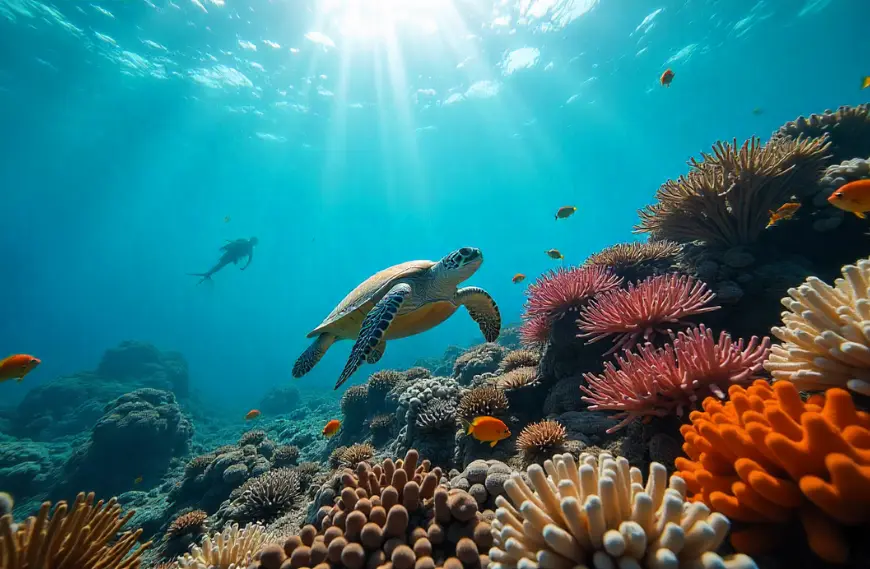
Crisp reef crest. A riot of colour. Branching staghorn, bulbous brain coral, delicate fans. Coral reefs are underwater cities, home to a quarter of all marine species. They rise from sunlit shallows. They teem with fish, molluscs and crustaceans. They buffer coasts from storm waves. They feed millions. Yet these cities face threats, from bleaching to human impacts. Let us explore how reefs are built, why they bleach and how we strive to restore them.
The Architects: Coral Polyps and Their Algae
At the heart of every reef is the coral polyp. These tiny animals, related to sea anemones, secrete limestone (calcium carbonate) to build hard skeletons. Over generations, these skeletons accumulate, forming vast reef structures.
Inside each polyp lives zooxanthellae, symbiotic algae. They photosynthesise and share sugars with the coral. In return, the coral provides nutrients and shelter. This partnership drives reef growth, with some species reaching up to 10 centimetres per year under optimal conditions.
Reef Construction and Diversity
Reefs flourish in warm, clear, shallow waters, typically between 18 and 29 degrees Celsius, and no deeper than 30 metres where sunlight still penetrates. The Great Barrier Reef, stretching 2,300 kilometres off Australia, is the largest living structure on Earth.
Reefs vary in form:
- Fringing reefs grow close to shore.
- Barrier reefs are separated from land by a lagoon.
- Atolls are ring-shaped reefs around submerged islands.
Each supports unique communities. Parrotfish graze algae from corals, preventing overgrowth. Cleaner wrasse set up stations where larger fish queue to have parasites removed. Sponges filter water. Sea cucumbers recycle sediment. Reefs are complex ecosystems of cooperation and competition.
The Bleaching Crisis
Bleaching occurs when corals expel their zooxanthellae, turning white. Without algae, corals starve. Bleaching is triggered by stress, most commonly elevated sea temperatures. A sustained rise of just one degree Celsius above normal can initiate bleaching within weeks.
Since the 1980s, mass bleaching events have increased in frequency and severity.
- In 1998, global bleaching affected 16 percent of reefs.
- In 2016 and 2017, the Great Barrier Reef suffered back-to-back bleaching. Nearly half its corals bleached in 2016, and 25 percent died.
Other stressors worsen bleaching. Pollution from land runoff carries nutrients and sediments, feeding algae that block sunlight. Overfishing removes key grazers like parrotfish, allowing seaweed to overgrow corals. Ocean acidification, driven by rising carbon dioxide, reduces corals’ ability to calcify and weakens skeletons.
Restoring Reef Kingdoms
Conserving reefs demands both mitigation and active restoration. Strategies include:
- Marine Protected Areas (MPAs)
Zones where fishing and development are restricted. MPAs around Palau and the Phoenix Islands have shown higher coral cover and fish biomass. - Coral Gardening
Divers collect small coral fragments from healthy colonies. They grow them on underwater nurseries such as rope frames or PVC structures. Once mature, they are transplanted onto degraded reef areas. - Selective Breeding and Assisted Evolution
Scientists identify heat-tolerant coral strains and breed them in nurseries. Their offspring are planted on vulnerable reefs to spread resilience. - Substrate Enhancement
Structures like limestone biorock frames encourage natural coral settlement. Electrically charged metal frames are believed to accelerate calcification, encouraging larvae to attach. - Algal Management
Protecting herbivorous fish such as parrotfish and surgeonfish helps keep algal growth in check.
Community Engagement and Traditional Knowledge
Local communities play a pivotal role. In Fiji, villages practise tabu, temporary fishing closures on reef sections, allowing recovery. In Indonesia, customary marine tenure involves locally managed marine areas that blend traditional rules with modern conservation.
Education programmes teach tourism operators, fishers and schoolchildren about reef ecology. Reef-safe sunscreen campaigns encourage products without harmful chemicals like oxybenzone.
The Promise of Technology
Emerging tools aid restoration.
- Drones and satellites monitor reef health, bleaching hot spots and sediment plumes in near real-time.
- 3D printing produces custom-designed reef modules that mimic natural structures, offering homes for fish and coral larvae.
- Genetic tools such as CRISPR and microbiome engineering explore ways to enhance coral stress tolerance, though these raise ethical and ecological questions.
Why Reefs Matter
Reefs provide ecosystem services estimated at tens of billions of dollars annually.
- Fisheries: Billions rely on reef fish for protein and livelihood.
- Tourism: Diving and snorkelling generate income for coastal economies.
- Coastal protection: Reefs reduce erosion and shield settlements from storms.
- Medicine: Marine organisms yield novel compounds including anticancer agents, antibiotics and anti-inflammatory molecules.
A Call to Action
Reefs will not recover without global climate action. Reducing greenhouse gas emissions to limit warming to 1.5 degrees Celsius is critical. Locally, we must curb pollution, regulate fishing and support community-led conservation.
Every snorkel trip and dinner plate carries choices. Sustainable seafood guides help consumers avoid damaging practices. Reef tourism operators can adopt best-practice codes, reducing anchoring damage, managing waste and educating guests.
The story of coral cities is one of creation and fragility. Of ancient architects building living monuments. Of modern threats bleaching their towers. Of human hands striving to rebuild what was lost. With science, stewardship and collective will, we can ensure these underwater kingdoms continue to thrive for generations to come.
