




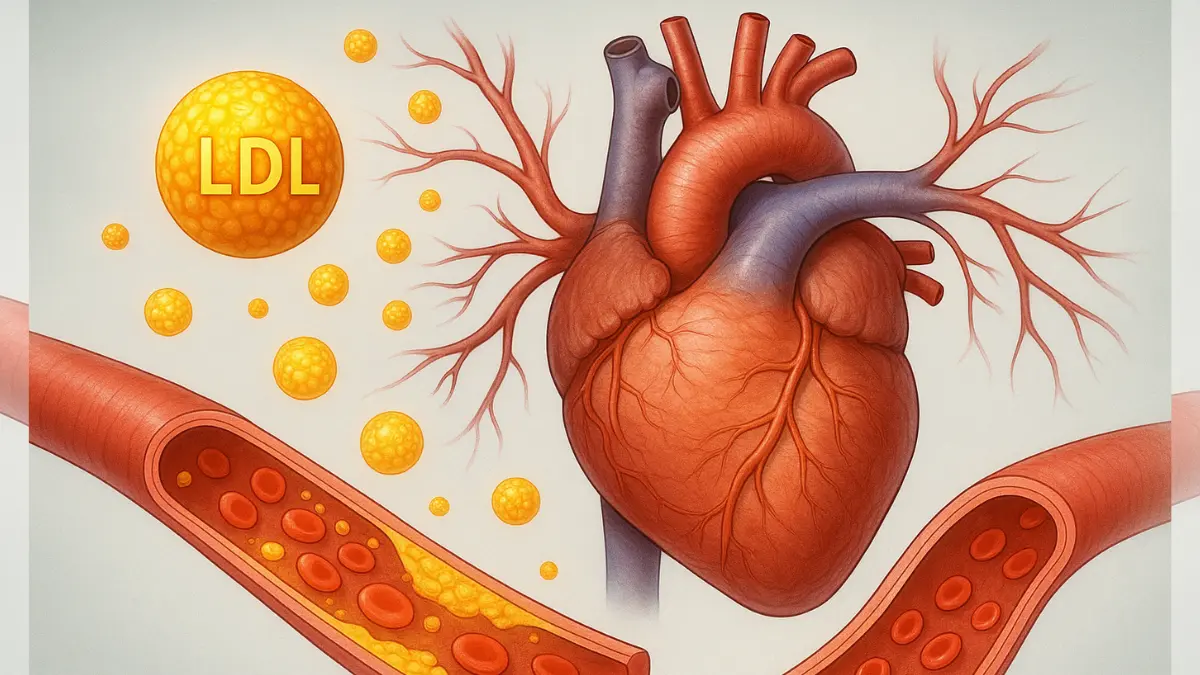
LDL cholesterol, often called bad cholesterol, is one of the leading risks for heart disease. When it rises, it forms plaques in the arteries. These block blood flow and can cause heart attacks or strokes. Unlike age or genetics, LDL can be managed and controlled.
High LDL usually has no symptoms. That is why regular lipid profile checks are crucial. The Cardiological Society of India (CSI) guidelines of 2024 recommend a first lipid profile around the age of 18, or earlier if there is a family history of premature heart disease. Early diagnosis makes treatment easier and more effective.
Once results are in, a cardiologist sets individual LDL targets. These targets depend on age, family history, lifestyle, and other health conditions. Personalised plans ensure that treatment matches each patient’s unique risks and needs.
Cardiologist Zakia Khan from Fortis Hospital, Mumbai explains that treating LDL begins with detection. A lipid profile is simple and must be part of routine check-ups. After detection, treatment follows a step-by-step plan. It starts with counselling, lifestyle changes, and, when needed, long-term medicines. Stopping medicines once levels drop is risky, as cholesterol can rebound. For many patients, especially those at high risk, guidelines recommend lifelong therapy. Any decision to stop must only be made with a clinician’s advice.
Older guidance used higher numerical cutoffs, labelling LDL of 130–159 mg/dL as borderline and ≥160 mg/dL as high. Modern guidelines have moved away from fixed cutoffs. They now focus on overall cardiovascular risk and recommend lower LDL targets for patients at higher risk. Draft guidance from the UK’s National Institute for Health and Care Excellence (NICE) even suggests that doctors consider offering statins to some adults with a 10-year risk below 10 percent. This reflects the global shift towards earlier and broader prevention.
Diet and exercise remain key. A diet rich in fruits, vegetables, and whole grains supports heart health. Watching portions and practising food hygiene also help. Regular exercise lowers LDL and boosts HDL, the good cholesterol. Even moderate workouts make a difference. However, fitness alone is not a guarantee. Even athletes can have high LDL levels, and sudden cardiac deaths are reported in sports. This proves that lifestyle must go hand in hand with medicines when required.
For patients not responding to standard medicines, newer therapies are now available. PCSK9 inhibitors, siRNA-based drugs, and inclisiran are showing strong results. These advanced treatments are safe, effective, and help patients reach their LDL targets when conventional therapy is not enough.
