



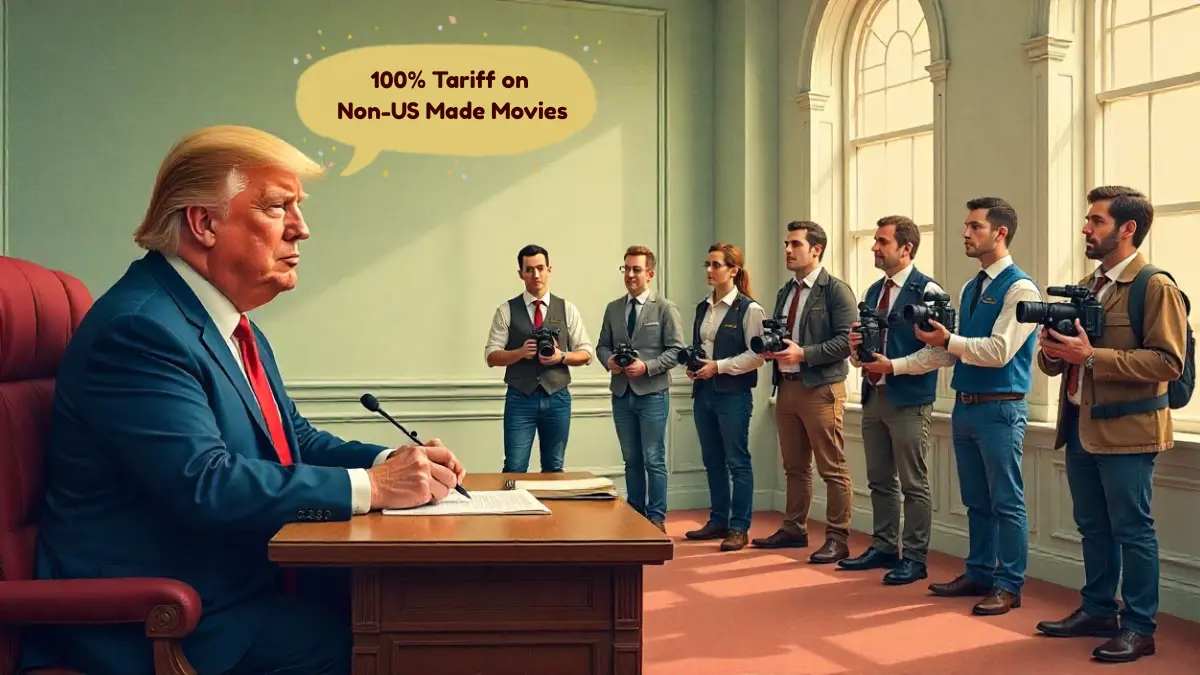
The announcement by U.S. President Donald Trump to impose 100% tariffs on non-US made movies has sent waves of concern through the global film industry. While the move is meant to protect American cinema, its effects on cultural exchange and international storytelling could be profound.
Trump claimed that foreign films were “stealing” the U.S. movie-making business, likening it to “stealing candy from a baby.” Under this policy, all movies produced outside the United States, including those distributed digitally, could face a full tariff. This includes films from India, South Korea, China, and other major production hubs.
The decision is unprecedented. Until now, tariffs rarely applied to digital services. Today, films are not just physical reels; they are delivered digitally to theaters and streaming platforms like Netflix, Amazon Prime, and Disney. Adding tariffs to this system could significantly increase costs and limit the availability of foreign films in the U.S.
India’s film industry, from Bollywood to regional cinema, depends heavily on international audiences. The 100% tariffs on non-US made movies could make it harder for Indian films to reach the U.S. This may affect streaming platforms like Zee5 and JioHotstar, which have already established a global presence. Higher costs could reduce access to Indian films, limiting cultural visibility abroad.
Experts warn that this policy could disrupt Hollywood’s own global model. Many U.S. studios shoot films in other countries to take advantage of tax incentives and local talent. These overseas productions support thousands of jobs. The tariffs could therefore create unexpected financial challenges, even for domestic studios.
Beyond economics, the tariffs threaten cultural exchange and diversity. Films are a powerful way to share stories, ideas, and traditions across borders. Limiting access to foreign films reduces opportunities for audiences to experience different cultures. Students, artists, and movie lovers in the U.S. may miss stories that reflect global perspectives. Filmmakers outside the U.S. lose a platform to showcase their work internationally.
Cinema is not just a source of entertainment; it plays a vital role in shaping culture, educating society, and fostering understanding between communities. Through films, audiences experience different traditions, social issues, and ways of life from around the world. When tariffs make foreign films unaffordable or block them from entering the U.S. market, it disrupts this cultural exchange. The result is not just fewer movies to watch – it is a break in the chain of ideas, values, and stories that cinema carries across borders. Limiting access to international films can slow the development of empathy, awareness, and cultural literacy, reducing the rich benefits that global storytelling brings to society.
There is also a risk of a ripple effect. Other countries might impose similar tariffs on American films, fragmenting the global film market. Instead of fostering collaboration, this approach could create walls between creative communities. For decades, cinema has connected people and cultures worldwide. Tariffs now threaten that bridge.
In the short term, the impact may be seen in higher ticket prices, reduced international film releases, and a tighter global market. Long term, the policy could alter the way studios plan productions, distribute films, and engage with audiences worldwide.
In conclusion, Trump’s 100% tariffs on non-US made movies go beyond economics. They could reshape cultural access, global storytelling, and international collaboration in cinema. While the intent is to protect domestic business, the move challenges the global exchange of ideas through film. For audiences and filmmakers alike, these tariffs mark a turning point in the way we share stories across borders.
Subscribe Deshwale on YouTube
