



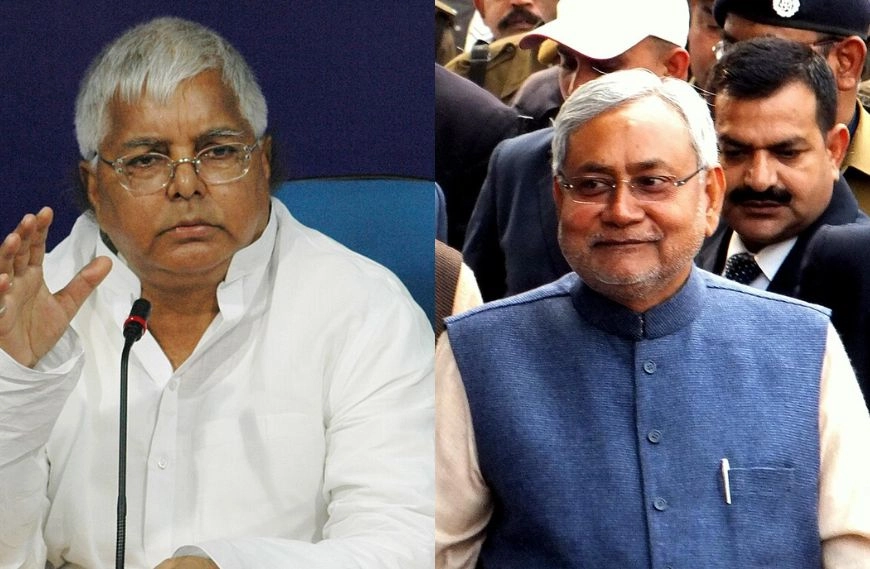
As Bihar heads for its 2025 Assembly elections, a familiar political face has reignited the debate over leadership change. Veteran leader Lalu Prasad Yadav has declared that “20 years is enough,” taking direct aim at Chief Minister Nitish Kumar’s long rule and calling for fresh leadership in the state.
During a recent campaign speech, Lalu Prasad Yadav compared Bihar’s political scene to a roti on a tawa, saying, “If you don’t flip the roti, it burns. Twenty years is enough.” His words have become a rallying cry for the opposition alliance, led by his son Tejashwi Yadav, as they push the message that Bihar needs new energy and direction.
Lalu’s comment reflects growing sentiment among sections of the electorate that long tenures in power can breed stagnation. His ‘change’ message also cleverly connects with younger voters who want better jobs, infrastructure, and governance.
Nitish Kumar has been at the helm of Bihar since 2005, leading the state under various political combinations. His tenure has seen several achievements, including improved roads, law and order reforms, and greater focus on education. However, critics argue that development has plateaued in recent years and that unemployment and migration remain serious issues.
The “20 years is enough” slogan aims to capitalise on voter fatigue with a government that, while stable, is seen by some as lacking fresh ideas.
The Bihar Assembly election 2025 will take place in two phases on November 6 and November 11, covering all 243 Assembly seats. Counting is scheduled for November 14. The contest is largely between the ruling National Democratic Alliance (NDA) and the opposition Mahagathbandhan, led by Tejashwi Yadav’s Rashtriya Janata Dal (RJD).
With Nitish Kumar seeking another term and the opposition pushing for generational change, the campaign has turned into a referendum on long-term governance.
Tejashwi Yadav has positioned himself as a symbol of youth and change. His speeches highlight job creation, migration control, and social welfare as key priorities. The RJD and its allies argue that Bihar’s next leap forward requires young leadership and new thinking.
“Give us 20 months, and we’ll show you change,” Tejashwi recently told a gathering subtly echoing his father’s “20 years is enough” slogan.
For Nitish Kumar and his party Janata Dal (United), experience remains their strongest defence. Supporters credit him for transforming Bihar’s governance and bringing stability after years of unrest. The NDA campaign focuses on continuity, women’s empowerment, and law and order areas where Nitish claims visible success.
Yet, the “20 years” narrative has put the ruling camp on the defensive, forcing them to address the fatigue factor among voters.
According to the Election Commission data, Bihar now has 7.42 crore registered voters, with male and female electorates nearly equal. This growing balance has made women’s votes crucial in shaping outcomes. Nitish Kumar has historically enjoyed strong female support through welfare schemes, but the younger demographic may be more open to change this time.
The 2025 election is shaping up to be more than just a political contest it’s a generational shift in Bihar’s politics. On one side is Nitish Kumar, representing experience and continuity. On the other is Tejashwi Yadav, carrying the hopes of youth and his father’s legacy of social justice.
Lalu’s slogan ties these elements together, turning the election into a broader question: should power stay with those who have ruled for two decades, or move to a new generation ready to take the reins?
The “20 years is enough” message has struck a chord with sections of Bihar’s electorate, especially in rural areas where anti-incumbency is simmering. However, Nitish Kumar’s strong organisational structure and governance record make this a closely fought contest.
When Bihar votes in November, it will not only decide its next chief minister but also send a strong message about how long is too long in power.
Subscribe Deshwale on YouTube
