




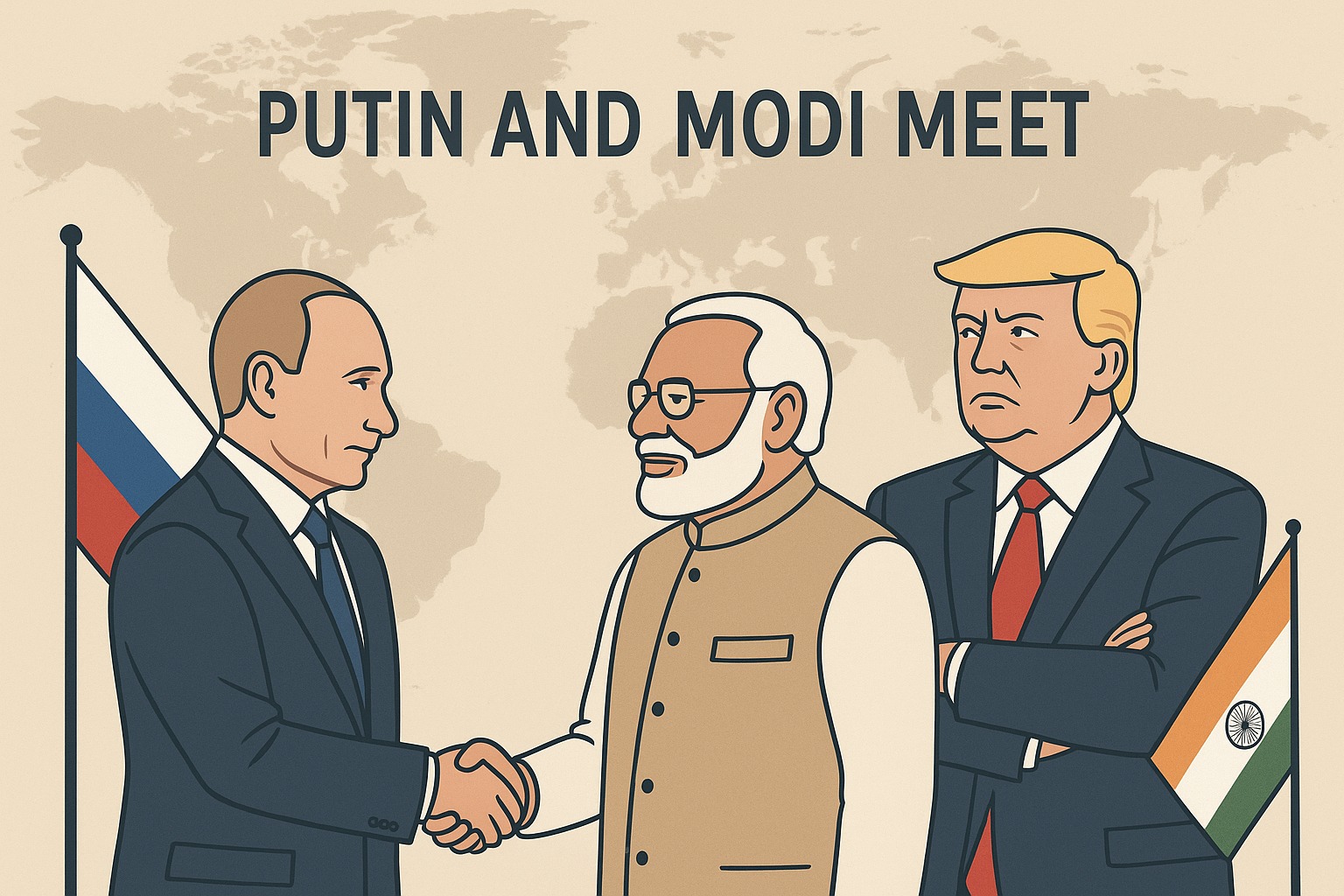
Russian President Vladimir Putin is arriving in India on 4 December 2025, and this visit is being viewed as one of the most consequential diplomatic events for global power balance and India’s economic-security architecture. India–Russia ties, built over 75 years of trust, strategic depth, and stable cooperation, remain one of India’s strongest international pillars in an uncertain world order.
Russia continues to be India’s most dependable partner in energy security. Nearly 35 percent of India’s crude oil imports now come from Russia, supported by long-term supply contracts, discounted crude, steady LNG flows, and fertilizer ingredients such as ammonia and phosphates. This has directly helped India control inflation amid global volatility.
In defence, Russia remains the backbone of India’s long-term capability — advanced air defence systems, the Indo–Russian BrahMos programme, Sukhoi-30 spare ecosystem, and nuclear submarine technology cooperation form the core of India’s security architecture. In agriculture, fertilizers sourced from Russia–Belarus ensure stable food production across Indian farmlands.
India–Russia trade has seen an extraordinary jump in the past five years. The year-wise table below highlights the scale of growth:
| Year | Total Bilateral Trade (Billion USD) | Note |
|---|---|---|
| 2020 | ~8–10 | Normal range |
| 2021 | ~13 | Post-pandemic recovery |
| 2022 | ~41–49 | Surge due to crude imports |
| 2023 | ~65 | Highest-ever rise |
| 2024–25 | ~68.7 | Record level |
Putin’s 2025 visit comes at a time when Russia–US ties are at their most strained phase since the Cold War, and India–US trade has come under pressure due to America’s steep import tariffs. Meanwhile, BRICS nations are accelerating efforts to reduce dependency on the dollar, and India–Russia energy cooperation holds the potential to reshape global markets.
Key focus areas expected in the upcoming summit include energy security, joint defence manufacturing, the rupee–ruble settlement mechanism, and a clear roadmap for a multipolar world order. The American response to this summit could immediately influence Indian stock markets, foreign exchange dynamics, and commodity prices. Potential reactions include new tariffs, secondary sanctions warnings, diplomatic pressure, or a softer engagement signal.
India has delayed a comprehensive trade deal with the US for now — largely because India is strengthening defence ties with Russia, and Washington’s unpredictable policy stance makes any big agreement risky at this stage. Economically, the rupee remains weak against the dollar, exports have slowed, trade deficit has widened, and reserve pressure is visible.
Despite this, India is prepared and moving systematically. The rupee–ruble settlement, BRICS financial architecture, long-term oil contracts, diversified energy partners, and expanded export routes to Asian economies are strengthening India’s strategic autonomy. Joint work on future-generation fighters like the Su-57 and Su-75 could redefine India’s defence ecosystem. India imported nearly 5.4 million tonnes of Russian oil through shadow fleet routes in 2025, and securing this supply chain remains a top priority.
Overall, Putin’s visit is not just a diplomatic event — it is a historic moment that could influence global politics, India’s energy security, defence cooperation, economic stability, and India’s position in the emerging world order. The world is watching New Delhi closely, markets are waiting for Washington’s reaction, and India is asserting its strategic independence while reinforcing a time-tested partnership with Russia.
Secretary — InGlobal Business Foundation (IBF)
Director — ReNis Agro International LLP, Ahmedabad, India
Subscribe Deshwale on YouTube
