



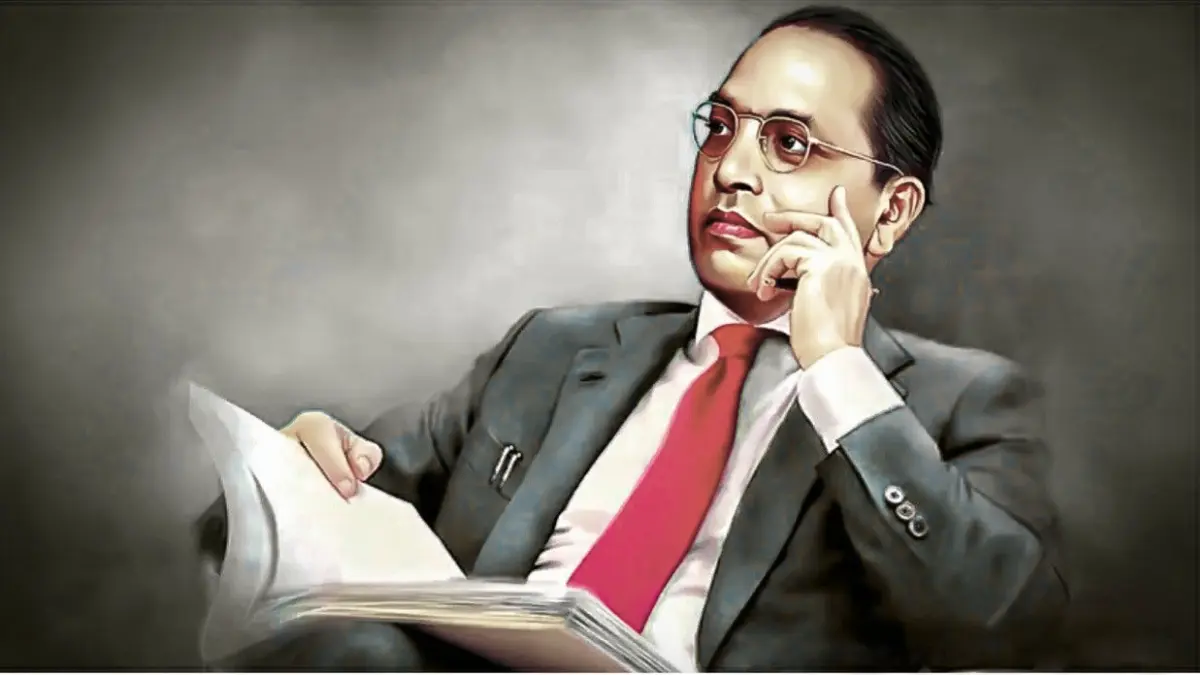
Every year, India observes Mahaparinirvan Diwas to honour Dr Bhimrao Ramji Ambedkar. His name is familiar to every Indian, yet his life holds layers that continue to guide our ideas of equality, dignity and justice. He was not only a scholar but also a person shaped deeply by the world around him. His journey was built on courage, pain and hope.
Early Years and Harsh Realities
Ambedkar was born on 14 April 1891 in Mhow. He was the fourteenth child in his family. His father, Ramji, served as a Subedar in the British Army and followed the teachings of Sant Kabir. When Ambedkar was only six, he lost his mother. His aunt stepped in to raise him, giving him the care he needed during a difficult time.
School life was not easy. He faced untouchability throughout his early education in Satara and later in Bombay. These humiliations left deep marks on him. They did not break him. Instead, they became the foundation of his future work.
He finished his matriculation in 1907. Soon after, he married in a simple shed in a market area. During this period, he depended heavily on a scholarship from Sayajirao Gaikwad of Baroda, which allowed him to continue at Elphinstone College. It was a step that changed everything for him.
The Turning Point in America
In 1913, Ambedkar received an opportunity that would redefine his life. He travelled to the United States for higher studies. At Columbia University, he completed his M.A. in 1915 and his Ph.D. in 1916. This was where he presented his famous paper “Castes in India: Their Mechanism, Genesis and Development.” His thesis “National Dividend for India” earned him his doctorate.
After his stay in America, he shifted to London to pursue law and economics at Gray’s Inn and the London School of Economics. However, the Dewan of Baroda called him back to India. His plans were disrupted, yet he eventually returned to London to complete his Bar at Law and D.Sc. He even spent some time studying at Bonn University in Germany.
Return Home and New Struggles
When Ambedkar returned to India in 1917, he worked in Baroda. But caste discrimination forced him to leave within months. He moved to Bombay and began teaching at Sydenham College. Students admired him for his clarity. Though, after some time, he resigned and again travelled to London to complete his studies.
He returned to India in 1924, now armed with strong academic achievements. He formed an association for the depressed classes to focus on education, economic improvement and raising community issues. In 1927, he launched the newspaper Bahiskrit Bharat. It became a platform for voices that were ignored in mainstream society.
His academic journey continued as well. In 1928, he joined Government Law College as a professor and later became its Principal in 1935. That same year, at a conference in Yeola, he made a bold declaration that he would not die as a Hindu. Many supporters stood with him.
A Leader Takes Shape
In 1936, he founded the Independent Labour Party to defend the rights of workers and marginalised communities. Two years later, he opposed a Congress bill that tried to change only the name of untouchables. He argued that real reforms must fight discrimination at its root.
His public life grew steadily. In 1942, he joined the Executive Council of the Governor General as Labour Member. He was elected to the Constituent Assembly in 1946. That year, he also published his book “Who Were the Shudras?”
After India became independent, Ambedkar became the Law Minister. But disagreements over Kashmir, foreign policy and the Hindu Code Bill led him to resign in 1951. His decisions always followed his principles, even when they carried a personal cost.
Beyond Government and Politics
Ambedkar’s intellectual work continued. Columbia University honoured him with an LL.D. in 1952 for his contribution to the Constitution. Osmania University awarded him a Doctorate in 1953. He published “Thoughts on Linguistic States” in 1955.
Few people know that his ideas influenced the creation of the Reserve Bank of India. His submissions to the Hilton Young Commission were an important input in shaping the institution.
In 1954, he received the title “Bodhisattva” from Buddhist monks at the Jagatik Buddhism Council in Kathmandu. The recognition was special because such honours are rarely given while the person is still alive.
A New Faith and His Final Days
On 14 October 1956, Ambedkar fulfilled the pledge he made at Yeola. He embraced Buddhism in a historic ceremony in Nagpur. The event marked a turning point in the social history of modern India.
On 6 December 1956, he passed away. His journey had travelled through loss, struggle, learning and reform. He left behind a legacy that still breathes through the nation’s constitutional and social frameworks.
Ambedkar’s thoughts on society, governance and economics are still relevant. India continues to deal with many of the issues he studied so closely. His ideas offer clarity, direction and hope.
As the country observes Mahaparinirvan Diwas, leaders and citizens will gather at Parliament House lawns to pay tributes. The remembrance is not only ceremonial. It is a reminder of a man whose life reshaped India’s idea of equality.
Also read: Verticals’ Shock: Why India’s Micro-Drama Boom Risks Killing Its Own Creativity?
Subscribe Deshwale on YouTube
