




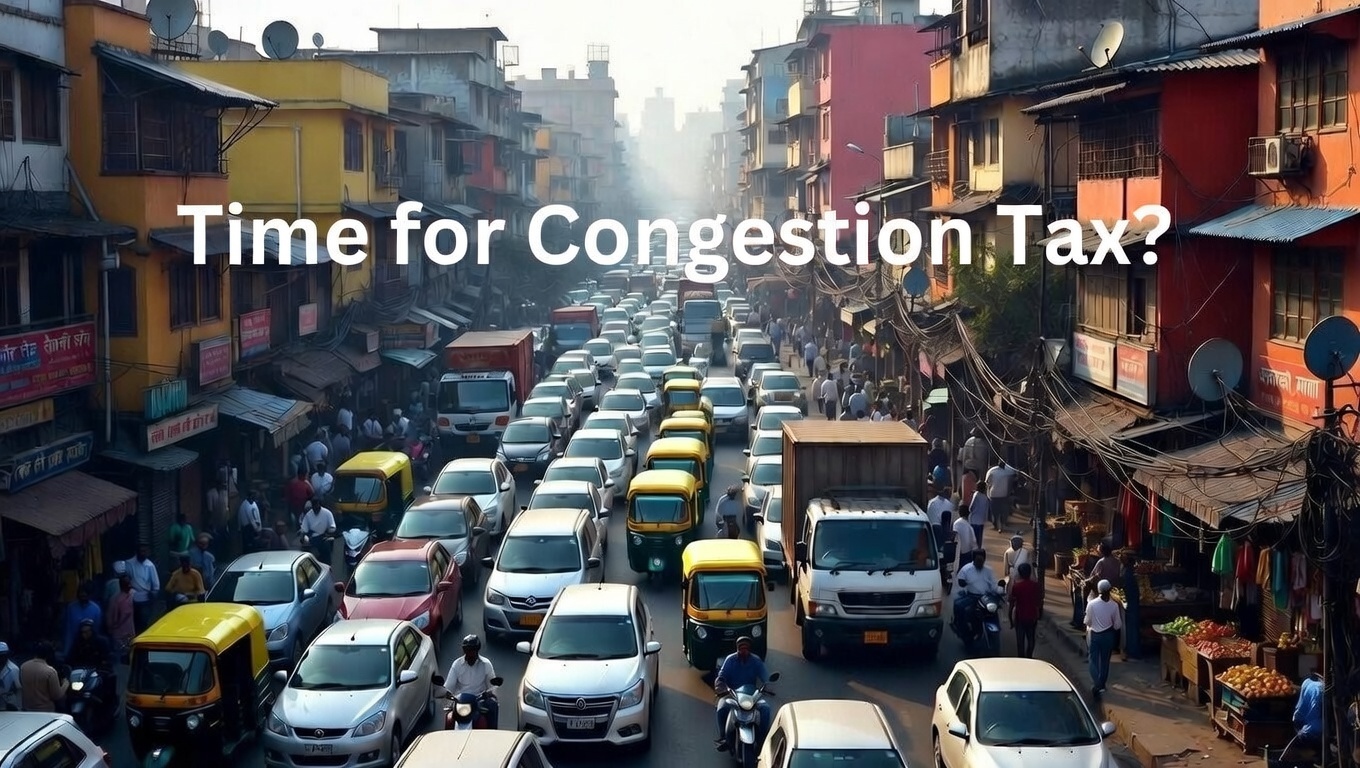
The debate around traffic congestion in Mumbai has once again moved to the political foreground. Bharatiya Janata Party Colaba corporator Makarand Narwekar’s support for a congestion tax has triggered opposition from the Uddhav Thackeray faction of the Shiv Sena. Narwekar has proposed a congestion tax on single-occupant private vehicles entering high-traffic zones and key business districts of the city.
However, setting aside the predictable partisan reactions, the idea of a congestion tax in Mumbai is not new. The proposal has surfaced repeatedly over the years. Governmental and judicial panels in Maharashtra discussed and supported congestion pricing as early as 2008, followed by similar recommendations in 2013 and again in 2017. Each time, the idea generated debate but failed to translate into policy.
Mumbai’s traffic situation during peak hours in several critical areas has long ceased to be a mere inconvenience. Prolonged gridlock has a tangible mental impact on commuters, reducing productivity and, by extension, affecting the city’s economic output. Given Mumbai’s geography, it is neither feasible nor sustainable to keep building coastal roads, flyovers, and foot over bridges indefinitely. Road space is limited, and supporters argue that pricing it during rush hours could discourage unnecessary use of private vehicles. Advocates of congestion pricing often cite global examples. Cities such as London, Singapore, and Stockholm witnessed notable reductions in traffic volumes and measurable improvements in air quality after introducing congestion charges.
Supporters believe Mumbai could see similar benefits if the policy is designed and implemented carefully. They also point out that Mumbai’s public transport system already carries a large majority of daily commuters, while private vehicles transport relatively fewer people despite occupying significant road space. A congestion tax, they argue, could encourage carpooling and greater use of public transport. Reduced congestion could lower pollution levels and contribute to better public health. Additionally, if the revenue generated is earmarked for public transport upgrades, it could help strengthen buses, suburban rail services, and metro connectivity.
Opponents of the proposal, however, see the issue very differently. They argue that a congestion tax in Mumbai would unfairly burden middle-class commuters, and even wealthier ones, who rely on private vehicles not as a status symbol but as a practical response to overcrowded and unevenly connected public transport. In the absence of flexible work timings and reliable last-mile connectivity, such a tax could disproportionately penalise those who have little choice but to drive.
There is also the argument that Mumbai’s citizens are already heavily taxed through fuel levies, road taxes, tolls, and parking charges. Instead of introducing yet another levy, critics contend that existing revenues should be used more efficiently to improve traffic management and public transport infrastructure. Implementation remains another major concern.
For a congestion tax to work, Mumbai’s municipal authorities would need transparent pricing, consistent monitoring, and a credible grievance-redressal mechanism. Given the city’s experience with lane discipline, parking enforcement, and traffic fines, scepticism about effective implementation is understandable. Without strong political will, the tax could easily be perceived as a revenue-extraction exercise rather than a long-term urban reform.
This is where middle-path advocates enter the debate. They argue that congestion pricing should not be introduced in isolation. Measures such as staggered office hours, encouragement of remote work, parking reforms, improved last-mile connectivity, and visible investment in public transport must accompany any congestion tax. A pilot project in a limited business district, implemented during peak hours, could help assess the policy’s impact before a wider rollout.
Ultimately, the question is not simply whether a congestion tax is necessary, but whether Mumbai is institutionally prepared to implement it fairly and transparently. If commuters see tangible improvements in footpaths, buses, local trains, and metro services, public acceptance may follow. Without that trust, however, even a well-intentioned policy risks deepening public resentment rather than easing congestion
Subscribe Deshwale on YouTube
