



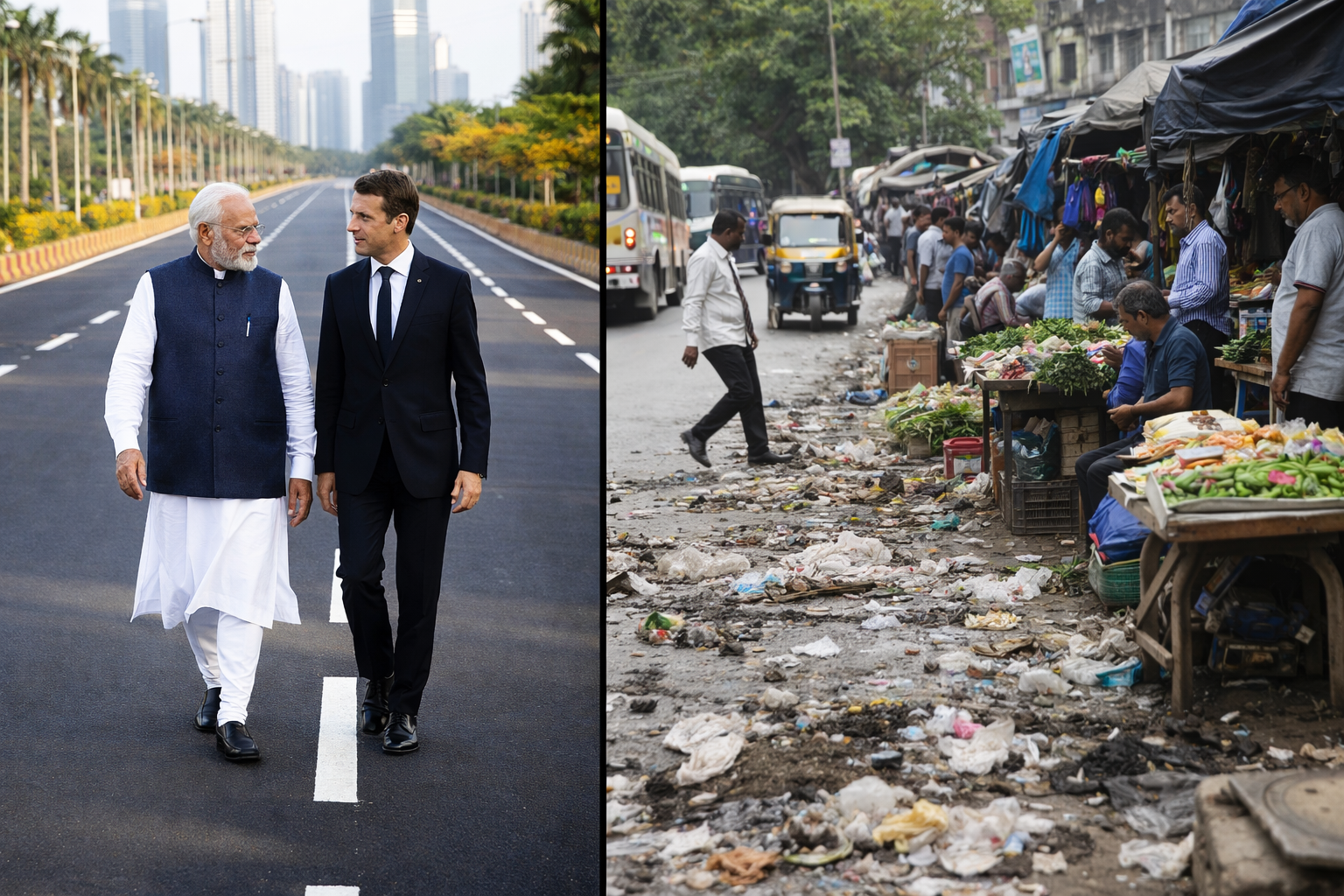
Ahead of high-profile visits by national and foreign leaders, Indian cities often undergo rapid cosmetic transformation. Roads are repainted overnight. Potholes are filled. Dividers are washed. Footpaths are cleared. Walls are freshly coated. Streetlights are repaired. The change is sudden and visible.
Mumbai has seen this pattern repeatedly. Before the visit of Prime Minister Narendra Modi and French President Emmanuel Macron, stretches of key routes were repaired and painted. Similar activity has been observed in other cities during diplomatic summits and political events. In 2025, before British Prime Minister Keir Starmer visited Yash Raj Studios in Mumbai, the surrounding area was reportedly cleaned, renovated and cleared of encroachments. The transformation was swift.
The question is not whether cities should look presentable for international visitors. They should. The real question is why this urgency appears only before VIP movement.
Urban infrastructure maintenance should be routine. Lane markings should not fade into invisibility. Potholes should not wait for diplomatic schedules. Footpaths should not be reclaimed only when motorcades pass through them. Cleanliness should not depend on protocol.
When roads are repainted overnight for a visit, it demonstrates administrative capacity. It shows that machinery, manpower and funds can be mobilised quickly. That raises a difficult but necessary question. If it can be done in 48 hours for a visiting dignitary, why can it not be done consistently for residents?
The pattern creates an uncomfortable perception. Areas along official routes receive attention. Neighbourhoods away from the spotlight continue with broken pavements, unclear lane markings and unmanaged encroachments. After the visit ends, maintenance often slows. Hawkers return. Paint fades. Waste accumulates again. The cycle repeats.
This is not unique to one city. It reflects a broader governance culture shaped by optics. Political visits bring scrutiny. International media cameras follow motorcades. That visibility drives action. Daily commuter routes rarely receive the same attention.
India’s urban population is expanding rapidly. Traffic density is rising. Road safety depends on clear markings and disciplined design. White lane painting is basic infrastructure. It improves visibility at night and during monsoon conditions. Yet many major roads across Indian cities lack consistent marking. That is not a funding mystery. It is a maintenance priority issue.
The deeper concern is psychological. When citizens see their streets repaired only for dignitaries, it sends a message. It suggests that global guests deserve standards that residents do not consistently receive. Whether intended or not, that perception erodes trust.
Governments argue that such preparations are part of diplomatic protocol. That is valid. International visits require security and logistical readiness. However, protocol should not become the only trigger for efficiency.
There is also a fiscal dimension. Emergency beautification drives may cost more than systematic upkeep. Repainting a road repeatedly is less efficient than maintaining it at regular intervals. Clearing encroachments temporarily without long-term urban planning does not resolve structural issues.
The example of areas renovated before high-profile visits invites another question. What is their condition months later? Are they maintained to the same standard? Or do they gradually revert? Sustainable governance is measured not by peak presentation but by everyday consistency.
Indian cities have the administrative capability to transform infrastructure quickly. That is evident. The challenge is not competence. It is continuity.
A mature urban policy does not rely on event-driven repair. It builds systems. It enforces maintenance schedules. It treats residents as permanent stakeholders, not temporary spectators.
Beautification for visiting leaders is understandable. Governance by spectacle is not.
The true test of civic commitment is simple. Do streets remain clean and marked when the cameras leave? If the answer is inconsistent, the problem is not resources. It is priorities.
Cities should not shine only for motorcades. They should function for citizens.
Subscribe Deshwale on YouTube
