



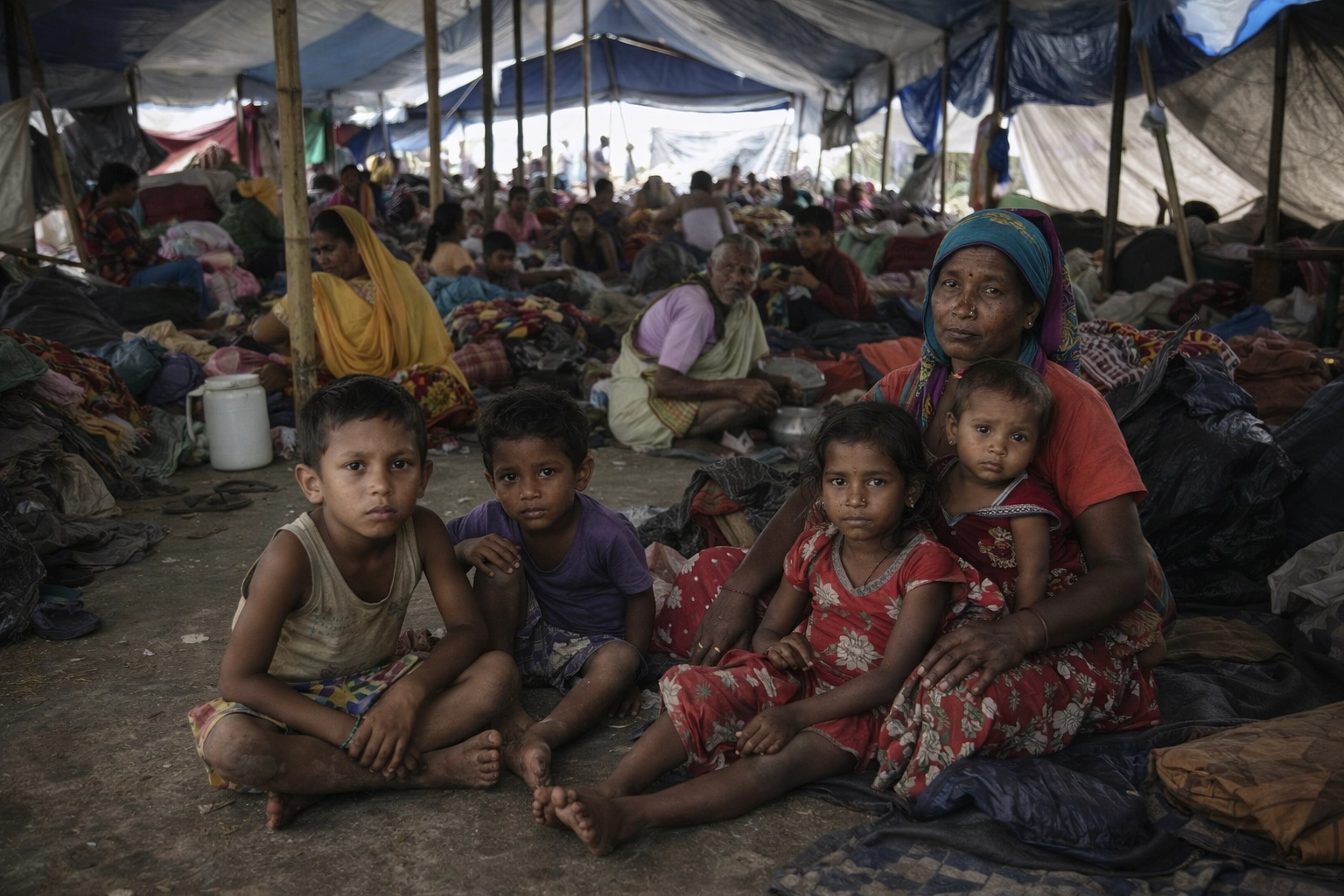
From the swollen banks of the Brahmaputra, where families have been forced to cling to rooftops to escape rising waters, Assam stands as one of the starkest examples of flood-driven displacement in India. Building on the broader national overview, this piece focuses on Assam’s worsening crisis. In 2025 alone, the state recorded 28 disasters, most of them floods. These events displaced nearly half of India’s 5.4 million internally displaced people during the year.
Assam’s tragedy reflects a global pattern. Riverine floods in the state mirror similar crises unfolding in Africa’s Niger Basin and along Europe’s Danube. Across continents, swollen rivers are uprooting communities, erasing livelihoods and reshaping fragile landscapes.
The state’s vulnerability is rooted in geography and climate. Rainfall in the northeast was recorded at nearly 40 per cent above normal levels, dramatically swelling the Brahmaputra and its tributaries. Vast stretches of agricultural land were submerged. In Cachar district, the situation worsened due to dam water releases and poor urban drainage systems, leaving homes underwater for days. In Jorhat, breaches in embankments inundated villages, sweeping away food supplies and damaging critical infrastructure.
Globally, floods triggered around 40 million displacements in 2024. Sudan’s Nile floods displaced thousands, echoing Assam’s recurring erosion crisis that forces entire riverbank communities to relocate year after year. The pattern is clear. Climate volatility is intensifying displacement in riverine regions worldwide.
The social consequences in Assam are profound. Indigenous communities face not only the loss of land but also the erosion of cultural identity tied to ancestral territories. Women and children bear a disproportionate burden, grappling with unsafe sanitation conditions and disrupted access to healthcare and education.
The economic toll is equally severe. An estimated 2.5 million hectares of land have been affected, threatening agricultural livelihoods and local employment. On a global scale, nearly 70,000 people are displaced daily due to disasters, placing immense pressure on governments and humanitarian systems.
Relief efforts are underway. Organisations such as SEEDS India have supported emergency response and rehabilitation. However, systemic challenges remain unresolved. The United Nations High Commissioner for Refugees continues to warn about the growing cycle of climate shocks and displacement, often compounded by poverty and conflict.
Assam’s floods underline the urgency of climate resilience and sustainable river management. As the focus shifts next to Maharashtra’s drought-prone regions, the contrast will reveal another face of climate displacement, one driven not by excess water but by its alarming absence.
Subscribe Deshwale on YouTube
