



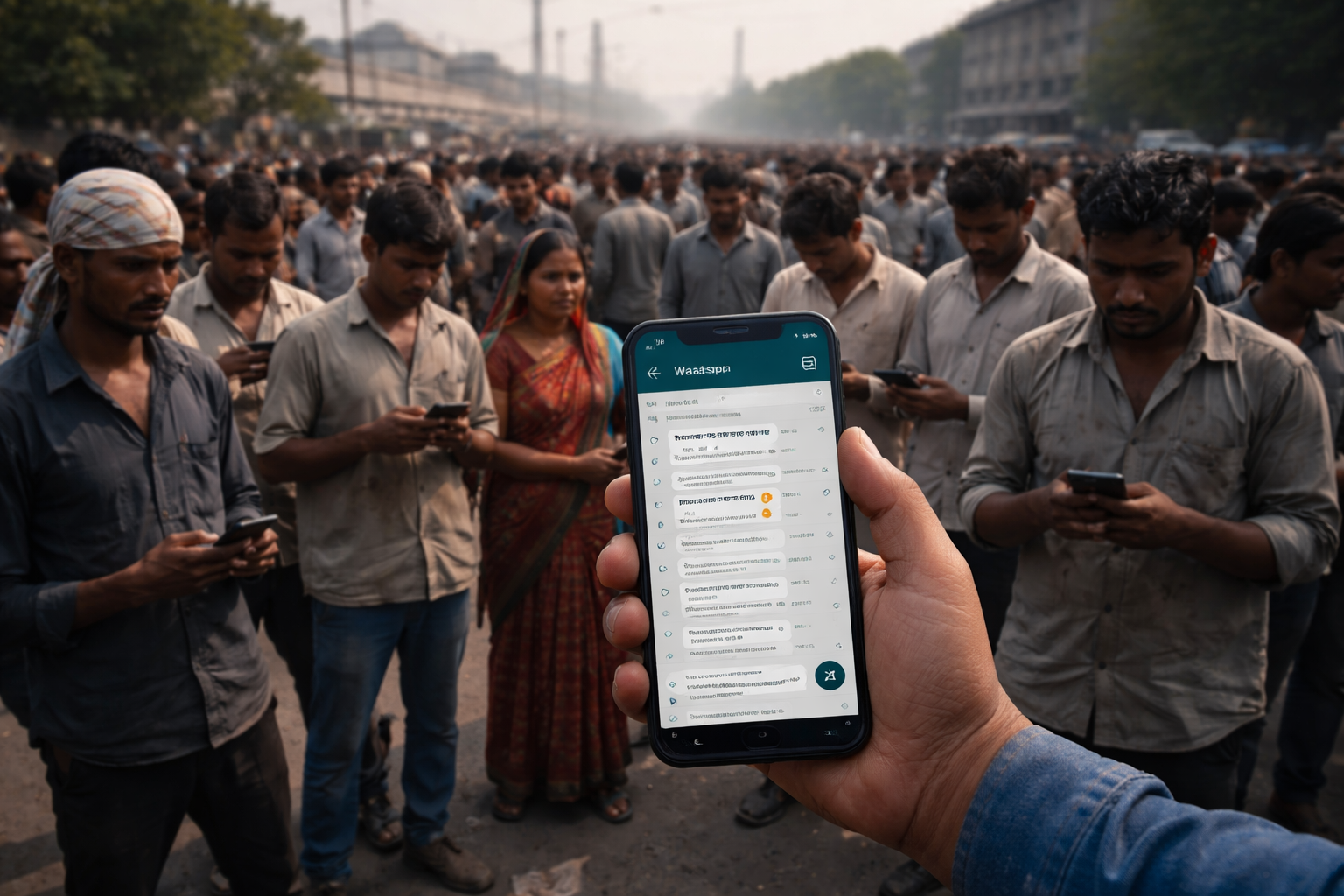
There was no stage. No microphone. No familiar face of a union leader raising a fist in the air. Just thousands of workers tired, unpaid fairly, and finally fed up stepping out of their factories and onto the roads of Noida.
What happened in this satellite city of Delhi earlier this month was not supposed to happen this way. Labour protests in India have historically been organised, structured affairs led by trade unions, backed by political parties, and announced well in advance. This was different. And that difference is exactly what makes it important.
The spark nobody planned
Noida is one of India’s most important manufacturing hubs. Its industrial clusters produce auto parts, electronics, garments and more. Behind these products are thousands of contract workers, most of them migrants from states like Uttar Pradesh and Bihar living in cramped rooms on the city’s outskirts, surviving on wages between ₹10,000 and ₹15,000 a month.
These wages have remained largely unchanged for years. Meanwhile, rent has gone up. Food prices have risen. Cooking gas, already expensive, has become costlier due to global supply disruptions linked to the conflict in the Middle East. One female worker, who did not want to be named, put it plainly: “I pay ₹5,000 in rent and spend another ₹4,000 on groceries. What do we save? Nothing. We just get by.”
For workers like her, the tipping point came from next door. The neighbouring state of Haryana had recently announced a 35% increase in minimum wages after similar demonstrations by workers. Same work. Same industry. Higher pay just because of which side of the state border you lived on.
The message spread fast. Not through pamphlets. Not through union meetings. Through phones.
The whatsapp revolution nobody noticed
This is the part of the story most coverage has missed entirely. These protests had no official leader. A union leader who spoke to reporters declined to be named out of fear of police action and confirmed what many observers had already noticed: the major trade unions were largely absent from the ground.
Instead, word travelled through informal worker networks, migrant community groups and messaging apps. Workers who had never attended a union meeting in their lives showed up in thousands because someone in their housing colony forwarded a message. Someone whose cousin worked in the next factory. Someone who had nothing to lose because they were already losing everything quietly, every month.
“The workers just don’t trust their employers anymore,” said Rajesh Kumar, a Delhi-based trade unionist. “Minimum wages have always existed, but not all employers comply with them. In most cases, workers have little choice but to accept this because jobs are scarce.”
That lack of trust, combined with a new ability to organise horizontally without waiting for permission from any institution produced something India’s industrial system was not prepared for.
The numbers behind the anger
The protests, which turned violent in some areas, led to police using tear gas and arresting more than 300 people in Noida alone. But no amount of force addresses the underlying arithmetic.
Government data tells a stark story: roughly nine in ten Indian workers earn less than ₹25,000 a month, approximately $300. India’s informal sector, which offers little to no job security, employs more than 310 million people. These are not marginal workers. They are the backbone of the economy.
Factory worker Soni Singh told news agency PTI that he works 12 to 14 hours a day but is paid overtime for only three hours beyond his standard eight-hour shift. His monthly income is around ₹13,000. The hours are invisible. The sacrifice is unrecorded.
India’s new labour codes, introduced last year, were meant to strengthen worker protections while making compliance simpler for employers. But as labour researcher Rakhi Sehgal, a former consultant with the International Labour Organisation, told the BBC, expectations have not been fully met. What workers are experiencing, she said, is a “cost of living crisis” a widening gap between what they earn and what it costs simply to exist.
The Uttar Pradesh government has announced a temporary wage increase in two districts and promised further steps. Officials say measures are being taken to ensure overtime pay and rest day wages. A broader national revision of minimum wages is reportedly under way.
But workers have heard promises before.
What is new and what cannot be easily undone is the knowledge that you do not need a union card or a political patron to make yourself heard. You need a phone, a group chat and enough people who are angry enough to show up.
In India’s factories, that number is not hard to find.
Subscribe Deshwale on YouTube
