




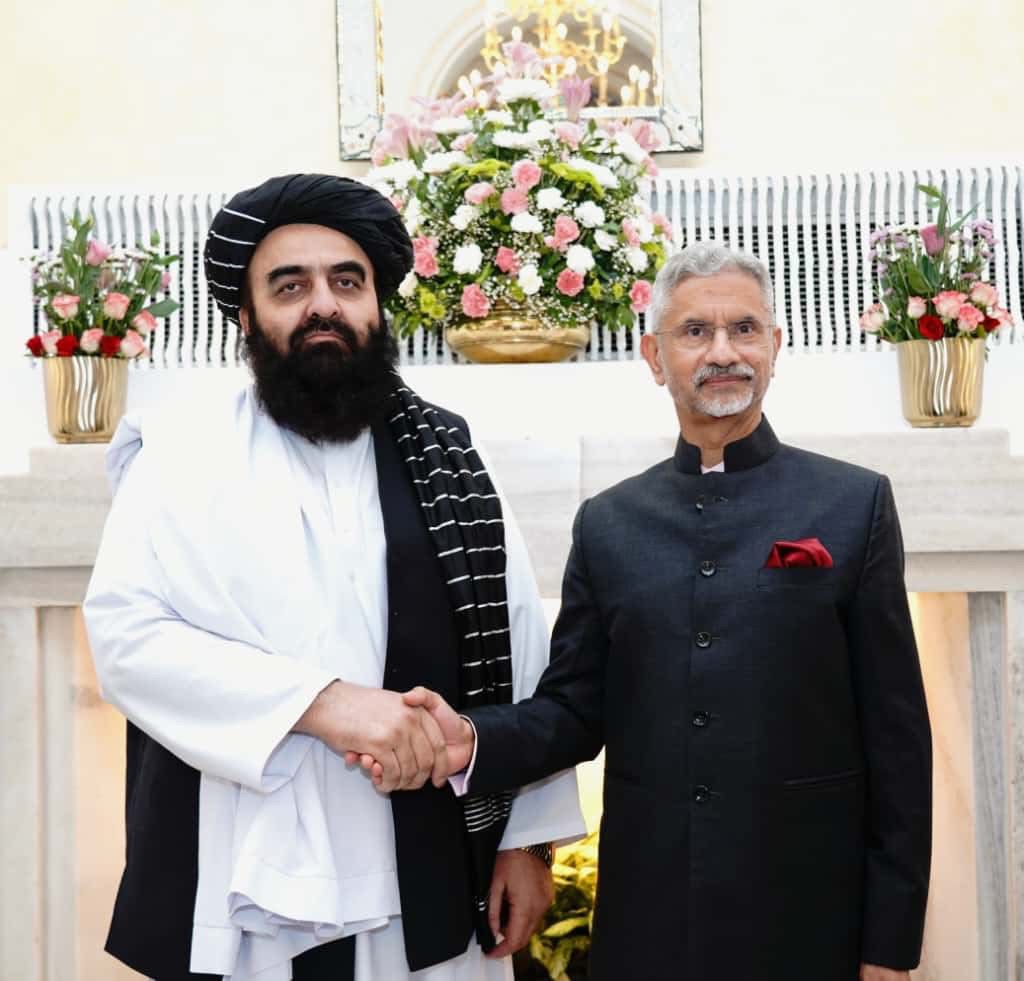
The recent meeting between Afghanistan’s Foreign Minister Amir Khan Muttaqi and India’s External Affairs Minister Dr. S. Jaishankar marks a new chapter in the evolving dynamics of South Asia. This is the first high-level engagement between India and the Taliban administration since 2021, signaling a cautious yet strategic re-engagement by New Delhi after four years of limited contact.
India’s “Mission” in Kabul — A Pragmatic Step
India’s decision to reopen its Embassy in Kabul under the name “Indian Mission” carries deliberate diplomatic nuance. It indicates renewed engagement without formal recognition of the Taliban government.
By choosing the term Mission instead of Embassy, India is emphasizing functional cooperation — focusing on trade, humanitarian work, development assistance, and consular services — while avoiding the implications of political recognition.
This careful positioning allows India to protect its interests, support Indian traders and businesses operating in Afghanistan, and sustain people-to-people ties that have historically connected the two nations.
Economic and Trade Possibilities
Afghanistan’s economy is deeply reliant on its agricultural and dry fruit exports, and India remains one of its largest markets. In *FY 2024–25, bilateral trade reached approximately **USD 1.01 billion, of which *USD 689.81 million represented Afghan exports to India — primarily dry fruits, nuts, and asafoetida (hing).
1. Revival of Trade Channels
The reopening of diplomatic communication is expected to revive smooth customs and trade documentation, particularly through:
- Attari–Wagah Border (primary route via Pakistan)
- Chabahar Port in Iran (India’s strategic investment offering Pakistan-free access)
This will help restore regular shipments of figs (Anjeer), hing, raisins, and pistachios, reducing delays and uncertainties that affected the trade over the past few years.
2. Gifts from Afghanistan — Cheaper Anjeer and Nuts
With improved diplomatic ties and stable trade channels, India can expect a larger influx of Afghan gifts such as Anjeer (dried figs), nuts, and raisins.
- Prices for these items in India are likely to drop by 10–20%, providing relief to consumers and traders alike.
- Earlier supply disruptions had caused significant price hikes, but the renewed engagement promises affordable access to high-quality Afghan dry fruits.
3. Support to Afghan Farmers
Afghan producers of figs, raisins, and asafoetida stand to gain from *larger, more stable Indian orders, ensuring income stability in a fragile economy. India may also extend cooperation in *agricultural technology, packaging, and food safety standards, contributing to long-term growth and rural development in Afghanistan.
4. Strengthening India’s Position as a Regional Hub
With supply stability, India could emerge as a re-export center for Afghan dry fruits to the Gulf, ASEAN, and European markets. The improved trade confidence will also benefit Indian food processors, spice manufacturers, and exporters in maintaining consistent product quality and pricing.
Geopolitical and Strategic Balance
India’s re-engagement is not limited to commerce. It reflects a broader strategic understanding — that economic cooperation can create stability in a region often shaken by conflict. A functional Indian presence in Kabul strengthens its influence in Central Asia and balances competing regional powers such as China and Pakistan.
Moreover, India’s focus on education, health, and humanitarian projects reaffirms its soft-power approach — building goodwill and fostering long-term partnerships rather than short-term political leverage.
Trade Snapshot: FY 2024–25
| Product Category | India’s Imports from Afghanistan | Share in Indian Imports | Projected Impact |
|---|---|---|---|
| Figs (Anjeer) | USD 150–200 million | 90% of total fig imports | 15–20% price drop expected; more “gifts from Afghanistan” |
| Hing (Asafoetida) | USD 100–120 million | 90% of total hing imports | Supply stability and lower costs |
| Raisins & Nuts | USD 150–200 million | Significant share of dry fruit imports | 10–15% supply growth; cheaper nuts from Afghanistan |
| Total Bilateral Trade | USD 1.01 billion | +7.4% YoY | May reach USD 1.2–1.3 billion by FY 2026 |
Risks and Realities
While optimism surrounds this renewed connection, several factors warrant cautious optimism:
- Afghanistan’s internal political situation remains unpredictable.
- India will likely restrict its engagement to trade and humanitarian activities, avoiding military or direct political involvement.
- Overdependence on Pakistan’s transit routes remains a vulnerability, though Chabahar Port provides an effective alternative.
The meeting between Dr. S. Jaishankar and Amir Khan Muttaqi symbolizes a return of dialogue, trust, and economic opportunity between India and Afghanistan.
India’s decision to reopen its Mission in Kabul is a pragmatic and forward-looking move — one that balances diplomacy, trade, and humanitarian commitment.
With the influx of Afghan gifts like *Anjeer and nuts, Indian consumers and traders can expect **affordable prices and stable supply, while Afghan farmers benefit from **larger, reliable markets. This engagement promises *economic relief, price stability, and renewed regional cooperation, shaping the future of South Asian connectivity and commerce.

Hiren Gandhi
Secretary, InGlobal Business Foundation (IBF)
Director- ReNis Exim House
Brand Ambassador – Namaste Hanoi , Vietnam
Subscribe Deshwale on YouTube
