




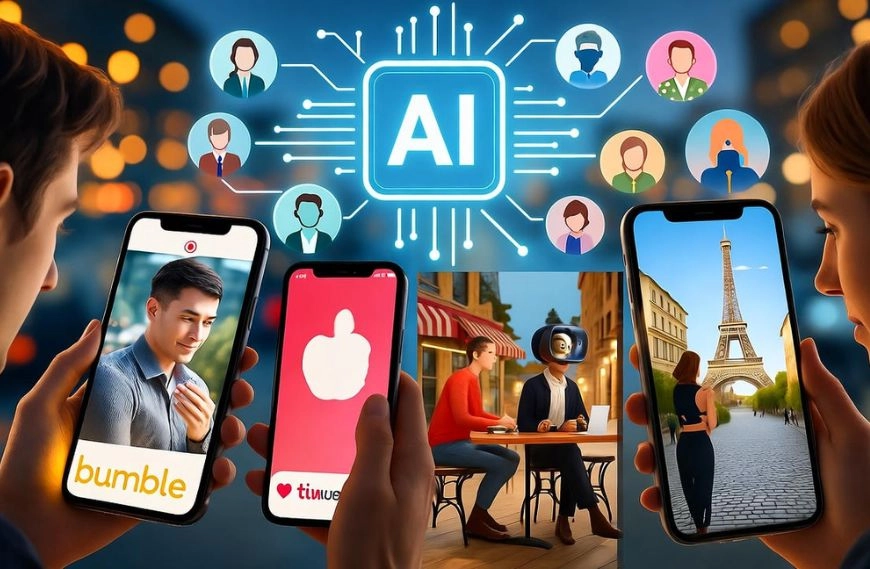
Love and technology are rewriting the rulebook. What once began with stolen glances, handwritten letters, or awkward introductions has transformed into swipes, algorithms, and chat prompts. Artificial Intelligence (AI) is now the new-age matchmaker, redefining not only how people meet but also how they connect, communicate, and even fall in love.
AI has entered almost every aspect of modern life and dating is no exception. Today’s popular apps like Tinder, Bumble, Hinge, and OkCupid use AI to study how people interact on their platforms. From the kind of profiles you linger on to the bios you skip, AI observes every move and learns your preferences over time.
These systems analyse behaviour, interests, and chat styles to predict what kind of partner you might find attractive or compatible with. For instance, if you often swipe right on people who enjoy hiking, reading, or playing the guitar, AI learns that pattern and shows you more profiles with similar traits. It’s like having a digital cupid that understands your taste better with each interaction.
This personalized matchmaking experience is one of the biggest reasons AI-driven dating apps are growing so fast. They save users time, reduce random matches, and create what feels like a more natural connection at least to begin with.
AI’s role doesn’t stop at finding a match. Once a user is connected with someone, AI can even help start or sustain the conversation. Some apps use built-in AI chat assistants to suggest witty icebreakers or offer advice when the chat goes dry.
People who struggle with social anxiety or shyness find these tools helpful. Instead of freezing up or overthinking, they can rely on AI to guide their messages or responses.
There are also standalone AI companions virtual partners designed to chat, flirt, and emotionally engage with users. While some see this as harmless fun or emotional support, experts warn that it can blur reality. When people get too attached to digital entities, it raises deep questions about loneliness and authenticity in the digital age.
AI can make dating smoother, but it also comes with its share of complications. For one, it turns love into a form of data preferences, swipes, emojis, and response times. Algorithms decide who we meet and, sometimes, even how we feel about them.
Privacy is another concern. AI models depend on vast amounts of user data from location to personality cues to function effectively. That data can reveal a lot about personal lives and emotional states. If not handled responsibly, it could lead to serious security and ethical issues.
Moreover, while AI can predict compatibility, it can’t measure chemistry. Real love thrives on surprise, imperfection, and emotional depth qualities that algorithms can’t truly understand.
Experts believe that AI’s role in relationships will only deepen. Future dating apps might analyse voice tones during video calls, facial expressions during chats, or even heart rate data from wearable devices to determine attraction levels. AI could also offer relationship coaching helping couples communicate better, manage conflicts, or rekindle intimacy.
Some developers are even experimenting with virtual reality (VR) dating spaces powered by AI, where people can meet in realistic digital settings before meeting in person. Imagine having your first date at a Paris café without leaving your living room.
But despite all the innovation, the essence of love remains human. AI might bring two people together, but it cannot feel butterflies, blush at compliments, or hold a hand during tough times. It can make the journey to love easier, but not replace the destination itself.
The story of AI and dating is really a story of how technology mirrors human desire our search for connection, comfort, and companionship. From handwritten love letters to digital love messages, the tools may change, but the emotions remain the same.
AI can help us find matches, spark conversations, and even teach us about compatibility. But in the end, love is still a deeply human experience, unpredictable, emotional, and wonderfully imperfect.
Subscribe Deshwale on YouTube
