




By: Prathamesh Amrute
The restaurant industry has always been a mirror of societal change, adapting to shifting consumer behaviors, technological advances, and economic realities. In recent years, two models have emerged as defining forces: cloud kitchens and hybrid dining. Together, they represent a reimagining of how food businesses operate, blending efficiency with experience, and reshaping the future of hospitality.
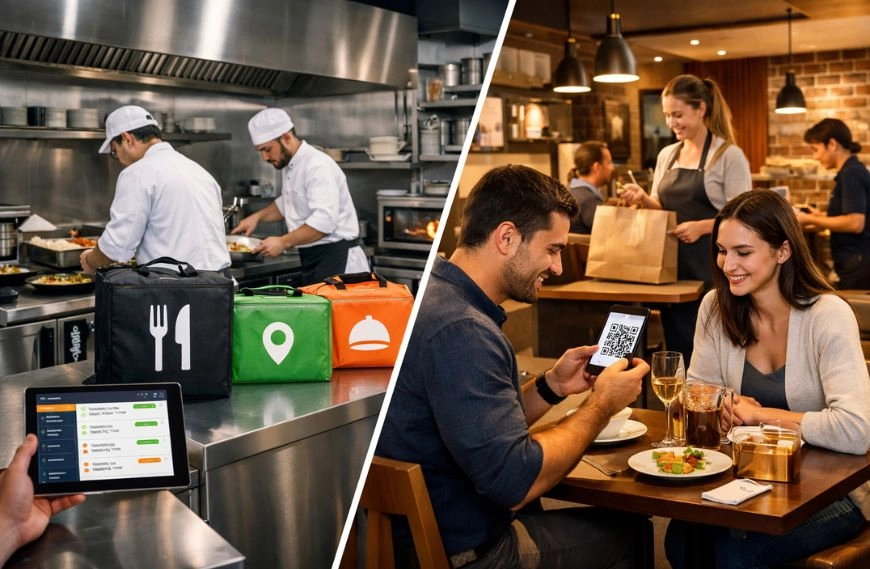
Cloud kitchens—also known as ghost kitchens or virtual kitchens—are delivery-only operations that eliminate the traditional dine-in space. Born out of the surge in online food delivery platforms, they thrive on streamlined logistics, reduced overheads, and digital-first customer engagement. By focusing solely on food preparation, cloud kitchens can scale rapidly, experiment with multiple brands under one roof, and respond quickly to evolving consumer tastes.
For entrepreneurs, the appeal is clear. Lower real estate costs, flexible staffing, and the ability to test new concepts without the risk of a full-service restaurant make cloud kitchens a fertile ground for innovation. A single facility might host a burger brand, a vegan salad concept, and a dessert line—all marketed independently through delivery apps. This agility allows restaurateurs to diversify revenue streams and hedge against market volatility.
Yet, the model is not without challenges. Customer loyalty is harder to build without a physical presence, and reliance on third-party delivery platforms can erode margins. Moreover, the absence of face-to-face interaction means brand identity must be carefully cultivated through packaging, digital storytelling, and consistent quality.
While cloud kitchens emphasize efficiency, hybrid dining models seek balance. Hybrid dining integrates traditional dine-in experiences with robust delivery and takeaway options, often supported by digital platforms. It acknowledges that consumers want flexibility: the option to enjoy a curated ambience one day and a convenient home delivery the next.
Hybrid dining is particularly relevant in urban markets, where lifestyle diversity demands adaptable solutions. Restaurants adopting this model invest in technology—QR code menus, app-based ordering, and loyalty programs—while maintaining the sensory appeal of physical spaces. The hybrid approach also allows businesses to optimize kitchen operations, dedicating sections to delivery orders without compromising dine-in service.
From a business perspective, hybrid dining offers resilience. During disruptions such as the pandemic, restaurants with hybrid capabilities were better positioned to pivot quickly. Today, the model continues to thrive as consumers embrace omnichannel dining, expecting seamless transitions between physical and digital touchpoints.
Both cloud kitchens and hybrid dining reflect broader trends in consumer behavior: convenience, personalization, and digital integration. For restaurateurs, the strategic question is not which model to adopt, but how to align operations with brand identity and market demand.
- Cloud kitchens suit entrepreneurs seeking scalability, experimentation, and cost efficiency. They are ideal for niche concepts, delivery-focused brands, and multi-brand portfolios.
- Hybrid dining benefits established restaurants aiming to expand reach without sacrificing experiential value. It strengthens customer loyalty by offering choice and flexibility.
Investors are taking note. Venture capital has poured into cloud kitchen startups, while established chains are reconfiguring spaces to accommodate hybrid operations. The convergence of these models signals a future where restaurants are not defined by walls but by ecosystems—digital, physical, and cultural.
Looking ahead, the evolution of restaurant models will be shaped by technology and consumer expectations. Artificial intelligence may optimize delivery logistics, while augmented reality could enhance dine-in experiences. Sustainability will also play a role, with eco-friendly packaging and energy-efficient kitchens becoming standard. Cloud kitchens and hybrid dining are not competing paradigms but complementary strategies. Together, they illustrate the industry’s adaptability and resilience. Restaurants are no longer just places to eat—they are dynamic platforms that deliver nourishment, convenience, and connection in ways that reflect the complexities of modern life.
Subscribe Deshwale on YouTube
