




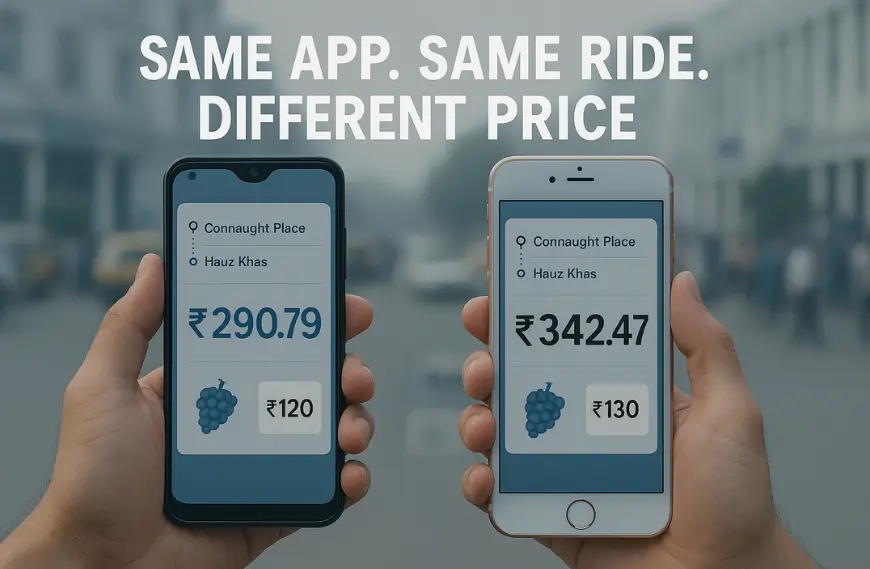
In the land of jugaad and digital dreams, where smartphones are more common than chai stalls, a sinister practice is eroding the trust of millions of Indian consumers. Online marketplaces, ride-hailing giants, e-commerce behemoths, and quick commerce apps, are allegedly charging different prices for the same services or products based on whether you wield an Android or an iPhone. This is no tech glitch; it’s a calculated chhal (deception) that assumes iPhone users can be fleeced for extra rupees. How can India, the cradle of innovation, tolerate such blatant exploitation of its people?
Imagine this: You book a cab from Delhi’s Connaught Place to Hauz Khas. Your Android phone shows a fare of ₹290.79. Your friend, standing next to you, checks the same app on their iPhone for the identical route, time, and cab type. Their fare? ₹342.47. A viral post on X a few months ago exposed this discrepancy, sparking a nationwide uproar. Similar stories have flooded social media, with users sharing screenshots of price differences on platforms like Uber, Ola, Flipkart, Zepto, and more.
It’s not just cabs. A Mokobara suitcase on an online marketplace was priced at ₹4,119 on Android but ₹4,799 on iOS, a ₹680 gap for the same product. On Zepto, a bunch of grapes cost ₹10 more on an iPhone than on an Android. In Chennai, parallel tests by a leading daily showed Uber Premier rides costing ₹397 on iPhone but ₹393 on Android for the same route. These aren’t isolated incidents; they are part of a pattern that screams discrimination. Why should the phone in your hand dictate the price you pay? This is digital apartheid, a modern-day loot that assumes iPhone users are fair game for higher prices.
Sudhir, a furious commuter from Bengaluru, posted on a social platform: “I always ask my daughter to book my cab on her Android because my iPhone fares are always higher. Yeh kya dhokha hai?” Another user reported a ₹1,700 spike in an Uber fare to the airport after a driver altered the destination, a tactic that smells of deliberate fleecing. On e-commerce platforms, users have flagged discrepancies like a Nescafe coffee jar costing ₹514 on Zepto’s Android app but ₹625 on Blinkit’s iOS app. These stories aren’t just about a few rupees; they are about dignity, fairness, and the right to not be cheated.
Consumers are sharing screenshots, comparing fares, and demanding answers. Yet, the companies remain evasive, hiding behind jargon like “dynamic pricing” while we bear the brunt of their opaque algorithms.
The Central Consumer Protection Authority (CCPA) has finally taken notice. In January 2025, it issued notices to ride-hailing platforms following a news report on fare discrepancies. Union Consumer Affairs Minister Pralhad Joshi took to X, calling this “prima facie unfair trade practice” and promising “zero tolerance for consumer exploitation.” The CCPA’s probe has expanded to include e-commerce and food delivery platforms, with a deadline for findings set for March 2025. Joshi’s words were clear: “This is blatant disregard for consumers’ rights to know.”
But we ask: Why has it taken so long for regulators to act? The Consumer Protection Act, 2019, mandates transparency in pricing, yet these companies operate with impunity. The Legal Metrology Act prohibits selling identical commodities at different MRPs, yet platforms flout this rule openly. In 2018, the Citizen Consumer and Civic Action Group (CAG) won a case against a retailer overcharging by just ₹1 for biscuits, citing unfair trade practices. If a small shop can be penalised for a single rupee, why are tech giants getting a free pass for hundreds?
The accused platforms have issued blanket denials. Ride hailing apps claim fares vary due to dynamic pricing based on demand, traffic, or weather—not device type. E-commerce giants echo similar excuses, citing supply chain costs or promotional discounts. But these explanations ring hollow when price differences are consistent and device-specific. A 2022 Harvard Business School paper revealed that third-party pricing algorithms can adjust prices based on user data, including device type, assuming iPhone users are more affluent. This is economic profiling, plain and simple.
Industry insiders suggest apps access hardware data (with user consent during installation) to tailor prices. A 2019 ResearchGate study noted that such personalised pricing triggers privacy concerns, as consumers feel their data is being misused without explicit permission. If algorithms assume iPhone users can pay more, they are not just maximising profits. They are exploiting trust. Why should any Indian pay extra just because of their phone?
This digital scam isn’t limited to ride hailing. E-commerce platforms like Flipkart and Amazon have faced scrutiny since 2020 from the Competition Commission of India (CCI) for anti-competitive practices, including predatory pricing and preferential seller treatment. A 2024 Reuters report confirmed violations, yet device based pricing adds another layer of unfairness. Quick commerce apps are also implicated, with users reporting price discrepancies for everyday items like groceries.
Food delivery platforms aren’t immune either. Tests by Digit showed minor price variations on Zomato and Swiggy, though not always device specific. The CCI’s chief warned in 2023 that platform economies, driven by algorithms and network effects, outpace current regulations. Without transparency, these platforms risk becoming virtual cartels, manipulating prices without accountability.
India’s digital economy is booming, with e-retail projected to hit $160 billion by 2028. Platforms like Uber, Ola, Flipkart, and Zepto are lifelines for millions, from an Indian commuting to work to the housewife ordering vegetables online. But with great power comes great responsibility, and these companies are failing us. The CCI notes that 72% of users rely on ride hailing apps for convenience, yet most feel helpless against surge pricing and algorithmic tricks.
This isn’t just about a few rupees; it’s about the principle of fairness. If companies can discriminate based on device type today, what’s next? Location-based pricing? Language-based surcharges? Profiling by name or pincode? This is a slippery slope to institutionalised bias, undermining the vision of a digital India where technology levels the playing field. Here’s what must happen:
1. Transparency in Algorithms: Companies must disclose all pricing variables and open their algorithms to regulatory scrutiny. If device type isn’t a factor, prove it with data.
2. Hefty Penalties: The CCI and CCPA should impose fines that hurt, not just token slaps on the wrist. Violators must overhaul their practices.
3. Consumer Empowerment: We urge users to compare prices across devices, which we believe most of us do, take screenshots, and report discrepancies to the CCPA or consumer forums.
4. Regulatory Overhaul: Laws must evolve to tackle algorithmic pricing, ensuring consumers aren’t pawns in a profit-driven game.
We are not just customers; we are the backbone of these companies’ success. Yet, they treat us like lambs to be fleeced, hiding behind tech jargon and legalese. Don’t hide, show us! If a street vendor can’t charge different prices for the same vada pav, why should tech giants get away with digital dacoity?
