




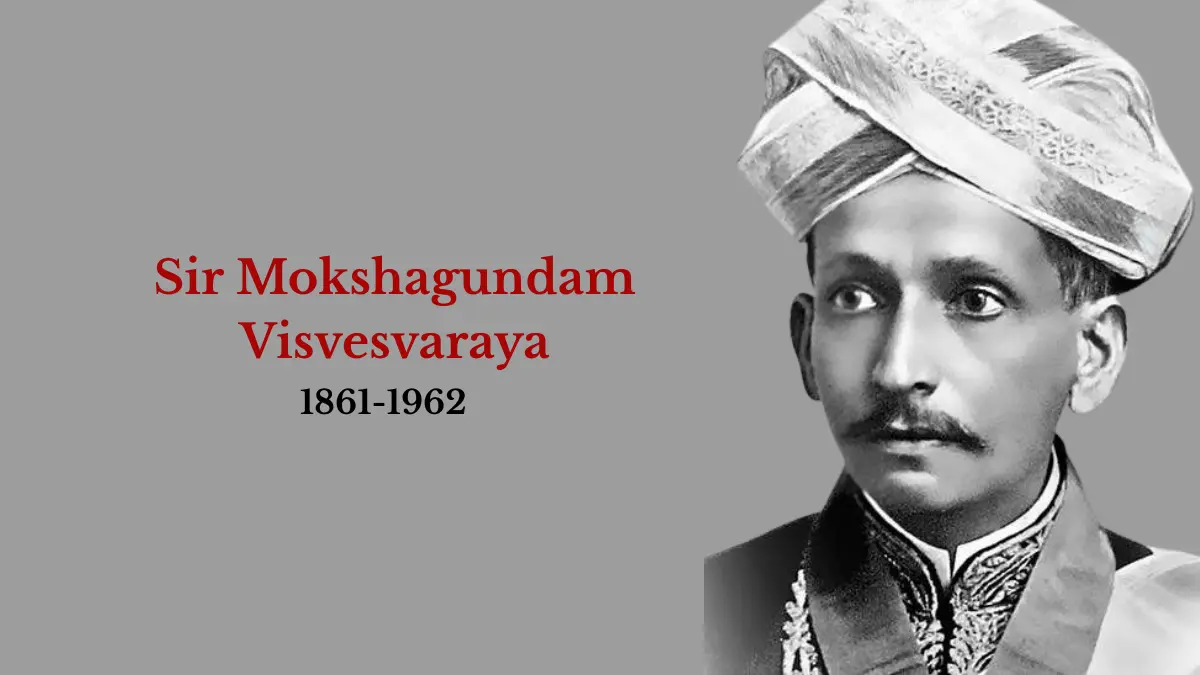
Every year on 15 September, India pauses to pay tribute to Sir Mokshagundam Visvesvaraya. The occasion, celebrated as Engineers’ Day, is not only about remembering one man’s remarkable journey but also about recognising the role of engineers in shaping our everyday lives. From the roads we travel on to the digital tools we use, engineers have been at the heart of India’s transformation.
Why 15 September is Engineers’ Day
The date marks the birth anniversary of Sir Visvesvaraya, born in 1861 in the small village of Muddenahalli in Karnataka. He grew up at a time when India was still under colonial rule, and opportunities in education were scarce. Yet, his determination led him to the College of Engineering, Pune, where he studied civil engineering. His career became a story of how technical knowledge, when paired with vision and discipline, can change societies.
Sir Mokshagundam Visvesvaraya: The Man and His Legacy
Sir Visvesvaraya is remembered for his engineering genius as well as his dedication to public service. One of his landmark achievements was designing the Krishna Raja Sagara Dam in Mysuru, a project that turned arid land into one of the most fertile belts in South India. He also created a system of flood protection for Hyderabad after the devastating floods of 1908, safeguarding the city from further disasters.
In 1912, he was appointed Diwan of Mysore, a role that gave him the chance to push forward industrial and educational reforms. He set up institutions such as the Mysore Soap Factory, the State Bank of Mysore, and encouraged technical learning to support industrial growth. For these contributions, he was knighted by the British Crown in 1915. Later, in 1955, he received India’s highest civilian honour, the Bharat Ratna.
His discipline and work ethic became legendary. Stories of his strict routine, punctuality, and lifelong commitment to nation-building continue to inspire generations of students and professionals alike.
India’s Engineering Workforce
India is often described as one of the world’s largest hubs of engineering talent. With millions of engineers across diverse sectors, the country relies heavily on this workforce to drive its progress. Whether in building highways and metros, developing cutting-edge software, or advancing space research, engineers have been central to India’s rise as a modern economy.
This vast pool of talent has its roots in India’s strong emphasis on technical education. Today, the country has thousands of engineering colleges and premier institutes like the IITs and NITs, producing graduates who contribute both at home and abroad. However, the challenge remains to ensure quality education, practical training, and adaptability in a rapidly changing technological landscape.
Visvesvaraya’s Belief in Education
Sir Visvesvaraya was deeply convinced that education was the key to development. While he did not singlehandedly create India’s modern engineering education system, his push for technical learning and his establishment of institutions in Mysore played an important role in inspiring future policy. He believed that industrialisation, backed by a skilled workforce, was the way to make India self-reliant.
Why Engineers’ Day Matters Today
Celebrating Engineers’ Day is not only about looking back at history. It is also about acknowledging the silent contributions engineers make every day. From ensuring clean drinking water reaches our homes to designing sustainable housing for growing cities, their work often goes unnoticed but remains indispensable.
At the same time, the day encourages young minds to see engineering not just as a career but as a service to society. It is a reminder that technology, when used responsibly, can uplift millions.
Sir Mokshagundam Visvesvaraya passed away in 1962, but his life continues to stand as a benchmark for integrity, vision, and excellence. Engineers’ Day is a moment to reflect on his contributions, but also to recognise the engineers of today who carry his legacy forward in new and challenging ways.
