




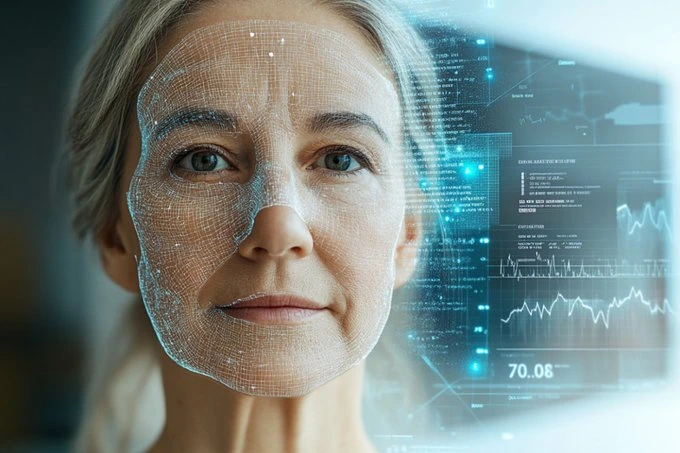
What if a simple photo of your face could tell how long you might live with cancer? Sounds unreal, right? But researchers are now saying it’s possible – thanks to a new AI tool called FaceAge.
Developed by a group of scientists in Canada, FaceAge has been trained to look at facial features in a whole new way. It’s not checking for wrinkles or beauty. Instead, it’s scanning signs of ageing that the naked eye usually misses. Based on that, it predicts your biological age – which is different from your age on paper. And here’s the kicker: that biological age can give doctors clues about how someone might respond to cancer treatment or how likely they are to survive.
This idea came from a study recently published in The Lancet. The research involved over 6,000 patients, and FaceAge turned out to be surprisingly accurate. In many cases, it could spot ageing signs that even medical professionals might overlook. People whose faces showed signs of being biologically older than their actual age often had worse outcomes in cancer treatment.
It’s not magic. The AI has been trained on thousands of patient images and medical records. It learns patterns – things like skin texture, droopiness, and other subtle facial markers. It then compares those to actual medical histories to build predictions. The best part? All it needs is a plain photo. No blood tests, no scans, no fancy machines.
This could be a game-changer in cancer care. Doctors could use it to make quicker, more informed decisions. It might help them choose the right treatment plans, especially when time is tight. And for patients, it could mean fewer unnecessary procedures and more personalised care.
Now, let’s be clear. This tool is not meant to replace doctors or other tests. It’s more like an extra pair of sharp eyes that can help guide decisions. And it still needs more real-world testing before it becomes a regular part of hospital practice.
Still, the idea is exciting. In a world where AI is often used for chatbots and filters, here’s a tool that could actually help save lives. It also opens the door to using everyday tech – like your phone’s camera – in serious healthcare settings.
There’s also the angle of accessibility. In many parts of the world, full cancer screening tools aren’t always available. A photo-based tool like FaceAge could help bridge that gap. Imagine a basic health checkup powered by AI that tells you more than a human eye ever could.
So next time you look in the mirror, remember this: your face might be telling a story even science is only beginning to understand. And with AI like FaceAge stepping in, that story could lead to longer, healthier lives.
