




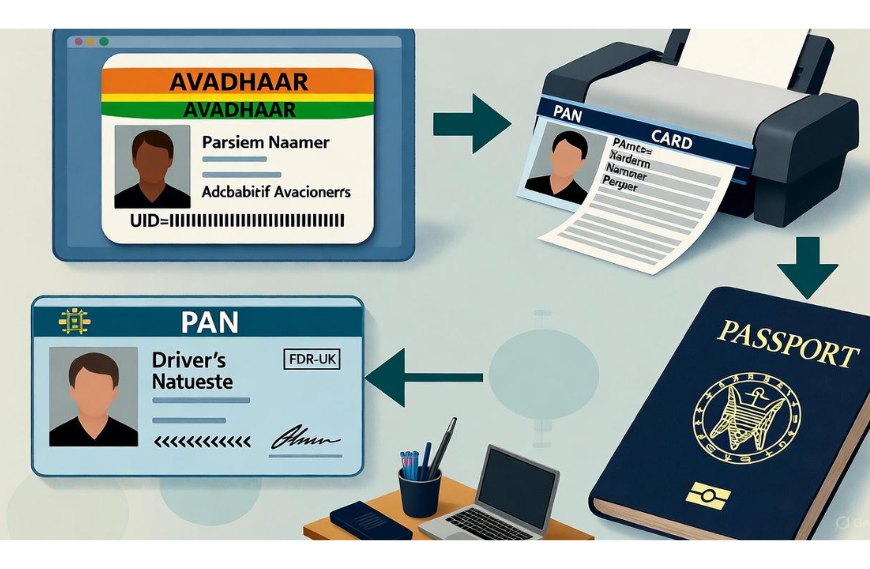
In Mumbai, a shocking case has exposed how one man managed to build a completely fake identity complete with forged educational certificates, Aadhaar card, PAN card, and even a passport. What makes this case truly alarming is not only the fraud itself, but also how easily India’s entire document verification system was bypassed at multiple stages.
The case came to light when Mumbai Police arrested a man who had been living under a false identity for years while posing as a scientist from the Bhabha Atomic Research Centre (BARC). To his neighbours and acquaintances, he appeared to be a quiet, educated professional with a respectable government job. But behind this convincing image lay an elaborate web of fake papers and digital manipulation.
Investigations revealed that the accused had paid around ₹19,000 to obtain forged documents. With the help of contacts in Jharkhand and Maharashtra, he fabricated a new identity using falsified academic degrees, a counterfeit Aadhaar card, a forged PAN card, and a fake Indian passport. Shockingly, this fake passport even allowed him to travel abroad several times, slipping through official checks without raising suspicion.
According to police reports, the man used VPNs and advanced digital tools to hide his online activity. This was not a one-man effort, but a sign of a much larger underground network of document suppliers, agents, and cyber enablers operating quietly across states. These groups used local printing shops and small cyber cafés to create government-grade fake IDs that looked completely authentic.
Using these documents, the accused was able to rent homes, open bank accounts, and apply for high-level positions. Each institution accepted his papers without proper cross-verification. The ease with which he moved through official systems revealed serious gaps in India’s identity verification process.
Experts believe that India’s core identification systems like Aadhaar and PAN are strong only if the source documents used to create them are genuine. If the foundation such as a birth certificate or school record is forged, the entire chain of identity becomes official on paper but false in reality.
This case highlights the urgent need for integrated and technology-backed verification systems. Policymakers and cybersecurity experts suggest linking all identity databases and using AI-based authentication or blockchain verification to catch inconsistencies early.
The Mumbai case is more than a one-off crime. It is a warning that document forgery has evolved into an organised, profit-driven industry that can endanger both national security and public trust.
Subscribe Deshwale on YouTube
