




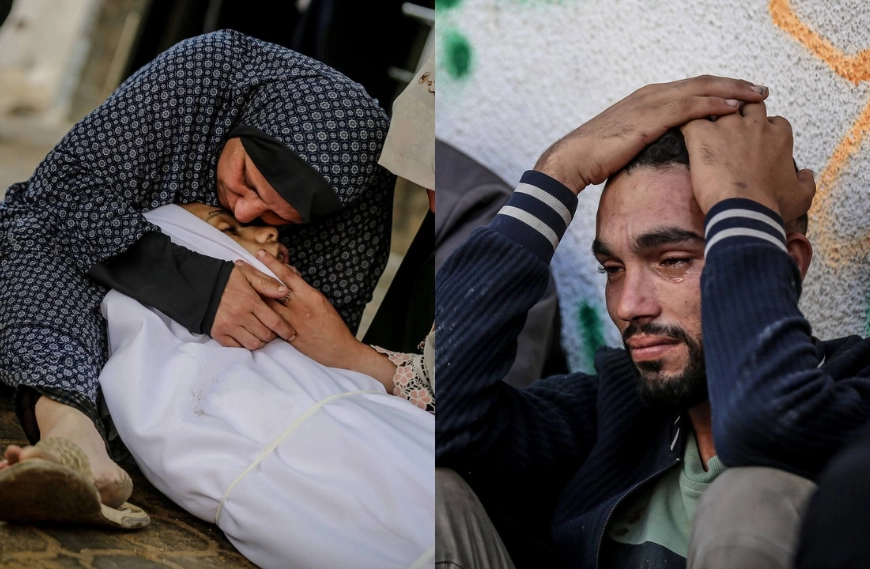
The cease-fire announced on 10 October 2025 between Israel and Gaza was supposed to bring a rare moment of calm to a region that has seen relentless bloodshed. Yet within weeks, the fragile truce was shattered. On 29 October, Israeli airstrikes killed at least 104 Palestinians, including women and children, in what became one of the deadliest incidents since the truce began.
Israel said it launched the strikes after one of its soldiers was killed in Rafah and accused Hamas of violating the agreement by delaying the return of Israeli hostages’ remains. Soon after the attacks, the Israeli military declared that the cease-fire was “back on.” However, this announcement only deepened the sense of uncertainty. For many, it raised a painful question — can there really be peace when violence returns so easily?
In Gaza, hospitals were overwhelmed with casualties, and families were seen carrying the bodies of their loved ones through the rubble. Makeshift camps were flattened, and emergency workers struggled to cope. Residents said they felt betrayed, believing that the cease-fire had never truly been honoured. For them, the promise of safety turned into yet another night of fear.
The humanitarian situation in Gaza remains dire. According to health authorities, more than 68,000 people have died since the war began last year. Thousands remain missing or displaced, with limited access to clean water, food, and medical care. Despite the peace deal, aid convoys face delays at checkpoints, leaving many without essential supplies.
For Israel, the strikes were justified as a response to what officials described as “terrorist activity” and cease-fire violations by Hamas. The government said it was targeting militants and underground tunnels used for smuggling weapons. Yet, the high civilian toll has drawn criticism from international observers and human rights groups. Many have called for independent investigations into whether the attacks breached international law.
For analysts and diplomats, the situation once again exposes how fragile such truces are in the absence of trust, accountability, and reliable enforcement. A cease-fire is not just a pause in fighting; it is a test of political will and empathy. Without strong monitoring mechanisms or neutral mediators, both sides often interpret the terms differently, leading to rapid breakdowns.
In Gaza, people speak of exhaustion more than anger. After months of living under siege, many say they have lost faith in political promises. In Israel, there are growing debates about how long the military campaign can continue without any clear end goal.
The tragedy of this latest episode lies in its familiarity. Each time a cease-fire is announced, it brings a flicker of hope that life may finally return to normal. But when bombs fall again, that hope fades quickly. The cease-fire between Israel and Gaza remains on a knife-edge a reminder that peace built on mistrust is peace that cannot last.
Subscribe Deshwale on YouTube
