





Did you know?
Something interesting is happening across India. From college students experimenting with 3D selfies to designers creating fantasy portraits of their friends, people are embracing a new kind of digital art.
This moment, often called India’s AI Adoption Wave, is not about coding or complex tech talk. It’s about creativity, curiosity, and the joy of seeing imagination turn into pictures.
A new kind of creative playground
Until recently, digital creation required skill. You needed to know design software or photography tools to make something professional.
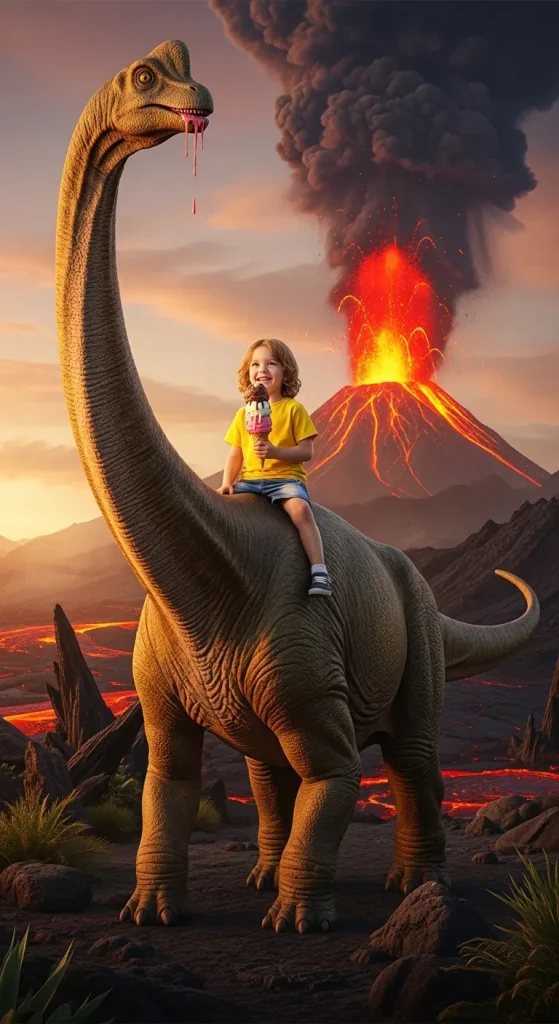
But now, with AI image generators like Google’s Nano Banana, creativity feels like play. You can type ‘a kid holding an ice cream cone and sitting on a dinosaur near a volcano’ and get a picture that looks real enough to frame. That’s the magic behind this new AI wave sweeping across India.
But, what’s striking is how fast this shift is happening.
In small towns, students are using AI tools for school projects. In cities, social media creators are using them to design entire campaigns.
These are not just early adopters anymore. They are everyday people finding ways to express themselves.
Why India is leading the charge
There’s a simple reason India’s AI Adoption Wave is growing so quickly: people here are naturally curious and experimental. Indians have always been quick to try new apps, trends, and tools.
Do you remember when short videos took off overnight? So, the same energy is now flowing into generative AI.
Another factor is accessibility.
With affordable smartphones and cheaper data, India has one of the world’s largest online populations. AI tools like Nano Banana work on mobile-friendly platforms, meaning anyone can try them.
You don’t need expensive devices or software subscriptions, just imagination and an internet connection.
And it’s not just for fun.
- Small business owners are using AI-generated images for posters, menus, and advertisements.
- Fashion students are designing virtual outfits.
- Wedding photographers are exploring AI to add cinematic touches to their pictures.
The result is a blend of technology and tradition, where digital tools meet deeply personal creativity.
From novelty to necessity
When Google introduced its first Nano Banana tool, most users treated it like a novelty. People created retro avatars, fantasy scenes, or old-school movie posters.
But now, things are changing. With the next version—Nano Banana 2.0, powered by Gemini 3 Pro the tool can understand detailed prompts and produce photo-quality images.
That means you can describe your outfit, lighting, and even the background you want, and the AI brings it to life in seconds. For content creators and freelancers, this saves hours of work. Instead of paying for stock photos or waiting for a designer, they can make visuals instantly.
This is not just about convenience. It’s about creative independence. India’s AI Adoption Wave is showing that technology can empower individuals, not just big companies.
The cultural shift
Every generation has its creative signature. For millennials, it was digital photography and blogging.
For Gen Z, it’s short videos and AI visuals. The way young Indians use tools like Nano Banana says a lot about the country’s evolving identity.
They are not afraid to mix cultural roots with modern aesthetics. You will see an AI-generated image of a bride in traditional attire standing under the northern lights, or a portrait of an autorickshaw floating through space. It’s art that does not follow rules—it invents them.
This cultural experimentation is creating a new visual language online. India’s social media feeds are now filled with AI-made posters, characters, and storyboards.
Some creators even use these images to pitch ideas for films and comics. What began as a trend is turning into a serious creative economy.
And of course, this new world comes with questions.
‘How do we know what’s real and what’s generated?’
Google has built features like visible and invisible watermarks into its AI models to prevent misuse. The goal is not to stop creativity, but to keep it honest.
It’s an important step, especially in a world flooded with digital misinformation. As more Indians use AI for art, branding, and news visuals, knowing that something carries a digital signature adds trust. It shows that technology can be both creative and responsible.
In India, every new tool finds its own unique purpose. Some will use AI to tell family stories. Others will turn it into art or business. Schools might even start teaching creative AI as part of design and media studies. The wave is already here, and it’s growing stronger every day.
The real success of India’s AI Adoption Wave is not in the technology, it’s in the people using it.
Creativity, redefined
What makes this wave so special is its inclusivity. You don’t have to be a professional to create something beautiful anymore. AI has made visual storytelling available to anyone willing to try.
In a way, that’s what technology was always meant to do—level the playing field. Just as the smartphone turned everyone into a photographer, generative AI is turning everyone into a visual creator.
And while the tools will keep improving, the heart of it all remains the same: curiosity, imagination, and the desire to make something that feels like your own.
That’s the spirit driving India’s AI Adoption Wave. A movement where technology does not replace human creativity but amplifies it. The future of art, storytelling, and design might just be unfolding here, one prompt at a time.
Subscribe Deshwale on YouTube
