




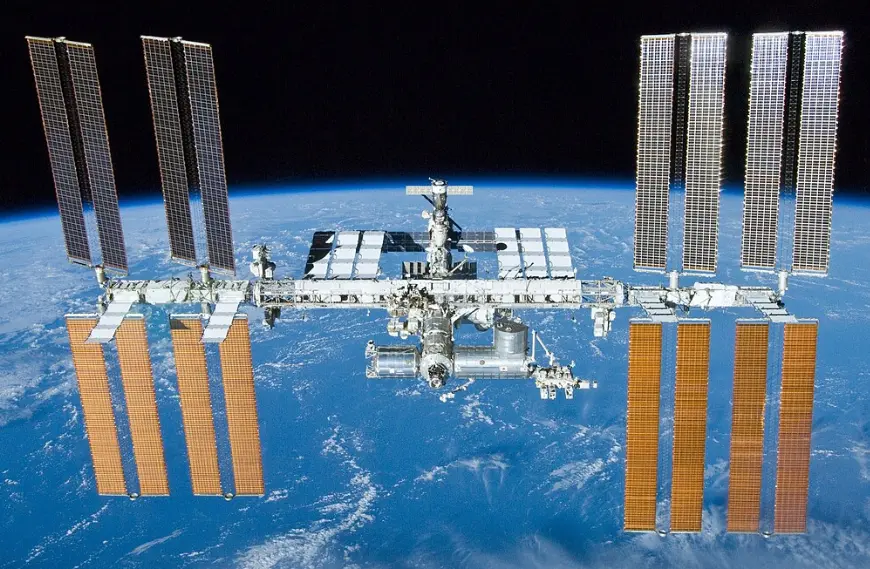
Orbiting 400 kilometers above Earth at 28000 km/h, the International Space Station (ISS), operational since 2000, is a global engineering triumph built by NASA, ESA, Roscosmos, JAXA, and CSA per a 2023 NASA report. Spanning 109 meters with 16 pressurized modules, it supports six astronauts conducting 2000 annual experiments in microgravity, advancing medicine and physics per a 2021 Nature study. Its construction, costing 150 billion dollars over 20 years, involved 42 launches and 1000 hours of spacewalks, assembling 420 tons of solar panels, labs, and living quarters in zero gravity per a 2020 ESA report.
Engineers overcame challenges like thermal extremes from minus 150°C to 120°C using radiators and insulation, and ensured reliability with redundant systems, surviving 99.9 percent of debris risks per a 2022 JAXA study. Economically, the ISS drives 1 billion dollars in annual research with 2024 patents up 20 percent, though maintenance costs 4 billion dollars yearly per a NASA budget. Environmentally, its solar arrays generate 90 kW, minimizing fuel use, but launches emit 1 million tons of CO2 per a 2020 IPCC study. In India, ISRO’s 2023 Gaganyaan mission draws on ISS tech though budget constraints limit scope per a Times of India report. Culturally, the ISS fosters global unity with 2024 live streams reaching 1 billion viewers, though X posts show 50 percent question its cost versus Earth-based needs. Its microgravity research aids cancer treatments, improving survival rates 10 percent per a 2021 Lancet study. The ISS proves collaborative engineering can push human frontiers, balancing scientific gain with logistical challenges.
