




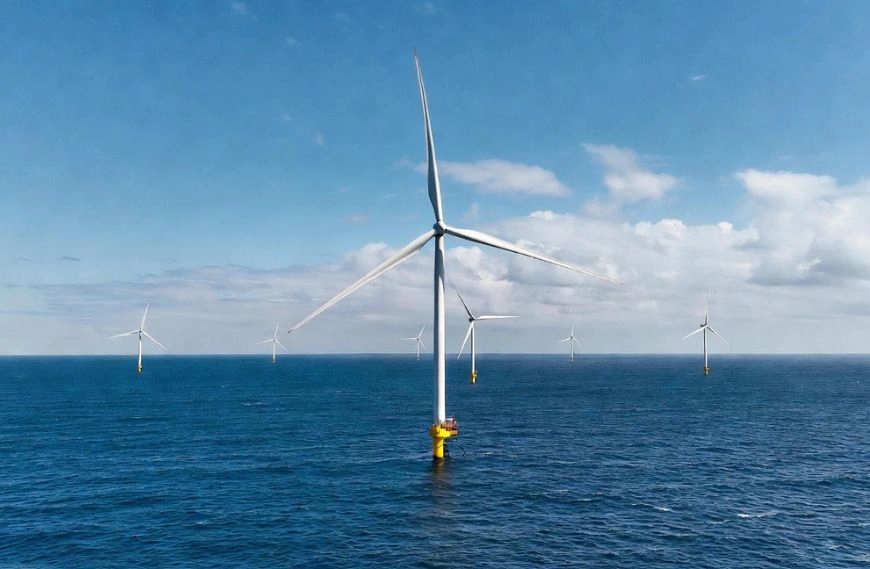
In a major milestone for clean energy, the world’s largest offshore wind turbine has begun operating, marking a new frontier in renewable power technology. This massive turbine, developed and installed in China, represents a significant leap forward in wind energy capacity and innovation.
The turbine has a capacity of 26 megawatts (MW) the highest for any single offshore wind turbine currently in service. Its rotor diameter exceeds 310 metres, larger than ten and a half football fields, and its hub height reaches 185 metres, equivalent to a skyscraper.
When operating at full capacity, this giant turbine can produce about 100 million kilowatt‑hours (kWh) of clean electricity each year, enough to power roughly 55,000 households annually, helping cut fossil fuel use and reduce carbon emissions.
This achievement is part of China’s broader push to expand renewable energy sources and reduce dependence on coal. The country has been rapidly scaling up wind and solar installations and already ranks among the world’s top producers of renewable power. By adding large turbines like this one, China aims to further strengthen its position in global wind energy technology.
What makes this wind turbine especially remarkable is not just its size but also the engineering challenges it overcomes. To build and install such a large machine offshore, engineers had to design and manufacture components of unprecedented scale, including long and flexible blades and a robust structure capable of withstanding harsh sea conditions.
The turbine’s enormous swept area, the circular region covered by its spinning blades, allows it to capture significantly more wind energy than smaller models. This means it can generate power more efficiently, especially in strong offshore wind environments.
Experts say that breakthroughs like this are essential for the future of clean energy. As countries work to meet climate goals and reduce greenhouse gas emissions, wind power, especially offshore wind, is expected to play a major role. Large turbines with high capacity can help make wind energy more cost‑effective and competitive with traditional fossil fuel sources.
At the same time, engineers must carefully balance environmental impacts and energy output as turbine projects grow in size. But the successful activation of this record‑breaking turbine stands as a powerful symbol of how renewable energy technology continues to evolve and expand.
Subscribe Deshwale on YouTube
