




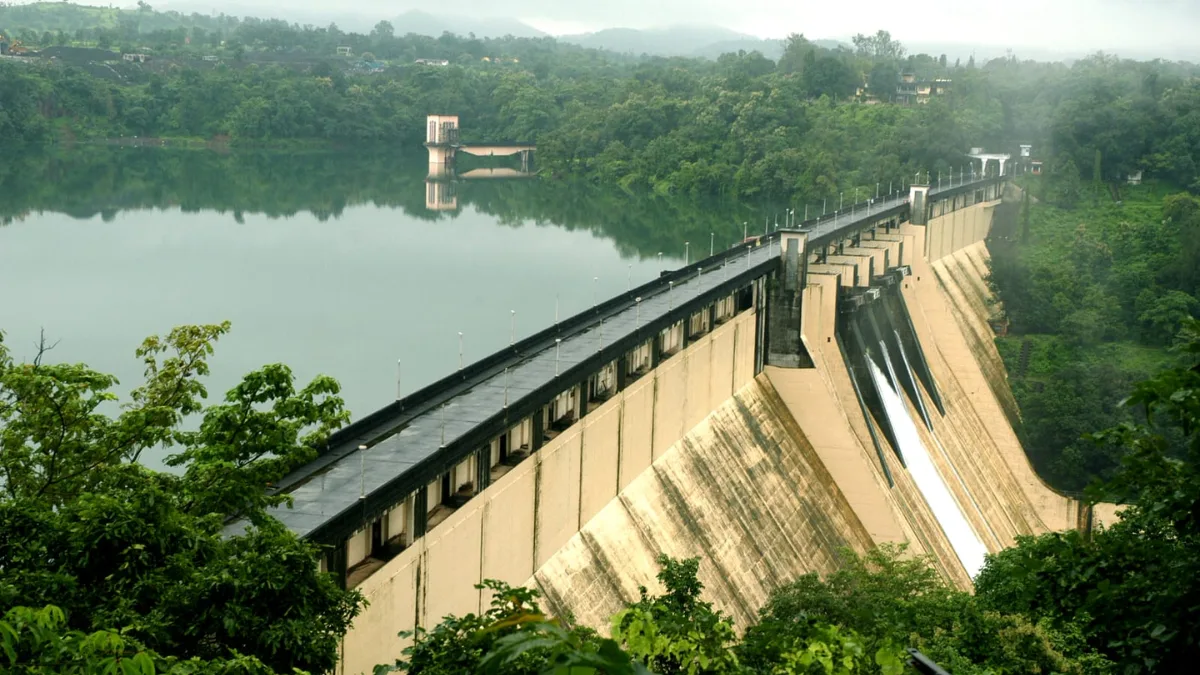
Mumbai, the city that never sleeps, thrives on its relentless energy. Yet, beneath its bustling streets lies a quieter hero: the Modak Sagar Dam. Nestled on the Vaitarna River in Thane district, this gravity dam has quenched Mumbai’s thirst since 1957. With a population soaring past 20 million, the city’s water needs are immense. Modak Sagar, also known as Lower Vaitarna Dam, delivers 450 million litres daily, a lifeline for the suburbs. This article explores its history, engineering, and enduring significance, blending tales of human ingenuity with nature’s splendour.
The 1950s marked a turning point for Mumbai, then Bombay. The city’s population ballooned from 2.966 million in 1951 to 4.152 million by 1961. Vihar, Tulsi, and Tansa lakes, built in the 19th century, struggled to meet this surging demand. Wells and tanks, once sufficient, had long been outpaced by urban growth. As Mariam Dossal notes in Imperial Designs and Indian Realities, “By 1845, trade flourished in Bombay, the population doubled, and scarce water resources came under severe stress.” The need for a new water source was urgent.
N.V. Modak, a brilliant engineer, stepped into this challenge. Known for crafting Mumbai’s iconic Marine Drive, he also penned the Outline of the Master Plan for Greater Bombay. His vision extended beyond roads to water security. Modak scoured Nashik, Pune, and Thane districts, identifying the Vaitarna River’s steady flow from Igatpuri to Khardi. His plan to dam the river promised a reservoir to sustain Mumbai’s growth. “Water is the lifeblood of a city,” a sentiment echoing the era’s urgency, drove his mission.
Construction began in 1954, a feat of mid-20th-century engineering. Completed in 1957, the Modak Sagar Dam stands 82 metres high and 567 metres long. Its gravity design relies on sheer mass to hold back the Vaitarna’s waters, creating a reservoir of 128,925 million litres. This capacity makes it Mumbai’s second largest water-supply lake, surpassed only by Tansa. The dam’s overflow level, set at 163.15 metres, ensures safety during heavy monsoons. Named after Modak, it honours his legacy in shaping Mumbai’s future.
The dam’s role extends beyond engineering. It supplies 450 million litres daily, over 11% of Mumbai’s 3,950 million litres per day, primarily to the suburbs. Water flows to the Bhandup Water Treatment Plant, Asia’s largest, where it’s purified to meet IS 10500:2012 standards. This process ensures clean water reaches millions of homes. Yet, Mumbai’s demand, at 4,200 million litres daily, outstrips supply, as noted in a 2023 ORF report. Modak Sagar’s contribution is vital but not enough alone.
Monsoons highlight the dam’s importance. On 27 July 2023, Modak Sagar overflowed at 10:52 PM, boosting Mumbai’s water stock to 68%. On 25 July 2024, it spilled over at 10:40 AM, a relief for a city parched by summer. These events, reported by Times of India and NDTV Profit, signal full reservoirs and no water cuts for the year. The BMC’s Hydraulic Engineer’s Department monitors levels daily, ensuring efficient distribution. Such overflows are celebrated, easing fears of shortages.
Beyond utility, Modak Sagar is a natural gem. Set against the Western Ghats, a UNESCO World Heritage site, the dam’s reservoir reflects lush hills and open skies. Visitors describe it as serene, with TripAdvisor reviews praising its “breathtaking views” and “calming atmosphere.” From June to September, the monsoon transforms the area into a verdant paradise. Boating, kayaking, and picnicking draw adventure seekers, while photographers capture the dam’s majesty.
Access, however, is tightly controlled. The state government protects the premises, limiting entry to BMC officials. Public visits require permission from the BMC’s head office at CST. Despite this, organized tours and special permits allow glimpses of its beauty. Located near Khardi village, about 100 km from central Mumbai, it’s reachable by train or car. The journey rewards with panoramic vistas and a chance to unwind.
The dam also supports a vibrant ecosystem. Crocodiles inhabit its shallow waters, a thrilling detail for visitors. This wildlife, noted in Wikipedia, underscores the reservoir’s role in the Western Ghats’ biodiversity. Birds and aquatic life thrive here, making it a haven for nature lovers. Yet, caution is advised near the water’s edge due to these wild inhabitants.
N.V. Modak’s legacy extends beyond the dam. He founded the Central Public Health Engineering Research Institute, now NEERI, shaping environmental engineering in India. His work on Marine Drive and urban planning cemented his reputation as a visionary. The dam’s naming reflects gratitude for his foresight in securing Mumbai’s water future during a time of rapid urbanisation.
Challenges persist, though. A 2005 ResearchGate paper highlights Mumbai’s water management issues, noting that while supply systems like Modak Sagar were well-planned, demand now outpaces supply. Pipeline leaks and inequitable distribution exacerbate shortages, especially in slums where residents get just 45 litres per person daily. The BMC’s efforts to install meters and raise awareness aim to address this, but reforms are needed.
The dam’s construction likely faced hurdles, though records are scarce. Building a gravity dam in the 1950s required significant labour and resources. The Vaitarna’s flow and the Western Ghats’ terrain posed logistical challenges. Yet, Modak’s expertise ensured success, creating a structure that stands firm nearly seven decades later.
Modak Sagar’s dual role as a water source and tourist spot makes it unique. MakeMyTrip calls it a “hotspot for water activities,” with kayaking and boating drawing crowds. The monsoon season, when water levels peak, is ideal for visits. The dam’s overflow mechanism, designed to release excess water safely, protects both the structure and downstream villages.
Recent proposals, like a desalination plant at Manori, suggest alternatives to new dams, as noted by BMC’s P Velarasu in Times of India. Such plans aim to reduce environmental impact, like tree felling for projects like Gargai-Pinjal. Modak Sagar, however, remains indispensable, its reservoir a bulwark against Mumbai’s water stress.
The dam’s story is one of resilience. It reflects Mumbai’s ability to adapt to growth while preserving natural beauty. For Mumbaikars, it’s a silent guardian, ensuring taps don’t run dry. For visitors, it’s a retreat into nature’s embrace. Whether viewed through the lens of history, engineering, or ecology, Modak Sagar Dam stands as a testament to human ingenuity and Mumbai’s enduring spirit.
Key Specifications of Modak Sagar Dam
| Attribute | Details |
|---|---|
| Location | Thane District, Vaitarna River |
| Construction Year | 1954–1957 |
| Type | Gravity Dam |
| Height | 82 metres |
| Length | 567.07 metres |
| Storage Capacity | 128,925 million litres |
| Daily Supply | 450 million litres |
| Overflow Level | 163.15 metres |
| Significance | Second largest Mumbai water source |
Mumbai’s Water Supply Lakes
| Lake | Year Built | Capacity (Million Litres) |
|---|---|---|
| Vihar | 1860 | 27,698 |
| Tulsi | 1879 | 8,046 |
| Tansa | 1892 | 147,627 |
| Modak Sagar | 1957 | 128,925 |
| Upper Vaitarna | 1973 | 227,047 |
| Middle Vaitarna | 2012 | 455,000 |
| Bhatsa | 1983 | 717,037 |
Sources: Wikipedia, Times of India, NDTV Profit, MakeMyTrip, TripAdvisor, ResearchGate
