 Deshwale
From Roads to Elevators: Why Mumbai’s Skyscrapers May Soon Need A New Kind of Food Delivery System
In brief · AI summary Mumbai's rapid vertical growth is creating delivery delays, as riders face security checks, visitor restrictions, and long elevator waits after reaching buildings. The article suggests that dedicated in-building delivery staff could become common, with one rider bringing food to the entrance and another taking it up to the flat or office floor. This approach could improve delivery speed, reduce cancellations, and create new urban jobs.
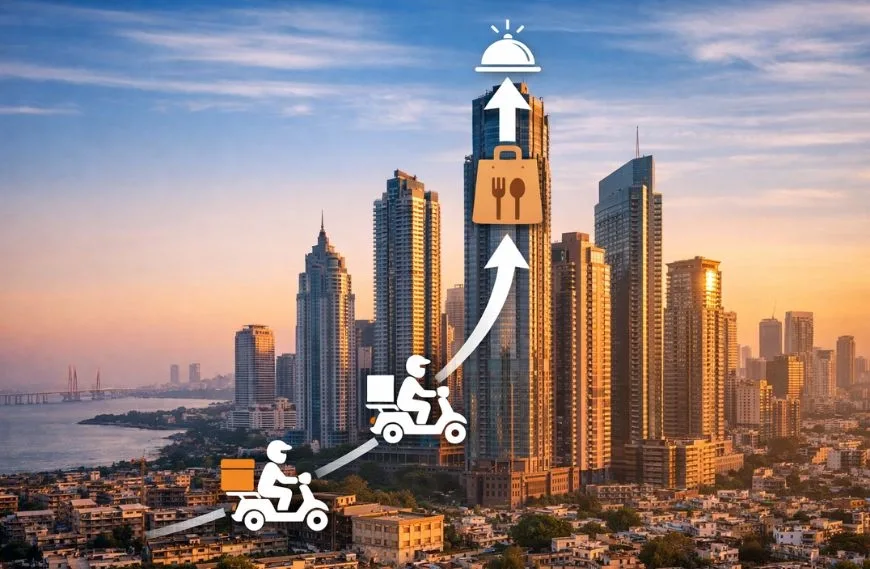
Mumbai is no stranger to density. For decades, the city has learned how to survive in limited space. But now, instead of spreading outward, Mumbai is rising upward. Across areas like Lower Parel, Worli, Andheri East and parts of the western suburbs, residential towers and office complexes are becoming taller every year. Forty-floor buildings are no longer rare. Some projects are already crossing fifty floors.
This vertical growth is quietly creating a new urban problem that most people do not notice until it affects their daily life. Food delivery.
Ordering food in Mumbai has become routine. Riders reach societies quickly, even during traffic hours. But the real delay often begins after they arrive. Security checks, visitor restrictions, distant parking spots and long waits for elevators slow everything down. In many high-rise buildings, riders are not even allowed to go upstairs. Customers are asked to come down. Security guards sometimes hold the food. Elevators remain packed during peak office hours.
The result is familiar to thousands of residents. Delayed meals. Cold food. Angry phone calls. Riders waiting helplessly at gates while new orders pile up on their apps.
As Mumbai continues to grow vertically, this problem will only become bigger.
Other global cities with mega skyscrapers have already faced this challenge. Their solution was simple but effective. Separate the road delivery from the building delivery. One rider brings the food to the entrance. Another worker inside the building takes it up using elevators and corridors.
Mumbai may soon need a similar system.
In large housing societies and office parks, dedicated in-building delivery staff could become common. Their job would not involve bikes or traffic. Instead, they would work inside towers. Collect food at the gate. Use resident elevators. Navigate building layouts. Deliver orders directly to flats and office floors.
For delivery companies, the business logic is strong. Riders waste valuable time waiting for lifts and security approvals. That time could be better used completing more orders. With in-building staff handling the final part, overall delivery speed improves. Customer satisfaction rises. Order cancellations drop.
For workers, this could open a new form of urban employment. The work would be physically demanding, but it would not require vehicle ownership or fuel expenses. Fixed buildings would offer predictable routes and stable work hours. For students, part-time workers and migrants, this could become another entry point into the gig economy.
For residents, the benefit is clear. Faster deliveries. Less confusion at gates. Fewer arguments with security guards. A smoother experience overall.
Interestingly, Mumbai has already seen early signs of this shift. In some corporate parks, office assistants collect bulk lunch orders. In premium residential towers, building staff help coordinate parcel movement. What exists informally today could soon become organised tomorrow.
Urban experts point out that infrastructure planning often focuses on roads and transport networks. But modern cities also need to plan internal movement. When thousands of people live and work inside vertical spaces, elevators become just as important as streets.
Mumbai’s future delivery story will not only depend on faster bikes or better traffic management. It will also depend on how efficiently people and goods move inside towers.
As the city continues to climb higher, the definition of ‘last mile delivery’ will change. It will no longer end at the gate. It will end at the top floor.
And when that happens, Mumbai may discover that its newest delivery route does not begin on the road. It begins inside the elevator.
Subscribe Deshwale on YouTube