




By Hiren Gandhi
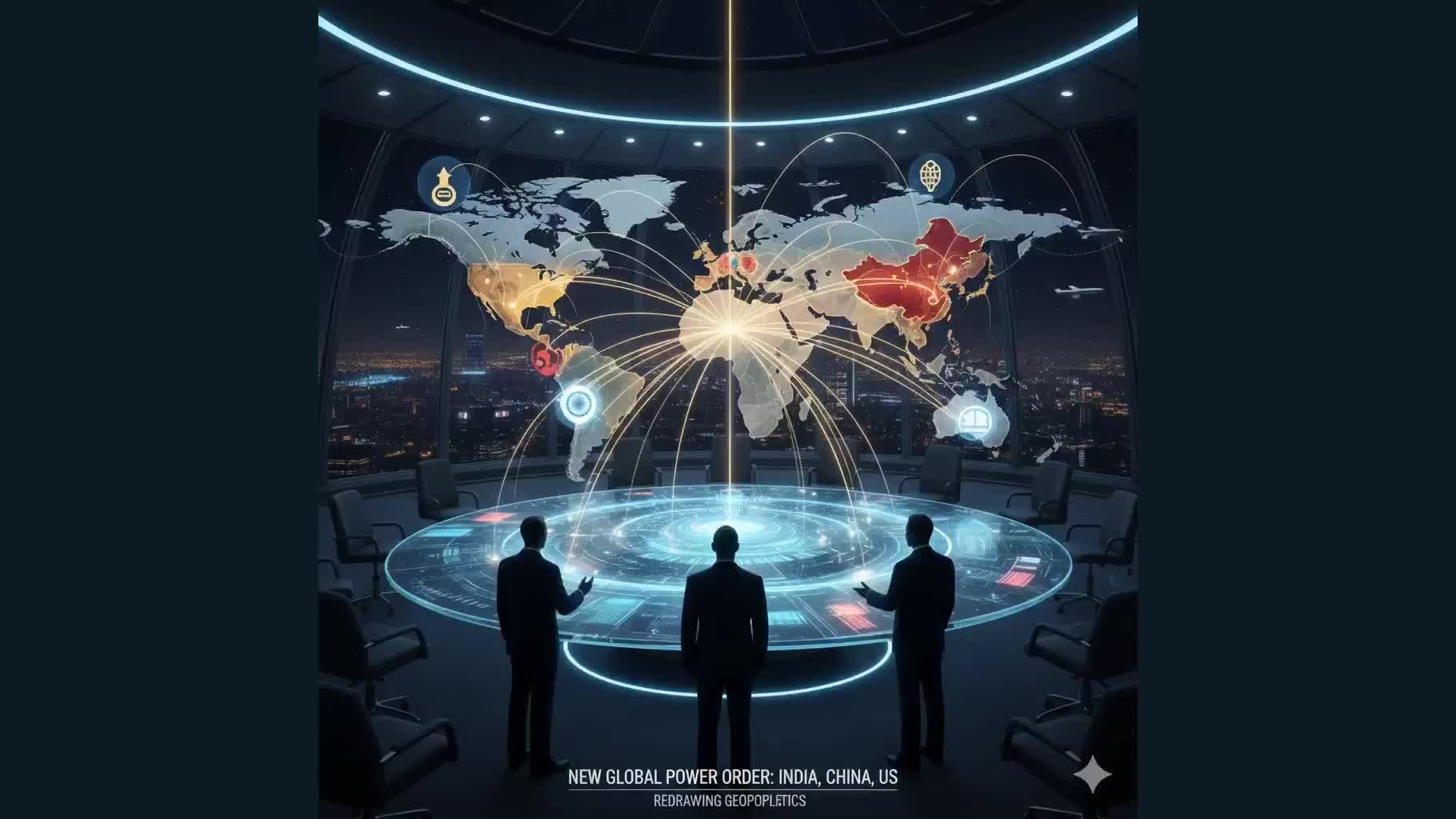
The global power structure is undergoing its sharpest shift in decades as traditional dominance weakens and new strategic centers emerge. India has stepped into a position where it no longer operates as a secondary player but as a decisive force influencing global politics, economics, and diplomacy. The United States and China continue to shape the global environment, but the old hierarchy is no longer intact.
India’s rise is defined by clarity, confidence, and an increasingly independent foreign policy. It makes decisions based on national interests rather than external pressure, driven by strong economic growth, technological momentum, demographic advantage, and global trust. India has transitioned from being a participant in global conversations to becoming a key architect of the emerging world order.
China, meanwhile, maintains formidable influence through sheer economic weight. With annual exports now touching the 1 trillion dollar mark, its manufacturing scale and integration in global supply chains give it strategic leverage over the world’s trade systems. Rising trade deficits between China and major economies such as India, the United States, and Europe expose both its competitive pricing power and the dependence of global markets on Chinese production.
For the United States, reducing its trade deficit with China remains structurally difficult. American consumers prefer lower-cost goods, US companies rely heavily on Chinese manufacturing, and domestic production costs remain far higher. Washington has shifted from direct confrontation to strategic balancing, tightening technology export controls, strengthening alliances like the QUAD, asserting military presence in sensitive zones, and promoting supply-chain diversification. The goal is to contain China’s influence without triggering a costly conflict.
India’s diplomatic strategy stands out as a case study in multi-alignment. It maintains deep relationships with the US, Russia, Europe, the Middle East, and Africa simultaneously, without falling into any single geopolitical camp. India’s negotiating strength stems from its market size, strategic geography, demographic depth, and credibility as a stable partner. It deals with major powers on equal terms and refuses to compromise its autonomy for any alliance.
China, although economically assertive, chooses silence on global conflicts including the Russia-Ukraine war and the Israel-Gaza confrontation. The calculation is simple: taking sides risks trade, investment, and long-term influence. Beijing prefers a low-noise, high-impact strategy that secures economic progress without political entanglements.
The emerging global power order is anchored around three pillars: China as the manufacturing and export powerhouse, the United States as the security and technology leader, and India as the independent balancing force that both sides must now engage with seriously. These three actors are shaping a new triangular power structure where trade, technology, defence, and geopolitics intersect more tightly than ever.
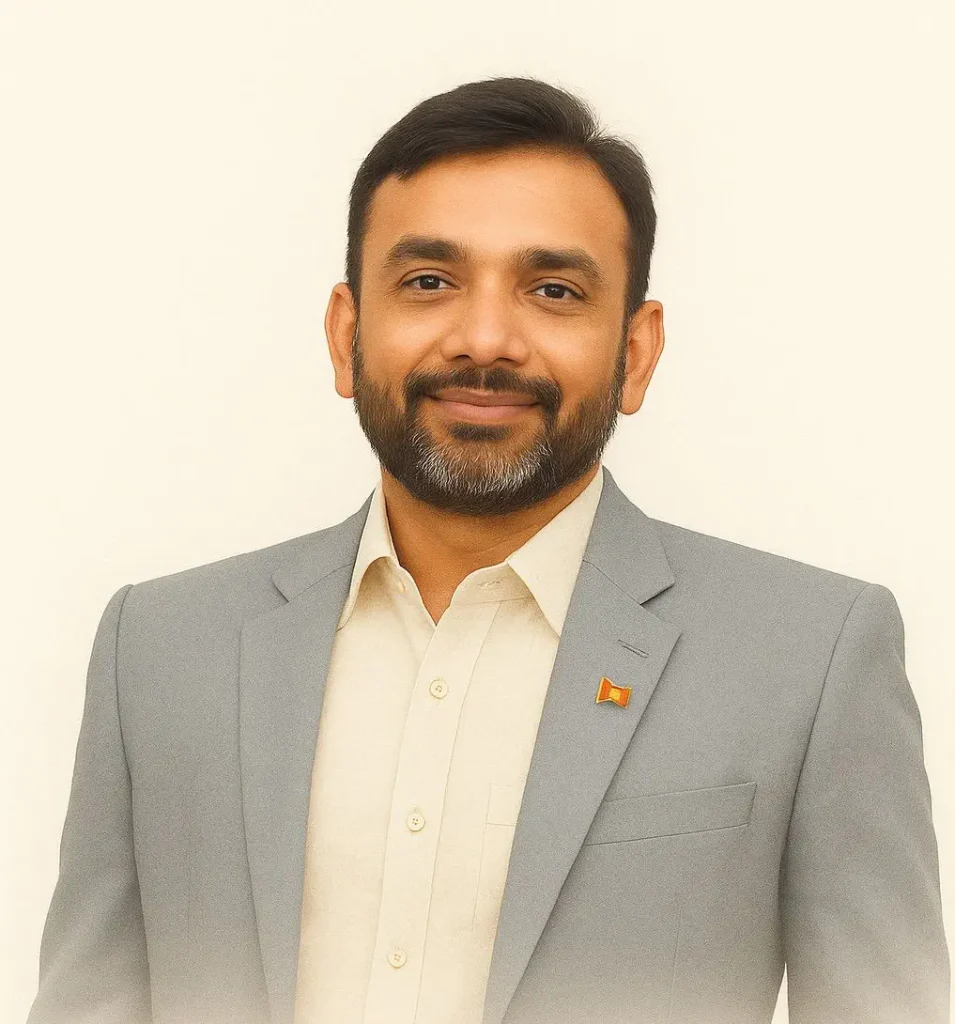
Secretary — InGlobal Business Foundation (IBF)
Director — ReNis Agro International LLP, Ahmedabad, India
Subscribe Deshwale on YouTube
