




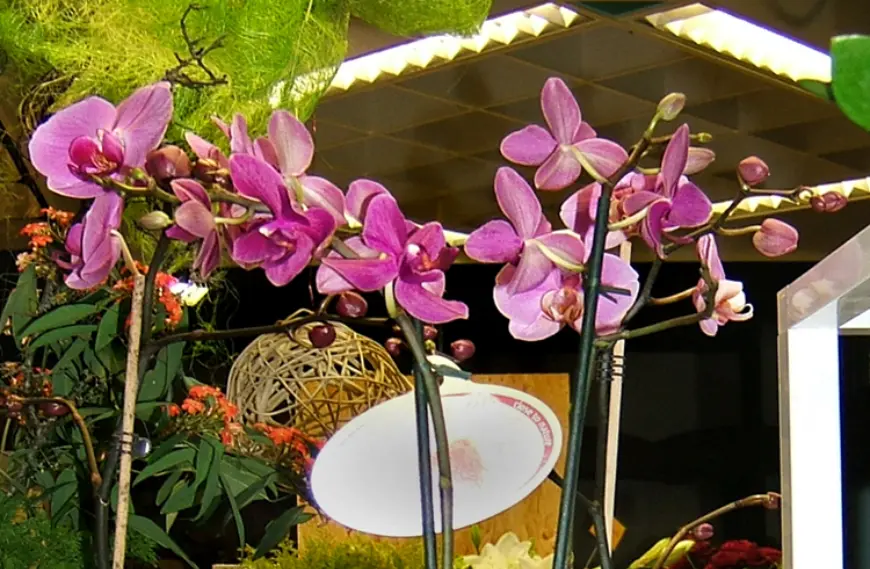
Few flowers captivate the human imagination like orchids. With over 25,000 species and countless hybrids, orchids make up one of the largest flowering plant families on Earth. These extraordinary blooms have evolved astonishing strategies to attract pollinators, producing shapes and colours that few other plants can match.
The Greatest Plant Family
Orchids grow on every continent except Antarctica, thriving in rainforests, mountains, grasslands, and even arid regions. Some of the most famous orchids include:
- Phalaenopsis: Moth orchids, common in homes and florists.
- Cattleya: Large, fragrant flowers popular in corsages.
- Vanilla planifolia: The only orchid grown commercially for food. It produces vanilla beans.
Evolutionary Wonders
Orchids’ pollination strategies are remarkable. Some mimic female insects in shape and scent, tricking male bees into attempting to mate with the flower. Others trap pollinators temporarily, ensuring they come into contact with pollen.
These specialised relationships show the creativity and complexity of co-evolution.
Ecological Marvels
Many orchids are epiphytes, growing harmlessly on trees in rainforests where they capture light above the forest floor. Their aerial roots absorb moisture from rain and mist.
Terrestrial orchids, found in temperate forests and grasslands, often depend on symbiotic fungi (mycorrhizae) to germinate and survive. Without these fungi, their tiny, dust-like seeds cannot sprout.
Cultural and Economic Importance
Orchids have symbolised beauty, luxury, and love across cultures. The ancient Greeks believed orchids could influence a child’s gender. In Victorian England, rare orchids were so prized they triggered “orchid fever,” leading collectors on dangerous expeditions.
Vanilla, derived from an orchid, is now the world’s most popular flavour. Producing vanilla beans requires careful hand-pollination, a tradition still practised in Madagascar and other tropical regions.
Conservation Concerns
Orchids are among the most threatened plant groups:
- Habitat loss from logging, farming, and urbanisation harms wild populations.
- Illegal collection for horticultural trade puts rare species at risk.
- Climate change disrupts relationships between orchids, their pollinators, and fungal partners.
Organisations such as the Orchid Conservation Alliance and many botanic gardens work to protect endangered orchids through seed banks, cultivation, and habitat restoration.
Orchids in Science and Art
Charles Darwin studied orchids extensively, using them as evidence for natural selection. He marvelled at their precise adaptations and even predicted pollinators based solely on flower structures. These predictions were later confirmed.
Orchids continue to inspire artists and designers with their intricate forms, diverse colours, and endless variety.As Darwin noted in 1862: “The more I study orchids, the more I am lost in wonder at their adaptations.”
