




By: Ananth Venkatesh
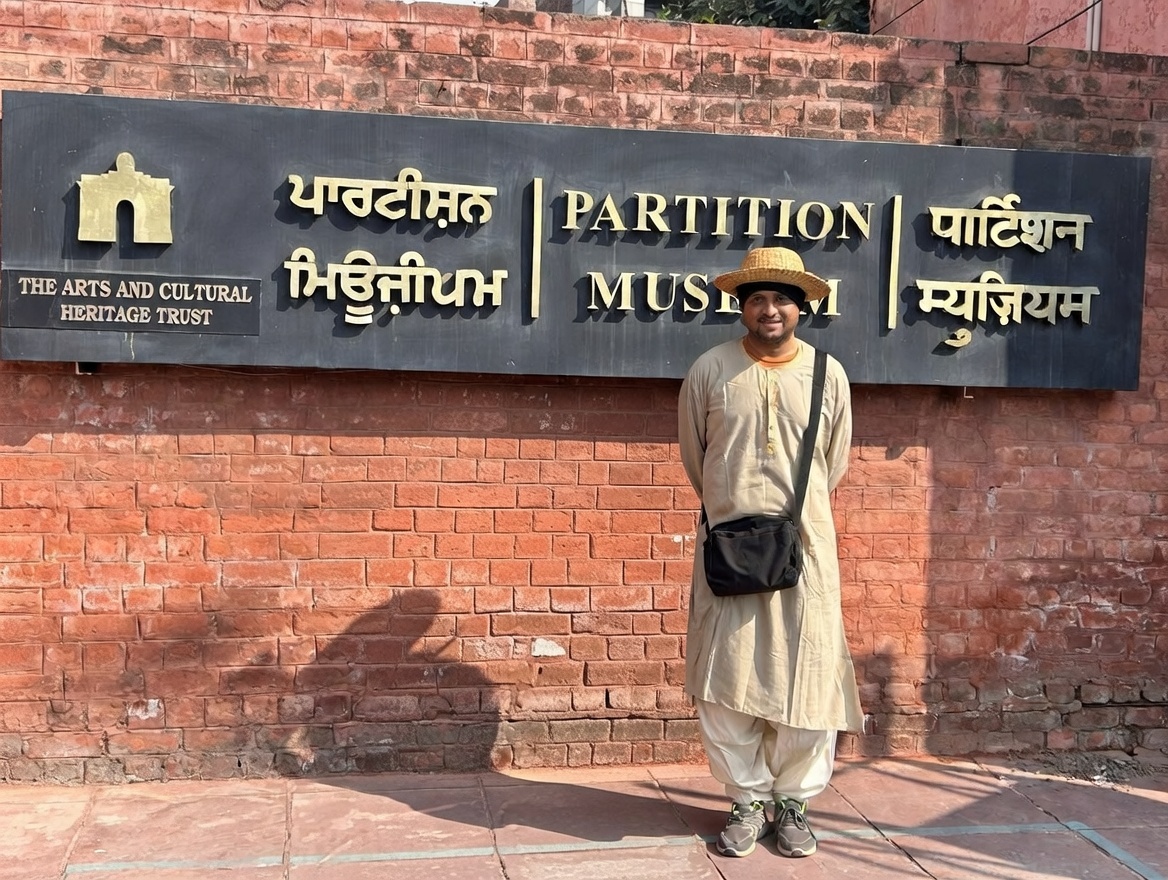
I visited The Partition Museum in Amritsar on a quiet afternoon, just a short walk from Jallianwala Bagh. The museum is located about five minutes away on foot, along a stretch that feels like a Heritage Street. The walk itself prepares you for reflection. It slows you down.
The museum opened in 2017. It stands as one of the world’s first museums dedicated entirely to the Partition of India in 1947. That fact alone gives it weight. This is not just a regional archive. It is a national memory space.
Inside, the historical journey begins in the early 1900s. The depiction of British India, and later India and Pakistan between 1900 and 1971, is largely neutral in tone. At times, I felt it could have been more hard-hitting, especially while discussing political currents such as Mohammedan revivalism in British India and its interaction with British officialdom. However, the presentation is careful and measured. It allows visitors to form their own conclusions.
The storytelling is layered. It is pictorial, audiovisual and textual. Archival photographs line the walls. Recorded testimonies play softly in the background. Personal letters and handwritten notes sit inside glass cases. These artefacts are not abstract history. They are fragments of real lives.
One of the most powerful aspects of the museum is the display of souvenirs and personal belongings left behind or carried across borders. There are utensils, clothes, identity papers and family photographs. Each object tells a story of displacement. The estimated human cost of Partition was staggering. Historians believe that around 10 to 15 million people were displaced. Between one and two million people are estimated to have lost their lives. Standing in front of these objects, those numbers stop being statistics. They become human.
The museum does not limit itself to Punjab. The trials and tribulations of Partition in Bengal, Punjab and Sindh are all highlighted. The suffering was not confined to one region. Nor was the resilience. Some sections focus on survivors who rebuilt their lives in independent India. Their professional success, achieved after immense loss, offers a quiet sense of hope.
Architecturally, certain parts of the museum take one back to rural Punjab of the 1930s and 1940s. The design choices are subtle. They recreate courtyards and village-style settings. It feels immersive without being theatrical.
The premises are clean and well maintained. There is a ticket that must be purchased to enter, which seems reasonable given the scale and upkeep of the institution. There is also a toilet and wash basin within the premises, which makes the visit comfortable for families and elderly visitors. An open-air food court inside the complex provides a place to sit and process what one has seen.
What stayed with me most was not anger or accusation, but silence. The museum does not shout. It presents. It documents. It remembers. At times, I wished it had taken a sharper stance on certain historical currents. Yet perhaps its strength lies in restraint. It trusts the visitor.
By the time I stepped back onto the street leading towards Jallianwala Bagh, the noise of the city felt distant. The museum had done what it was meant to do. It had made history feel immediate. It had turned a chapter from a textbook into a lived experience.
Subscribe Deshwale on YouTube
