




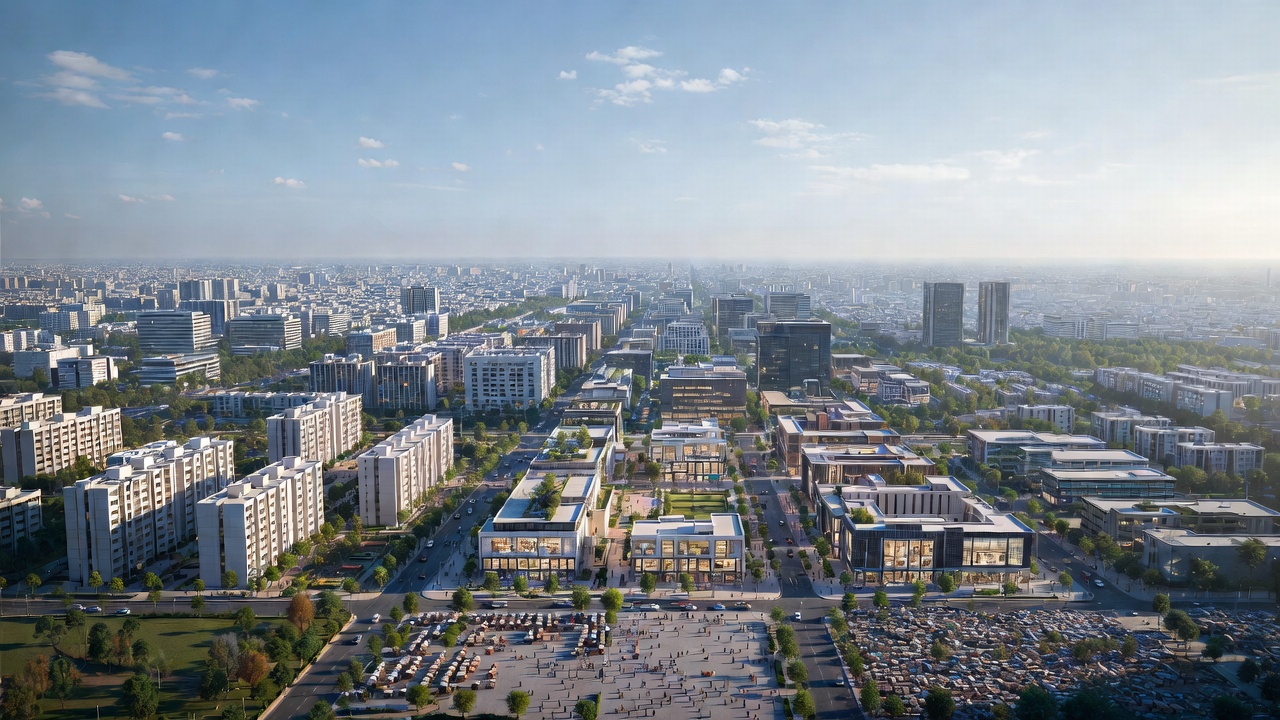
Urban life in many Indian cities is a constant juggling act. Residences, hotels, factories, offices, restaurants, shops, beggars, and hawkers often coexist in close proximity, creating environments that are noisy, congested, and stressful. For residents, commuters, and visitors alike, this blend of activity can feel chaotic, reducing the quality of life. It is worth asking whether a city can be planned differently—more methodically—to reduce stress, improve civic order, and make urban living more efficient and humane.
One possible approach is to design cities with clearly delineated zones, each serving a specific purpose. Residential areas would be exclusively for housing, offering quiet and safety for families. Commercial and professional zones could include factories, industries, offices, hotels, and restaurants, facilitating business activities without disturbing residential life. Designated areas for hawkers and street vendors could allow entrepreneurial activity without cluttering public spaces or obstructing pedestrian movement. Similarly, zones for beggars or informal settlement areas could provide social support and temporary accommodation in a structured manner, while migrant housing zones could offer safe and affordable living spaces for temporary workers.
Public transport would still be allowed to connect all these zones, ensuring mobility without compromising order. By restricting commercial activities, shops, and hawkers within a three-kilometre radius of railway stations, bus stops, and rickshaw stands, planners could reduce congestion and improve the commuting experience. Rickshaws could be confined to designated stands within each zone, preventing random stops that create traffic bottlenecks and pedestrian hazards. Public toilets would be allowed in all zones, as would public dust bins be. Such regulations would require strict enforcement, but they would contribute to cleaner, calmer, and more organised urban spaces.
Feasibility is a key question. Critics may argue that humans and their activities are inherently mixed, and that total segregation is unrealistic. Cities are living organisms, and enforcing rigid zoning could create logistical challenges, particularly for smaller businesses and low-income populations who rely on proximity to customers. However, partial implementation could still yield significant benefits. Even modestly separating noisy commercial activities from residential areas, while creating structured zones for hawkers and temporary migrants, could dramatically improve public order and civic pride.
Proper zoning also carries broader social benefits. When people live in well-planned residential zones, with controlled commercial activity nearby, noise and pollution are reduced, streets are safer, and residents can experience a sense of tranquillity that is currently rare in urban India. Dedicated hawking zones allow informal traders to earn a livelihood legally, without creating congestion or harassment for residents. Designated migrant housing zones could reduce overcrowding, improve sanitation, and provide temporary workers with access to essential facilities, contributing to social stability.
Successful implementation would require foresight, strict regulatory mechanisms, and ongoing civic engagement. Urban planners would need to integrate public transport efficiently to connect all zones, provide adequate amenities, and ensure that zoning laws do not marginalise vulnerable populations. Enforcement agencies must also prevent illegal encroachments, unplanned construction, and haphazard street vending. Without these safeguards, zoning risks becoming a paper plan rather than a functional reality.
In conclusion, while Indian cities face inherent challenges due to rapid urbanisation, haphazard development, and high population density, carefully planned zoning offers a pathway to calmer, cleaner, and more efficient urban life. Clearly defined residential, commercial, hawker, migrant, and beggar zones, combined with regulated public transport and designated rickshaw stands, could transform the experience of city living. It may not be simple, but strategic planning, thoughtful design, and disciplined enforcement could make orderly, stress-reduced cities a feasible goal. Such urban planning would not only improve civic life but also reflect a modern, self-respecting, and forward-looking India.
Subscribe Deshwale on YouTube
