




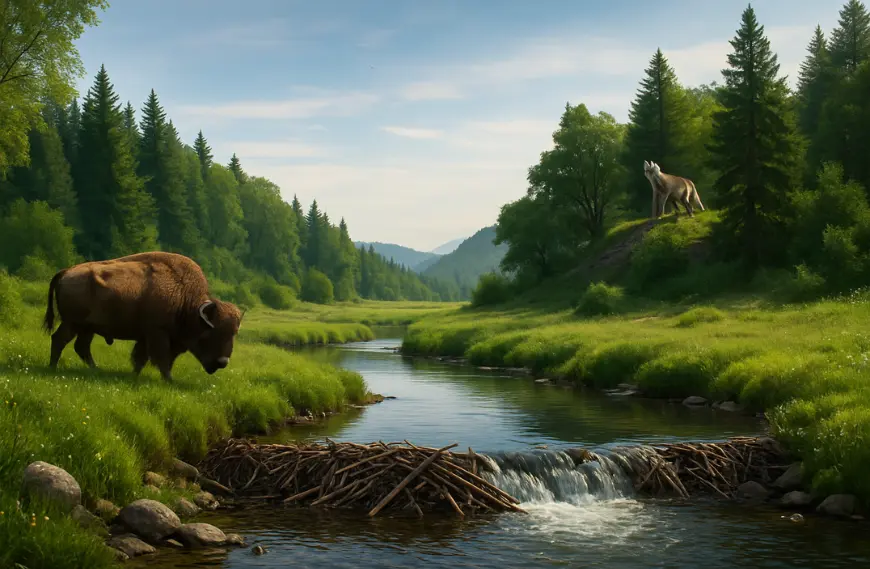
Imagine a landscape teeming with wildflowers, birds, insects, and large animals — restored not by planting trees, but by bringing back lost species. This is the heart of rewilding, a bold conservation approach that reintroduces key animals like wolves, bison, and beavers to revive natural processes and heal damaged ecosystems.
What Is Rewilding?
Rewilding goes beyond protecting individual species. It seeks to restore the interactions between animals, plants, and landscapes. By reintroducing keystone species, rewilding lets nature regulate itself, often with remarkable results.
Wolves in Yellowstone: A Famous Example
In 1995, wolves were reintroduced to Yellowstone National Park, nearly 70 years after being eradicated. Over the following years, scientists observed a cascade of positive effects:
- Elk populations became more cautious, reducing overgrazing.
- Aspen and willow trees began regenerating along riverbanks.
- Beavers returned, building dams that created wetlands supporting fish, amphibians, and birds.
This process, known as a trophic cascade, shows how one predator can transform an entire ecosystem.
Bison: Ecosystem Engineers
Once roaming North America in tens of millions, bison shape grasslands through their grazing patterns, wallowing behaviour (which creates microhabitats), and fertilising soils. Projects like the American Prairie Reserve are restoring bison herds to vast open spaces, helping grasslands recover.
In Europe, rewilding projects have reintroduced European bison — the continent’s largest land mammals — to countries like Poland and Romania, reviving a species nearly extinct in the wild.
Beavers: Nature’s Architects
Beavers fell trees and build dams, turning streams into ponds and wetlands. These wetlands store water during droughts, filter pollution, and provide homes for countless species. Reintroducing beavers has significantly improved river systems in Scotland, the Netherlands, and parts of the United States.
Challenges and Controversies
Rewilding faces some resistance. Farmers worry about livestock losses, communities fear large predators, and restoring habitats can be expensive. However, many experts argue that the long-term ecological benefits outweigh the risks.
As conservationist George Monbiot says, rewilding offers hope — the prospect of a richer, wilder, more abundant world.
