 Deshwale
Saints of Maharashtra: Sant Namdev, the Voice of Devotion Across Borders
In brief · AI summary Sant Namdev, born around 1270 CE in Narsi Namdev in present-day Hingoli district of Maharashtra, was a devotee of Lord Vitthal whose simple, heartfelt abhangs spoke against caste discrimination and empty rituals. His songs travelled across North India, and 61 of his hymns were later included in the Guru Granth Sahib. Today his abhangs are still sung during the wari pilgrimage to Pandharpur and recited in gurdwaras in Punjab.
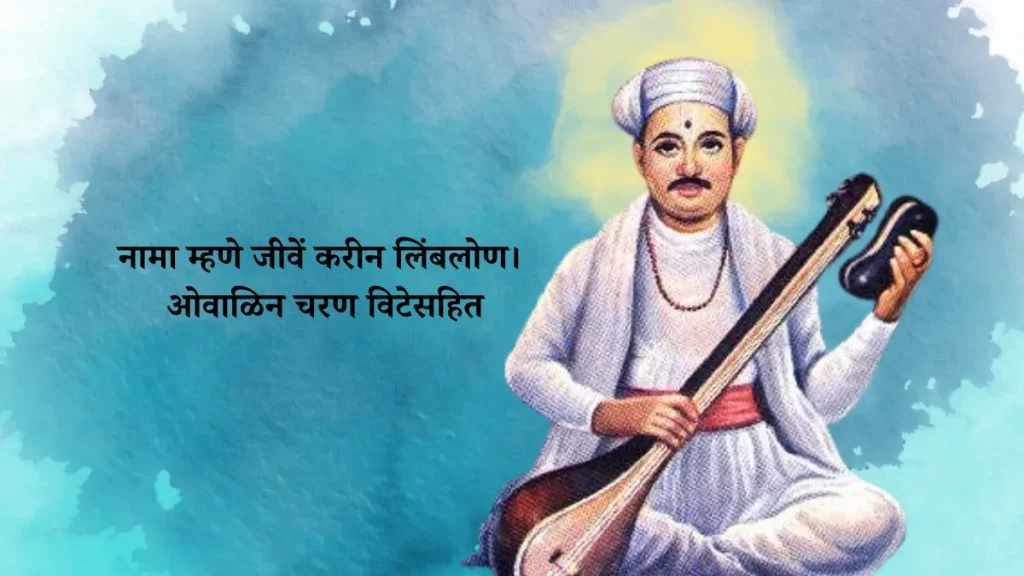
A Voice of Devotion in Every Home
India’s spiritual history is full of saints who transformed society not by force or fame, but through love, simplicity, and soulful songs. Among them, Sant Namdev holds a unique place. His words crossed caste lines, his songs travelled across regions, and his love for Lord Vitthal touched hearts from Maharashtra to Punjab. He was not just a poet, not just a reformer, and not just a singer. He was a friend to God and a voice for the people.
Humble Beginnings in Narsi
Namdev was born around 1270 CE in a small village called Narsi Namdev, in what is now Hingoli district of Maharashtra. His parents, Damashet and Gonai, belonged to the Shimpi community, traditionally known as tailors. Though the family was modest, the atmosphere at home was rich with devotion. His mother often sang bhajans to Lord Vitthal, which deeply influenced the young Namdev.
From early childhood, he found joy not in rituals or scriptures, but in calling out to God with love. He began singing heartfelt songs to Vitthal, treating Him not as a distant deity but as a close and loving companion.
Few of his abhangs says:
“अमृताहुनि गोड नाम तुझें देवा। मन माझें केशवा कां वा नेघे
“Your name, O Lord, is sweeter than nectar. My mind clings to you alone.
“काय पांडुरंगा सांग म्यां करावें। शरण कोणा जावें तुम्हांविण.”
Without you, whom should I seek shelter in?”
Pandharpur: The Heart of His Devotion
Namdev made Pandharpur his spiritual home. This sacred town, where the temple of Lord Vitthal stands beside the Chandrabhaga River, became the stage for his spiritual journey. It was here that he met Sant Dnyaneshwar, a young saint and philosopher. The two formed a close bond and often sang kirtans together, filling the temple with devotion and energy.
According to tradition, during one such gathering, Vitthal himself appeared before them, moved by their love and sincerity. Whether taken literally or symbolically, these stories reveal how deep and genuine Namdev’s devotion truly was.
Songs for the People
Namdev’s poems, known as abhangs, were not written for kings or scholars. They were for the common people. His words were clear, simple, and full of feeling. He spoke out against caste discrimination, challenged empty rituals, and reminded everyone that God lives in all beings.
“काय थोरपणा मिरविसी व्यर्था। खोटेपणा स्वार्थ कळों।।”
His message was clear -“Why boast of false greatness, when pride is rooted only in selfish lies?”
A Journey Beyond Maharashtra
Namdev did not limit his teachings to one region. He travelled across North India, spreading his message in Marathi, Hindi, and Punjabi. His compositions touched people everywhere. So powerful were his words that 61 of his hymns were later included in the Guru Granth Sahib, the holy scripture of Sikhism.
One of his famous hymns says:
“Aval Allah noor upaya, kudrat ke sab bande.”
(God first created light. From that light, all beings were born.)
This reflects his belief in unity, equality, and the oneness of creation, a message that still holds great relevance today.
Language That Crossed Borders
Namdev spoke the language of the heart. In Maharashtra, people still sing his Marathi abhangs during the wari pilgrimage to Pandharpur. In Punjab, his Hindi and Punjabi hymns are recited in gurdwaras with equal reverence. His ability to express spiritual truths in multiple languages made him a truly pan-Indian saint.
What Made His Abhangs Unique
Namdev’s songs were:
- Simple, so even villagers could understand them
- Emotional, filled with longing and love for God
- Courageous, as they questioned caste and pride
- Humble, as he saw himself as a mere servant
- Universal, seeing God in every living being and moment
He did not write for praise or fame. He sang because his heart overflowed with love.
Miracles and Devotion
Many legends surround Namdev’s life. One tells of how he once sang to a stone wall, and the wall turned to face the temple. Whether these stories are fact or symbol, they express the power of faith and the strength of devotion.
Companionship of Saints
Namdev was not alone in his journey. He walked and shared spiritual discussions with great saints like Dnyaneshwar, Gorakhnath, and Machhindranath. These exchanges deepened his understanding and helped him embrace all spiritual paths – whether based on devotion, wisdom, or discipline.
The Varkari Tradition and Namdev
Namdev is one of the early guiding lights of the Varkari tradition, which is built on the worship of Vitthal, the chanting of God’s name, and equality among all devotees. During the great pilgrimages of Ashadhi and Kartiki Ekadashi, thousands of people walk to Pandharpur. They sing his abhangs, not as songs of the past, but as living words of faith.
What Scholars Have Said
Many respected thinkers have acknowledged Namdev’s influence. Dr V. S. Khandekar called him the first poet of the people in Maharashtra. Eleanor Zelliot, a scholar of social movements, praised his role in challenging caste and inspiring change. Dr G. S. Mansukhani, a Sikh historian, highlighted how Namdev’s spirit of unity helped shape the Sikh tradition.
Final Years and Eternal Legacy
There are differing views about where Namdev spent his final years. Some say he passed away in Pandharpur, while others believe he spent his last days in Ghuman, Punjab. A shrine still stands there in his honour. These varied traditions only show how far his influence reached.
What truly matters is that his songs live on. His words have never faded, because they carry the timeless truths of love, unity, and surrender.
What We Can Learn Today
Namdev’s teachings continue to guide us in modern times. His life reminds us that:
- God is within every being
- Love is stronger than social divisions
- Devotion needs no rituals or caste
- A sincere heart is all that is needed to reach the Divine
He did not build temples or write books of rules. He simply sang with all his heart. And in doing so, he brought countless others closer to God.
A Song That Still Echoes
Namdev’s name is remembered not only in Maharashtra, but across India. In temples, gurdwaras, bhajan groups, and on pilgrim paths, his voice is still heard. His abhangs are still sung, not just as tradition, but as expressions of love that never grow old.
He showed us that no one is too small to touch the Divine, and that God listens not to status or speech, but to the voice of a devoted heart.