




Have you ever tried to eat something healthy, like a salad or some fruit, but then a chocolate bar, packet of chips, or slice of pizza suddenly feels irresistible? You are not alone. Many people struggle with this every day. The truth is, craving junk food is not just about a lack of willpower. There are real scientific, emotional, and even marketing reasons why your brain and body crave these foods so strongly. Understanding them can help you take control of your cravings and make healthier choices.
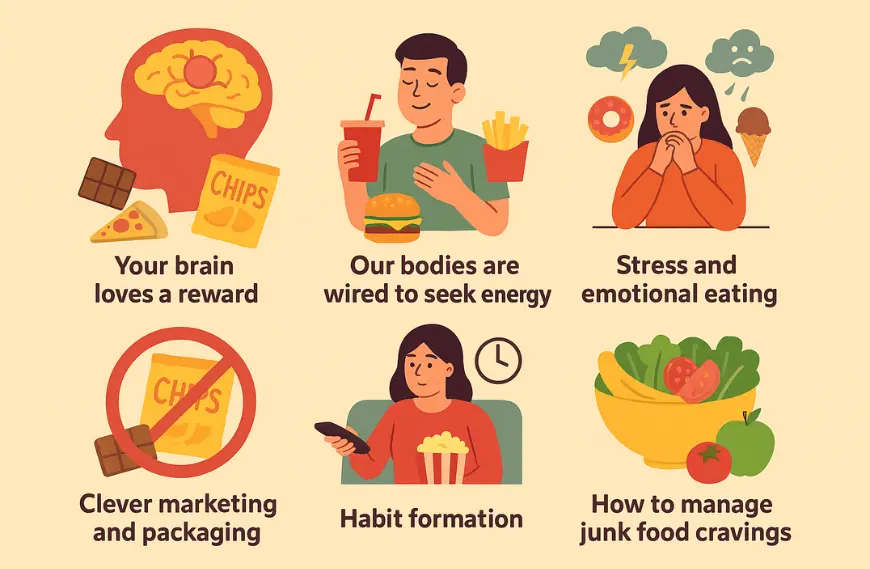
Your brain loves a reward
One of the main reasons we crave junk food is how our brain responds to it. When you eat foods that are high in sugar, fat, or salt, your brain releases a chemical called dopamine. Dopamine is often called the ‘feel-good chemical’ because it makes you feel happy and rewarded.
Think of it like your brain throwing a little celebration every time you eat something tasty. That first bite of chocolate or that crisp chip feels so good because your brain is enjoying the reward. Over time, your brain begins to expect this pleasure, even when you’re not hungry. This creates a cycle where you continue craving junk food for that moment of happiness. The more you eat, the more your brain wants it, making it hard to stop.
Our bodies are wired to seek energy
Humans didn’t always have easy access to food. Thousands of years ago, food was scarce, and people needed high-calorie foods to survive. Foods rich in sugar, fat, and salt were perfect for giving quick energy and helping the body store reserves for lean times.
Today, we live in a world where food is abundant, but our brains still behave as if we need those energy-dense foods. When you eat something like a burger, cake, or fries, your body interprets it as a quick energy source, making it naturally appealing. This evolutionary wiring is one reason why junk food seems so tempting even if your body doesn’t actually need the extra calories.
Stress and emotional eating
Cravings are often triggered by emotions rather than hunger. Stress, boredom, sadness, or anxiety can push you toward comfort foods. Eating something sugary or fatty can temporarily boost your mood because it activates the brain’s reward pathways, releasing dopamine and endorphins.
This is called emotional eating, and while it might make you feel better for a short time, it is not a long-term solution. If you consistently use food to cope with feelings, it can become a habit and may lead to weight gain or other health problems. Recognising whether you’re eating out of hunger or emotion is a key step in controlling your cravings.
Clever marketing and packaging
Junk food is made to be irresistible. Bright colours, shiny packets, appealing smells, and catchy slogans are all designed to attract your attention. Advertisements on TV, social media, and influencer campaigns link these foods to happiness, fun, and friendship.
Portion sizes are also carefully designed. Small, easy-to-grab packets encourage frequent snacking, while large packets make it easy to overeat. These marketing tricks play on both your brain and emotions, making junk food even harder to resist.
Habit formation
Eating junk food regularly can create habits. For example:
- Watching TV → reaching for popcorn or chips
- Working late → grabbing chocolate or candy
- Hanging out with friends → snacking on fried foods
Over time, your brain begins to associate these situations with snacking. Even if you are full, these habits can trigger cravings automatically. Breaking these patterns takes effort and awareness, but it is possible.
How to manage junk food cravings
You don’t need to completely cut junk food from your life. Instead, try these simple strategies:
- Mindful Eating: Ask yourself if you are really hungry or just stressed or bored.
- Healthy Alternatives: Fruits, nuts, yogurt, or dark chocolate can satisfy cravings without harming your health.
- Balanced Meals: Eating meals with protein, fibre, and healthy fats keeps you full and reduces sudden cravings.
- Limit Temptation: Keep junk food out of easy reach or avoid buying large packs.
- Occasional Treats: Allow small portions of your favourite snacks so you don’t feel restricted.
Craving junk food is natural. It happens because of brain chemistry, evolutionary instincts, emotions, and clever marketing. Knowing why your cravings happen is the first step to taking control. By being aware of your triggers, forming better habits, and making healthier swaps, you can enjoy treats without letting them take over your diet or health. Small changes and mindful choices can make a big difference over time, helping you feel in control while still enjoying the foods you love.
