




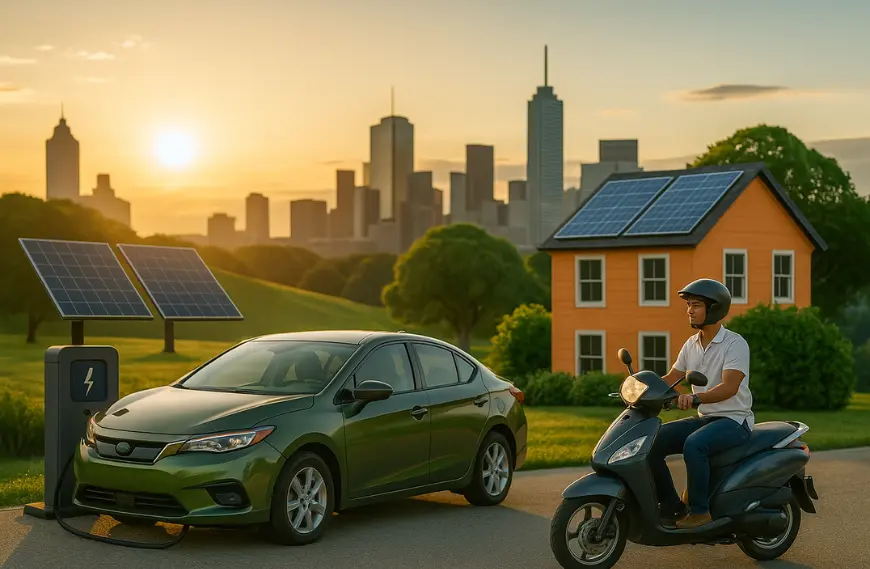
Sustainability is no longer just an idea from the West. It has taken root in India, changing how people live, travel, and even shop. In 2025, searches for solar panels, waste segregation tips, and affordable electric scooters surged. This wave of interest shows a growing desire for cleaner and healthier living across the country.
Electric Vehicles Find a Home in Smaller Cities
Electric vehicles are no longer confined to big cities. From Tata EVs to Ola e-scooters, affordable models have reached Tier 2 and 3 towns. For many, owning an electric scooter priced under ₹one lakh is now possible.
In places like Indore and Coimbatore, delivery riders and local shop owners are switching to EVs to save fuel costs. Families are choosing compact EVs for daily errands. These changes reflect how green technology is becoming part of everyday life, not just an urban luxury.
Why Indians Are Choosing EVs
The reasons are clear. EVs cut air pollution, reduce carbon emissions, and cost less to run. According to NITI Aayog’s e-AMRIT platform, maintenance is simpler too. For budget-conscious households, this makes EVs practical as well as planet-friendly.
Charging stations are spreading fast. In cities such as Surat and Lucknow, charging your scooter is becoming as simple as refuelling. Slowly, the fear of running out of charge is fading.
The Bigger Picture of Green Living
This shift goes beyond vehicles. More people are turning their homes into eco-friendly spaces. Rooftop solar panels are reducing power bills while shrinking carbon footprints. Communities are learning to compost kitchen waste and separate recyclables.
Social media has played a big part here. From viral videos on home composting to influencers promoting green shopping, sustainability has found a younger, energetic audience.
Smaller Cities Lead the Way
Interestingly, it’s the smaller cities driving this change. As The Economic Times reports, eco-friendly housing is in demand in these regions. Tier 2 and 3 cities have the space for rooftop solar and shorter travel distances perfect for EVs. For many families here, sustainable choices are practical, not just fashionable.
Challenges Still Ahead
The road is not without bumps. Rural areas still lack enough charging stations. Batteries need better recycling options. While prices are falling, the cost of EVs remains high for some. Educating new buyers on safe use and upkeep is another challenge.
Looking Forward
Experts agree that 2025 marks a turning point. EVs are no longer niche products but part of everyday life. Combined with solar energy and eco-friendly habits, India is slowly but surely embracing sustainable living.
This is not just about trends. It is about a cleaner sky, quieter streets, and healthier lives. As more Indians choose green, they are not just upgrading lifestyles, they are reshaping the country’s future.
