




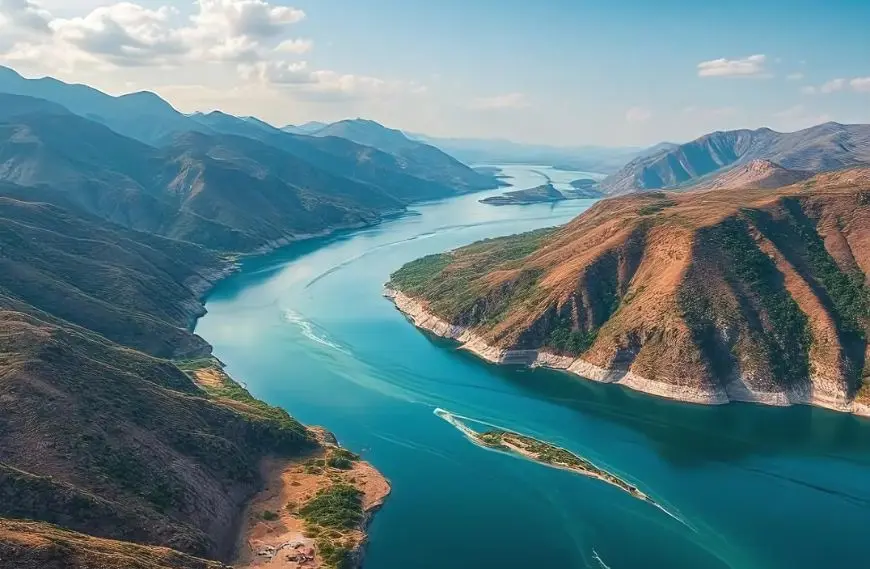
Rivers have played a crucial role in shaping human civilization, ecosystems, and economies. From providing fresh water and fertile land for agriculture to serving as trade routes and sources of hydroelectric power, rivers are the lifeblood of societies. Some of the world’s longest rivers stretch across multiple countries, supporting millions of people and countless species.
This article explores the longest rivers on Earth, their significance, and the challenges they face due to climate change and human activity.
The 10 Longest Rivers in the World
1. The Nile River (Africa) – 6,650 km (4,130 miles)
- Countries: Egypt, Sudan, Ethiopia, Uganda, Kenya, and others.
- Significance: The cradle of ancient Egyptian civilization, providing water for agriculture in the Sahara desert.
- Challenges: Dams, water disputes, and pollution threaten the river’s flow.
2. The Amazon River (South America) – 6,575 km (4,094 miles)
- Countries: Brazil, Peru, Colombia, and others.
- Significance: The world’s largest river by discharge, sustaining the Amazon Rainforest, known as the ‘lungs of the planet.’
- Challenges: Deforestation, illegal mining, and climate change impact water levels.
3. The Yangtze River (China) – 6,300 km (3,917 miles)
- Country: China (Asia’s longest river).
- Significance: Essential for Chinese agriculture, industry, and trade; home to the Three Gorges Dam, the world’s largest hydroelectric plant.
- Challenges: Industrial pollution, flooding, and habitat loss for species like the Yangtze River dolphin.
4. The Mississippi-Missouri River System (USA) – 6,275 km (3,902 miles)
- Country: United States.
- Significance: A major transportation and agricultural artery in North America.
- Challenges: Pollution from farming runoff and climate-related flooding.
5. The Yenisei River (Russia/Mongolia) – 5,539 km (3,445 miles)
- Countries: Russia, Mongolia.
- Significance: One of the largest rivers flowing into the Arctic, crucial for Siberia’s ecosystem.
- Challenges: Hydropower development, pollution, and extreme winter conditions.
6. The Yellow River (China) – 5,464 km (3,395 miles)
- Country: China.
- Significance: Known as ‘China’s Sorrow’ due to frequent devastating floods; essential for ancient Chinese civilization.
- Challenges: Soil erosion, pollution, and reduced water flow due to overuse.
7. The Ob-Irtysh River System (Russia/Kazakhstan/China) – 5,410 km (3,364 miles)
- Countries: Russia, Kazakhstan, China, Mongolia.
- Significance: Supports Siberian ecosystems and industries.
- Challenges: Damming, pollution, and climate-related ice melting.
8. The Parana River (South America) – 4,880 km (3,030 miles)
- Countries: Brazil, Paraguay, Argentina.
- Significance: Powers hydroelectric dams like Itaipu, one of the world’s largest.
- Challenges: Deforestation, droughts, and pollution.
9. The Congo River (Africa) – 4,700 km (2,922 miles)
- Countries: Democratic Republic of Congo, Republic of Congo, Central African Republic.
- Significance: The world’s deepest river, vital for transportation, fishing, and hydroelectric power in Central Africa.
- Challenges: Hydropower projects, illegal logging, and pollution.
10. The Amur River (Russia/China) – 4,444 km (2,763 miles)
- Countries: Russia, China, Mongolia.
- Significance: A natural border between Russia and China, supporting diverse wildlife.
- Challenges: Deforestation, overfishing, and industrial pollution.
Why Are Rivers So Important?
1. Water Supply and Agriculture
- Rivers provide freshwater for drinking, farming, and industry.
- Many civilizations (e.g., Egypt, Mesopotamia) thrived due to river-based irrigation.
2. Transportation and Trade
- Rivers serve as natural highways for transporting goods and people.
- The Mississippi River and the Yangtze River remain vital trade routes.
3. Hydroelectric Power
- Many rivers generate electricity through dams (e.g., Three Gorges Dam in China, Hoover Dam in the USA).
- Hydropower is a renewable energy source, but it can disrupt ecosystems.
4. Biodiversity and Ecosystems
- Rivers support thousands of species, from freshwater fish to river dolphins.
- The Amazon River alone is home to 3,000+ fish species and the endangered pink dolphin.
5. Cultural and Historical Importance
- Rivers have influenced religions, myths, and legends (e.g., the sacred Ganges River in India).
- Many world capitals, including London, Cairo, and Paris, are built along major rivers.
Threats to the World’s Rivers
1. Pollution and Waste Dumping
- Industrial waste, plastic pollution, and untreated sewage poison many rivers.
- The Ganges River and Yangtze River are among the most polluted in the world.
2. Damming and Water Diversion
- Large dams (e.g., Three Gorges Dam) disrupt fish migration and water flow.
- Overuse of river water for irrigation has dried up rivers like the Aral Sea’s tributaries.
3. Climate Change and Melting Glaciers
- Many rivers depend on glaciers for water (e.g., the Ganges and Indus Rivers).
- Melting glaciers due to climate change are shrinking these rivers.
4. Deforestation and Soil Erosion
- Cutting down forests near rivers leads to soil erosion, making water bodies shallower.
- The Amazon River is losing forest cover rapidly due to deforestation.
How Can We Protect the World’s Rivers?
1. Reduce Pollution
- Governments should enforce laws against waste dumping in rivers.
- Industries should use eco-friendly waste management systems.
2. Promote Sustainable Water Use
- Efficient irrigation systems can reduce excessive water withdrawal.
- Personal habits, like reducing water waste, can also help.
3. Restore Natural Ecosystems
- Reforestation near riverbanks can prevent erosion.
- Protecting wetlands helps filter pollutants and maintain biodiversity.
4. Support Renewable Energy Alternatives
- Instead of large dams, sustainable energy sources like wind and solar can be used.
- Hydropower projects should focus on eco-friendly designs.
The world’s longest rivers are more than just bodies of water, they are lifelines for civilization, biodiversity, and economies. From the ancient Nile to the vast Amazon, these rivers have shaped human history and continue to support millions of people.
However, pollution, climate change, and overuse threaten their survival. Protecting these vital waterways requires global cooperation, sustainable practices, and responsible policies. Only then can we ensure that these majestic rivers continue to flow for future generations.
