



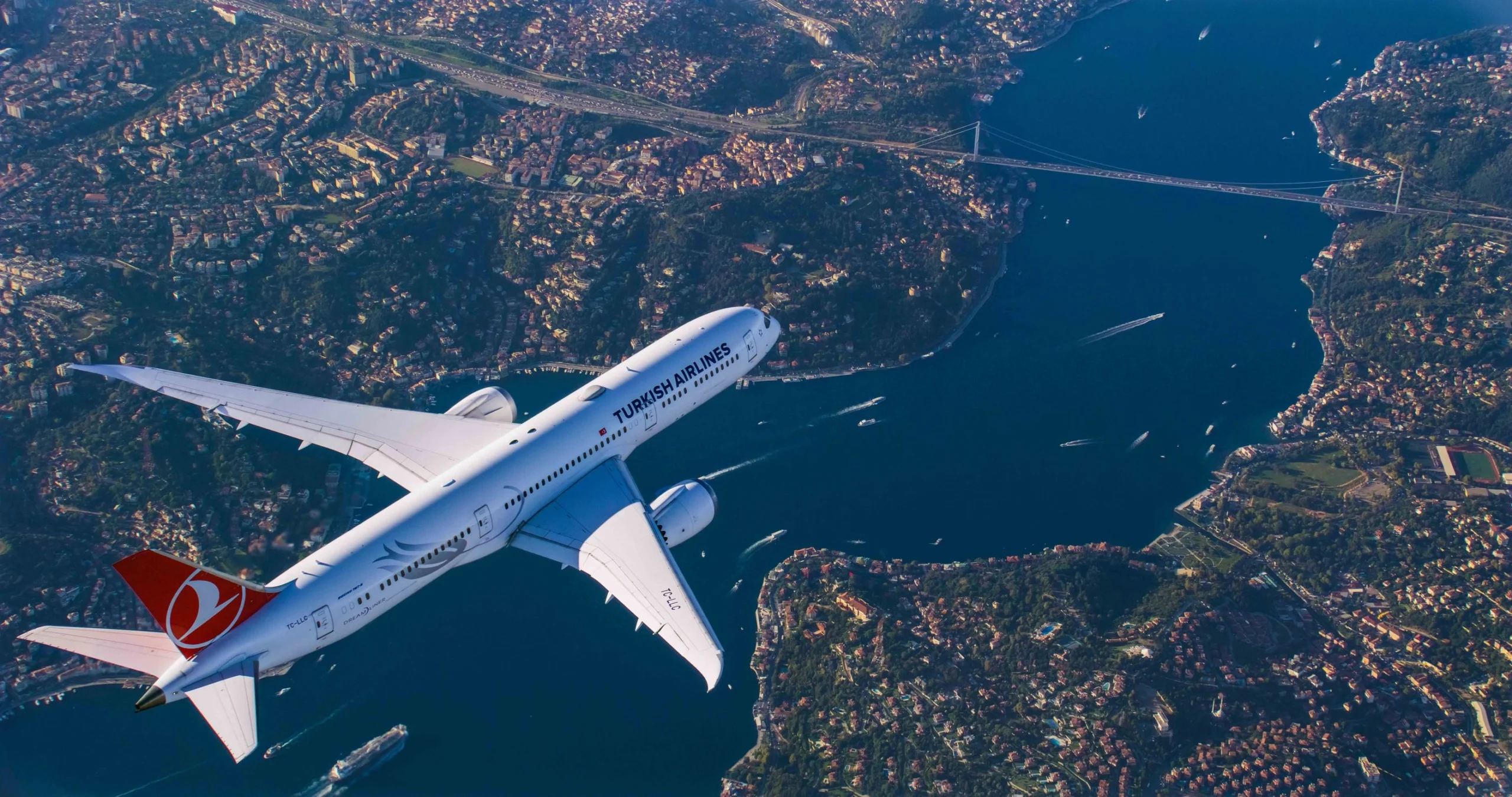
Turkish Airlines has reported a $2.2 billion profit from main operations in 2025, highlighting the resilience of its business model and long-term growth strategy despite global aviation challenges.
The airline posted total revenues of $24.1 billion for the full year, marking a 6.3% year-on-year increase, supported primarily by strong passenger demand across international and premium travel segments. In the fourth quarter alone, revenues rose 12% to $6.3 billion, while profit from main operations increased 23% year-on-year to $534 million.
Operational performance also remained strong in terms of capacity and scale. By the end of 2025, the airline expanded its fleet 5% year-on-year to 516 aircraft, transporting 92.6 million passengers and handling 2.2 million tons of cargo, marking the highest operational results in its history.
Passenger operations remained the largest contributor to revenue growth. Passenger revenue rose 7.4%, driven by sustained international travel demand and growth in premium cabin bookings. Meanwhile, cargo revenues reached $3.4 billion. Although global trade slowdowns and tariff impacts reduced cargo unit yields, a 16.6% rise in cargo volume helped offset the decline.
The airline’s EBITDAR (Earnings Before Interest, Taxes, Depreciation, Amortization, and Rent) reached $5.7 billion, with a margin of 23.7%, exceeding the midpoint of the company’s long-term target. Consolidated assets climbed to $46.6 billion, while total employment across the group surpassed 101,000 people.
In line with its long-term strategy, the airline invested $6 billion in 2025, bringing its five-year total investments to nearly $20 billion. These investments support fleet expansion, network growth, and operational efficiency.
Commenting on the results, Chairman Ahmet Bolat stated that the company’s financial success demonstrates its ability to adapt to rapidly changing geopolitical and commercial conditions.
“Despite an exceptionally challenging and unpredictable operating environment, the financial success we achieved in 2025 once again showed our ability to adapt thanks to our diversified revenue structure,” Bolat said.
Looking ahead, strong demand in early 2026 supports expectations that the airline’s EBITDAR margin will remain within the 22–24% range, aligning with its long-term targets.
Founded in 1933, Turkish Airlines continues to expand its global presence as one of the world’s largest network carriers and a member of the Star Alliance, operating flights to 356 destinations across 132 countries.
Subscribe Deshwale on YouTube
